


Choosing the correct Instagram ad size is one of those small production decisions that can quietly change the whole campaign. A square product image may look clean in the Feed, then feel underpowered in Stories. A 9:16 video may fill the screen beautifully, then lose important text when it appears in a cropped preview.
This guide gives you the practical Instagram ad specs creators, marketers, and ecommerce teams need before exporting creative. You will find the recommended Instagram ad dimensions for major placements, simple rules for video files, and a clear workflow for making correctly framed ads with insMind.
Table of Contents
Best Instagram Ad Size for Each Placement
The best Instagram ads size depends on where the ad appears. For most Feed campaigns, 1080 x 1350 px at 4:5 gives you strong mobile visibility without using a full-screen format. For Stories and Reels, 1080 x 1920 px at 9:16 is the natural choice because it fills the phone screen.
If you only have time to make one flexible asset, 1080 x 1080 px at 1:1 is still dependable. But when performance matters, create at least two versions: a 4:5 Feed version and a 9:16 Stories or Reels version.
- 4:51080 x 1350 px
Best for Feed image and video ads. - 9:161080 x 1920 px
Best for Stories, Reels, and full-screen video. - 1:11080 x 1080 px
Best when you need one square asset for multiple uses.
Want to build the creative while keeping the frame in mind? Open the Instagram ad maker, describe the placement in your prompt, and choose the matching ratio before generating.
Instagram Ad Sizes and Specs Chart
Use this chart as your production starting point. Instagram and Meta Ads Manager can update placement rules, file limits, and delivery options, so confirm the final upload fields before launch.
For Instagram video ad specs, export MP4 or MOV when possible, use H.264 video and AAC audio, and keep motion at a stable frame rate such as 30 fps or the original source frame rate. Short ads often perform well at 6-15 seconds because they can deliver one hook, one benefit, and one action without feeling crowded.
Instagram Ad Formats and Creative Examples
The main Instagram ad formats are not just different upload containers. They change how people notice, watch, and act on your creative. Pick the format based on the message first, then choose the correct Instagram ads sizes for that placement.
Feed Image Ad
Use a 4:5 Feed image when you have one strong product shot, seasonal offer, or before-and-after visual. Keep the product large, make the headline readable at phone size, and avoid tiny legal or feature text.
Feed Video Ad
Use Feed video when motion explains the value faster than a static image. A beauty product can show texture, a SaaS product can show one simplified workflow, and a food brand can show the first satisfying pour or bite.
Stories Ad
Stories are full-screen and fast. Design for a 9:16 canvas, open with the benefit immediately, and leave clean space near the bottom so Instagram's call-to-action area does not compete with your own text.
Reels Ad
Reels need a native rhythm. Use vertical framing, a quick visual hook, and captions if speech carries the point. The recommended Instagram video ad dimensions are still 1080 x 1920 px, but the creative should feel less like a static poster and more like a short scene.
Carousel Ad
Carousel works well for product sets, tutorial steps, feature comparisons, and storytelling. Choose 4:5 or 1:1, then keep every card in that same format so the swipe feels intentional.
When you need motion but do not have footage, an AI video generator can help turn a written concept or product image into a short ad idea. Product-focused teams can also try an AI product video generator for ecommerce clips and launch visuals.
How to Make Instagram Ads with insMind
Once the sizes are clear, the next job is building creative that fits the frame. insMind lets you begin with a product image, a short visual reference, or a text-only idea, then generate a social-ready video ad from a prompt.
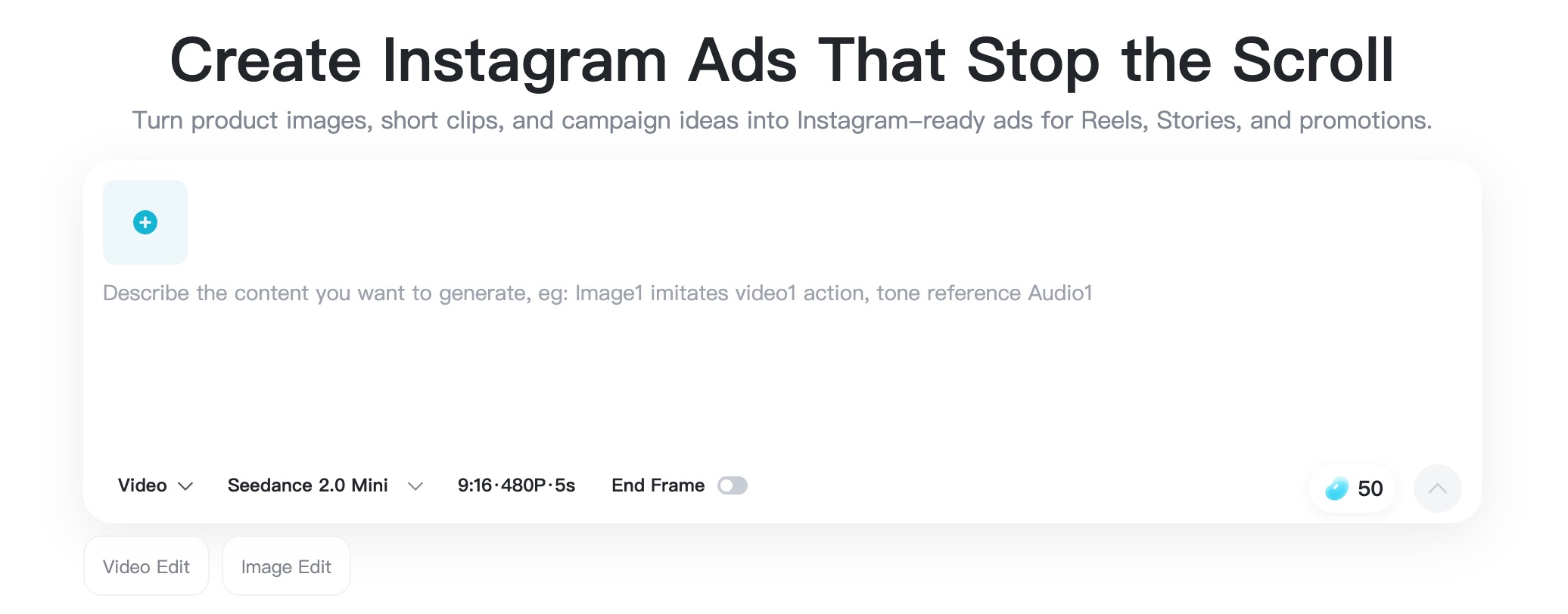
Step 1: Open the Instagram Ad Maker and Choose Your Input
Go to the insMind Instagram Ad Maker. Keep the project in video mode, then add a product image or short reference clip if you already have one. If you want AI to create the whole scene, you can start from the prompt box instead.
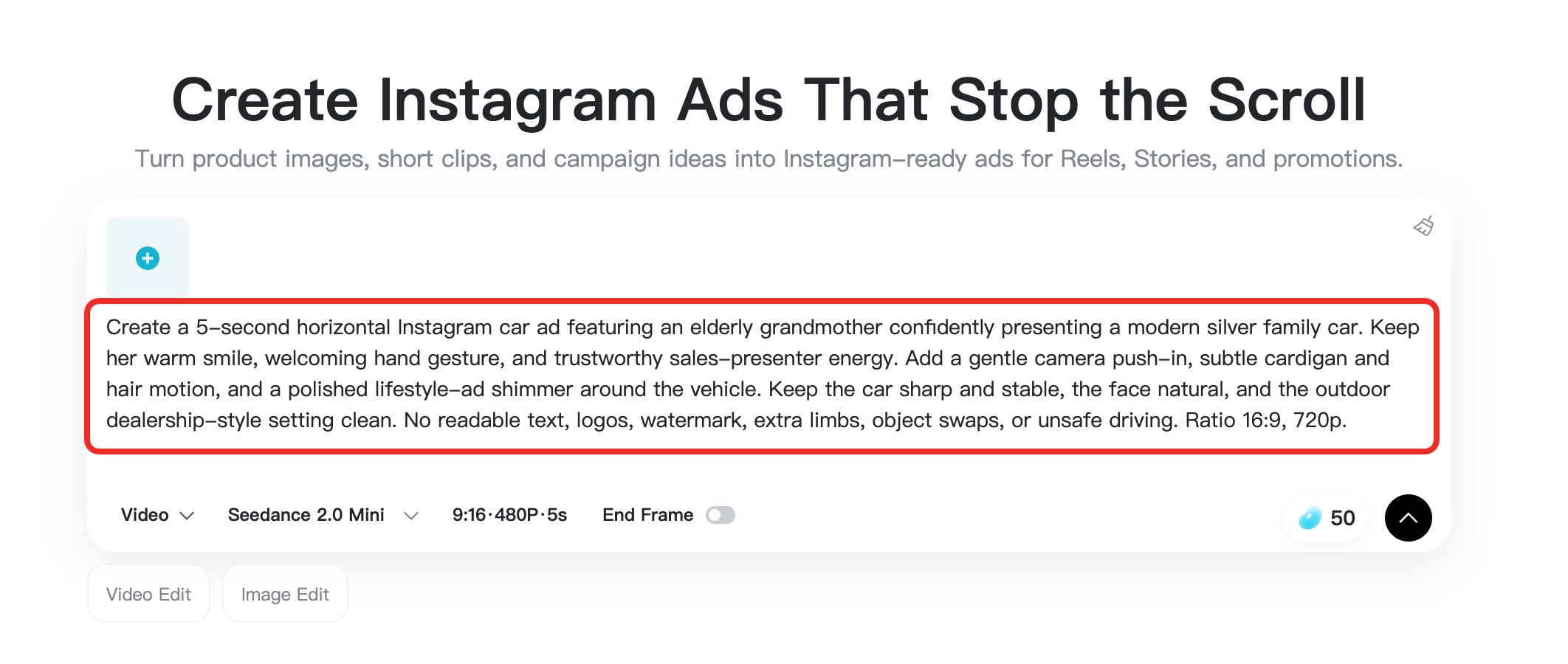
Step 2: Write a Placement-Specific Prompt
Describe the product, scene, action, camera movement, and ad placement. For example: "Create a 7-second vertical Instagram Story ad for a citrus sparkling water can. Use a bright kitchen background, crisp condensation, a gentle push-in, and clear space for a CTA. Ratio 9:16."
Step 3: Choose Ratio, Resolution, Duration, and Audio
Open the video settings and match the output to your placement. Pick 9:16 for Stories or Reels, 1:1 for a square ad, or another available ratio when your campaign needs it. Choose the highest useful resolution, set a short duration, and turn audio on only when it supports the concept.
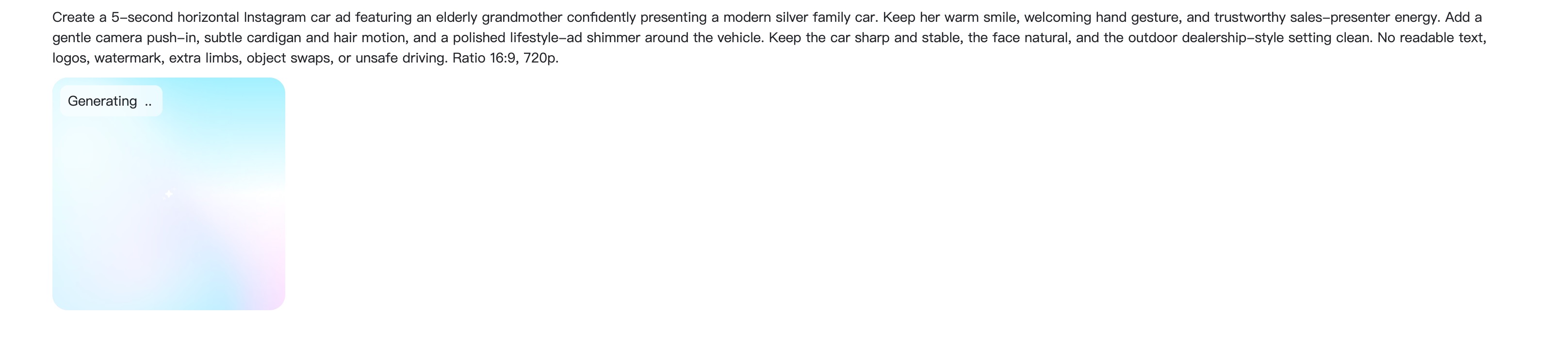
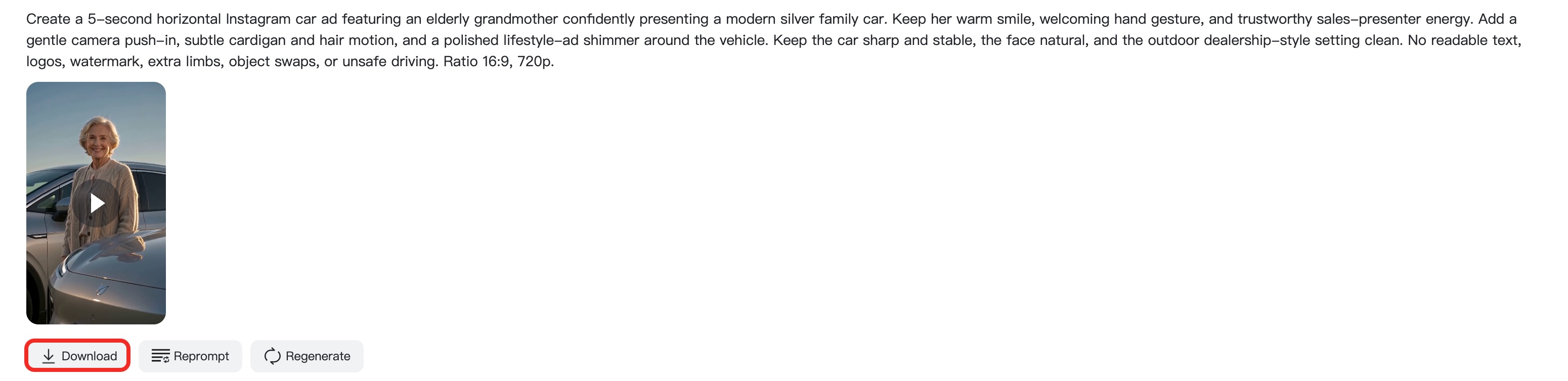
Step 4: Generate, Review, and Download
Click Generate, then watch the result at full size. Check the product shape, label clarity, first-frame hook, and safe space for text. If the output needs a cleaner composition, revise the prompt and regenerate. Download the finished version once it fits your placement.
Safe Zones, Resolution, and Export Checklist
The right Instagram ad size prevents technical problems, but safe layout prevents creative problems. Keep logos, subtitles, prices, and CTA text away from the edges, especially in Reels and Stories. Interface elements, preview crops, and device shapes can cover areas that look fine in your editing canvas.
Use this quick checklist before exporting or uploading:
- Use 1080 x 1350 px at 4:5 for Feed-first creative.
- Use 1080 x 1920 px at 9:16 for Stories and Reels.
- Keep carousel cards in one consistent aspect ratio.
- Export video as MP4 or MOV with reliable audio and video codecs.
- Make the first frame understandable even with sound off.
- Keep important text inside the center-safe area.
- Preview automatic placements in Meta Ads Manager before launch.
Creator-style ads follow the same dimensional rules but often need a more conversational visual style. If that is your campaign direction, an AI UGC video generator can help you test a social-first concept while keeping the correct vertical framing.
FAQs About Instagram Ad Sizes
What is the standard Instagram ad size?
There is no single standard size for every placement. Use 1080 x 1350 px for Feed portrait ads, 1080 x 1920 px for Stories and Reels, and 1080 x 1080 px when you need a square asset.
What is the best Instagram ad ratio?
Use 4:5 for Feed ads and 9:16 for full-screen Stories or Reels. A 1:1 square ratio is useful when you need one flexible asset, but it gives up screen space in vertical placements.
What are the recommended Instagram video ad dimensions?
The recommended Instagram video ad size for Stories and Reels is 1080 x 1920 px. For Feed video, 1080 x 1350 px is a strong portrait option, while 1080 x 1080 px works for square campaigns.
Can I use one video for Feed, Stories, and Reels?
You can, but it is rarely ideal. A single video may be cropped or leave unused space. Create separate 4:5 and 9:16 exports when the campaign budget or importance justifies the extra version.
Does Instagram accept 720P video ads?
Some lower-resolution videos may upload depending on the current placement rules, but sharper 1080 px-wide production targets usually look better. Preserve the correct ratio and avoid stretching a low-resolution file.
How long should an Instagram video ad be?
Many paid social ads work well at 6-15 seconds because the message stays focused. Always confirm the current duration limit in Ads Manager for the exact placement and objective you choose.
Build an Instagram Ad That Fits the Screen
Good Instagram ad specs protect your creative from avoidable cropping, softness, and clutter. Start with the placement, choose the right ratio, keep the message inside a safe area, and preview the ad before launch.
With insMind, you can move from size planning to creative production in the same workflow: choose an input, write the prompt, set the ratio, generate the video, and download a placement-ready draft for review.

I am the Chief Editor of insMind. I provide tips and skills to help users design better photos with insMind, whether for e-commerce, social media, or any other use.


