


Need the right YouTube ad specs before you export a campaign video? A technically valid upload can still perform poorly if the ratio fights the placement, the hook arrives too late, or a call to action sits under YouTube's interface.
This guide separates upload requirements from practical creative recommendations. You will get the current YouTube ad dimensions, supported video files, length guidance by format, and a four-step workflow for turning a product image and campaign idea into an ad draft with insMind.
Table of Contents
YouTube Ad Specs at a Glance
What should your master file look like? Google recommends Full HD and accepts horizontal, vertical, and square video. For most campaigns, produce a high-quality MP4 master, keep essential content inside the safe area, and adapt the aspect ratio to where the ad will appear.
| Specification | Recommended | Also accepted |
|---|---|---|
| Resolution | 1920 x 1080 horizontal; 1080 x 1920 vertical; 1080 x 1080 square | 720p and SD minimums, although SD is not recommended |
| Aspect ratio | 16:9 horizontal; 9:16 vertical; 1:1 square | 4:3 horizontal; 2:3 or 4:5 vertical |
| YouTube video ad format | MPEG-2 or MPEG-4; MP4 is the practical default | MOV, AVI, WMV, WebM, HEVC, ProRes, and other supported video containers |
| Maximum upload size | 256 GB for a YouTube video upload | |
| Thumbnail | 1280 x 720, 16:9, JPG/GIF/PNG, under 2 MB for videos | 1280 x 640 minimum |
| Companion banner | 300 x 60, JPEG/GIF/PNG, 150 KB maximum; desktop only | |
Best working master: Export 1080p in MP4, use H.264 video with AAC audio, and keep a clean source file. YouTube will encode the upload for different devices, so extra compression before upload can reduce final quality.
YouTube Ad Formats and Length Guide
The correct YouTube ad length depends on the buying format and campaign setup. Some values are hard limits; others are strong creative recommendations. Google can also make placement-specific changes, so confirm the final field requirements inside Google Ads before launch.
| YouTube ad format | Where it appears | Length guidance | Viewer action |
|---|---|---|---|
| Skippable in-stream | Before, during, or after videos; may also run across Google video partners | Any length in many auction campaigns; viewers can skip after 5 seconds. Reservation campaigns use 12 seconds to 6 minutes. | Skip after 5 seconds |
| Non-skippable in-stream | Before, during, or after content | Common standard inventory uses 7-15 seconds. Some eligible placements and campaign types support 30 seconds or up to 60 seconds. | Must watch before content continues |
| Bumper | Before, during, or after videos | 6 seconds maximum | Non-skippable |
| In-feed video | YouTube search, related videos, and mobile Home feed | The destination video may be longer; use a compelling thumbnail, headline, and opening because the viewer chooses to watch. | Click to watch |
| YouTube Shorts ad | Between organic Shorts in the vertical feed | Create a concise vertical cut. A 10-30 second edit is a practical testing range even when the uploaded video can be longer. | Swipe away at any time |
| Masthead | Top of the YouTube Home feed on supported devices | Placement behavior varies by device and reservation setup; build from a 16:9 master and verify current booking requirements. | Autoplay or click, depending on device |
For skippable campaigns, do not interpret “any length” as “make it long.” Put your product, problem, or visual surprise in the first five seconds. A focused 15-30 second cut is easier to test, while a longer version makes sense when the offer needs a demonstration or story.
For bumper ads, plan one idea only: brand plus benefit, product plus outcome, or offer plus deadline. Six seconds is not enough for a compressed 30-second script.
Choose YouTube Ad Dimensions by Placement
Which YouTube ad size should you design first? Start with the placement that matters most, then create alternate crops. One universal export often leaves either mobile or TV inventory with weak framing.
16:9 horizontal: 1920 x 1080
This is the safest primary format for traditional in-stream ads, desktop viewing, connected TV, and product demonstrations. It gives you room for a subject, product detail, and concise on-screen copy without forcing a tight crop.
9:16 vertical: 1080 x 1920
Use vertical for Shorts and other mobile-first placements. Recompose the scene rather than placing a horizontal video inside a vertical canvas. Keep the subject near the center and leave clear space around interface elements.
Need a vertical campaign cut quickly? insMind also offers a dedicated YouTube Shorts creator for mobile-first videos.
1:1 square: 1080 x 1080
Square video is a flexible cross-device option and can work well when you need one asset for several feeds. However, it provides less horizontal storytelling space than 16:9 and less immersive mobile coverage than 9:16.
Design for YouTube Safe Zones, Sound, and Mobile
YouTube dynamically fits video to the viewer's device, but controls, calls to action, and overlays can cover parts of the frame. Keep logos, prices, legal copy, subtitles, and product labels away from the edges. Check Google's current horizontal, vertical, and square safe-zone overlays before final delivery.
- Center the essential message. Decorative elements can reach the edges; critical information should not.
- Use readable text. Favor a few large words over a paragraph of tiny copy.
- Make the first frame useful. Do not spend three seconds on a blank fade or logo animation.
- Design for sound on and off. Add captions or visual context, but still mix clear voice and music for viewers listening.
- Label AI-created or AI-edited assets where required. Google notes that regulations in some regions require disclosures, and its AI label setting is rolling out across advertising products.
A polished ad can begin with a still product visual. An AI product video generator helps you explore motion, camera movement, and benefit-led product moments before committing to a larger shoot.
How to Make a YouTube Ad with insMind
Want to turn the specs into an actual creative? The YouTube ad maker on insMind accepts a product image or campaign idea, then lets you describe the hook, audience, scene, key benefit, call to action, tone, pacing, and format in plain language.
Step 1: Start with Your Product Image or Ad Idea
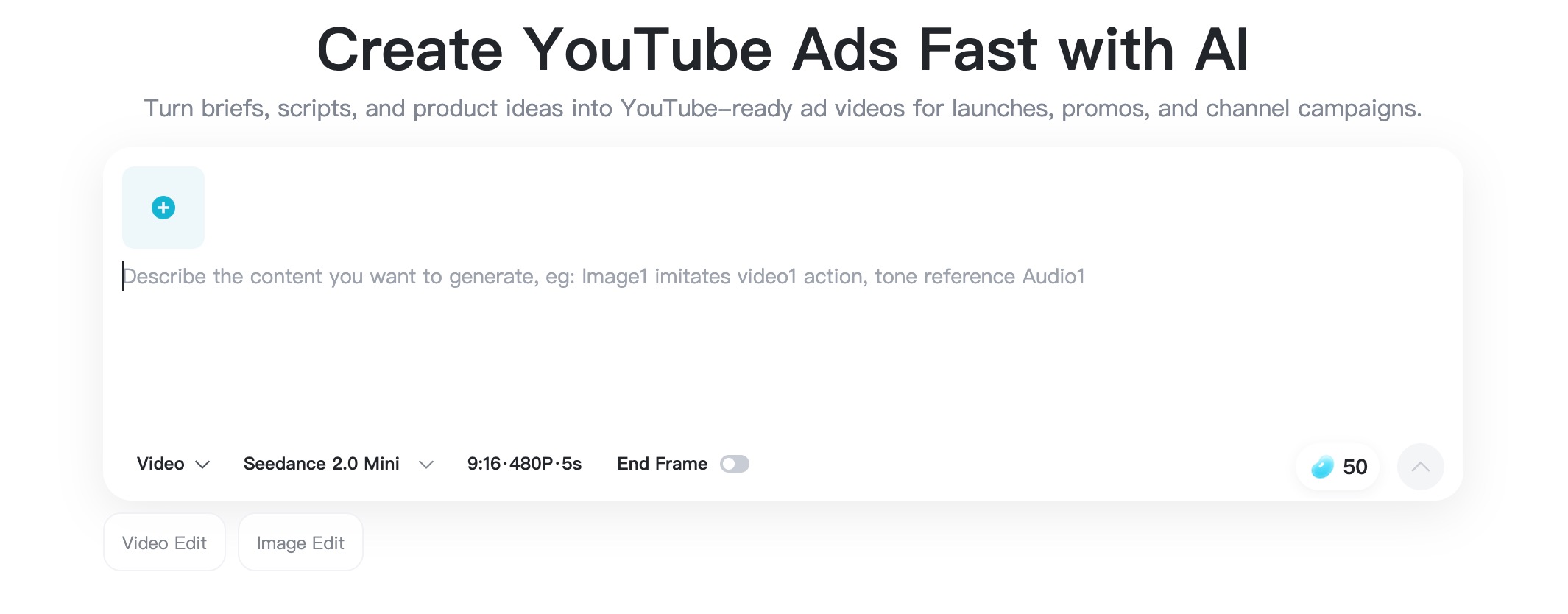
Open insMind's YouTube Ad Maker. Upload a clear product image, brand asset, or reference picture for an image-led ad. If your concept is better described from scratch, begin with a text prompt instead.
Step 2: Describe the Hook, Audience, and Format
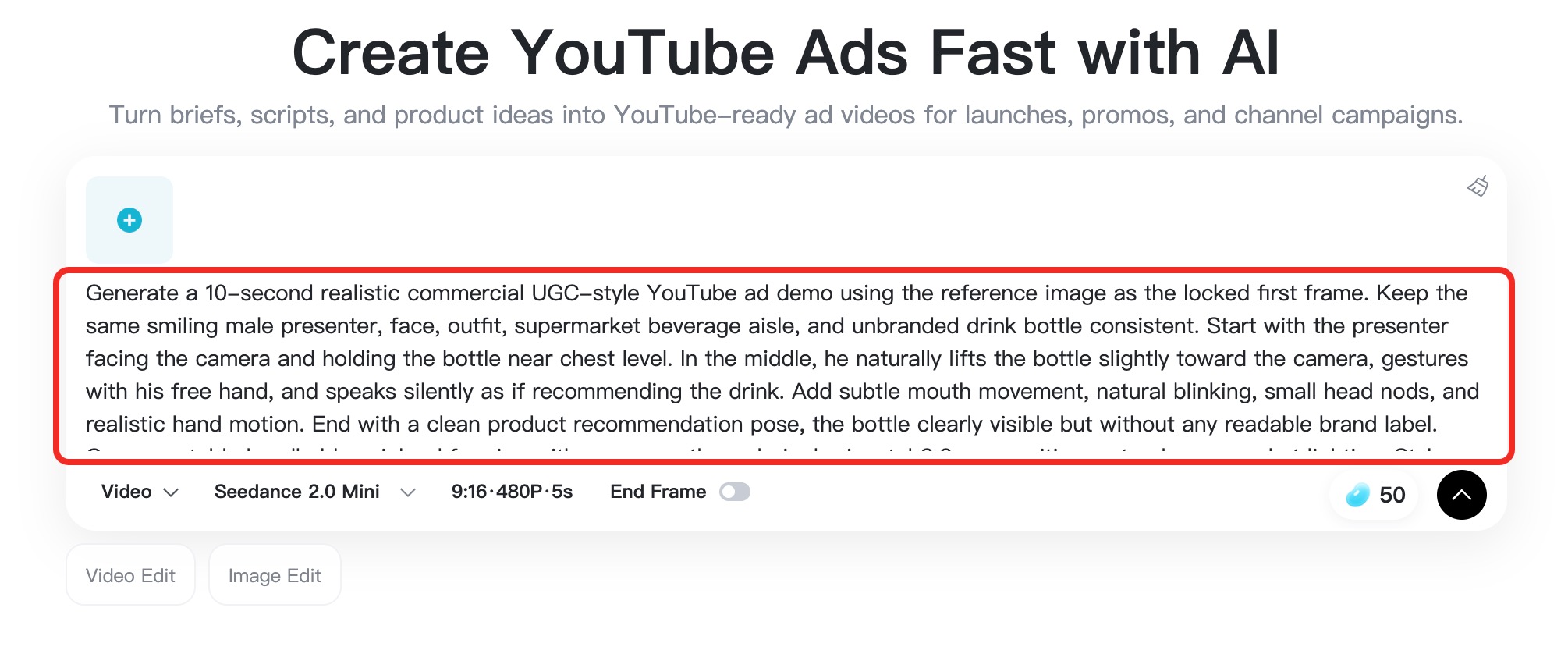
Write one clear direction that covers the product, target audience, opening hook, main benefit, scene, tone, pacing, call to action, ratio, and duration. For example: “Create a 15-second 16:9 skincare ad for busy professionals. Open on the serum bottle, show a quick morning routine, highlight lightweight hydration, and end with ‘Refresh Your Routine.’”
Choose 16:9 for a standard in-stream concept, 9:16 for Shorts, or 1:1 for a square version. Match the duration to the format you plan to buy.
Step 3: Generate and Review the First Cut
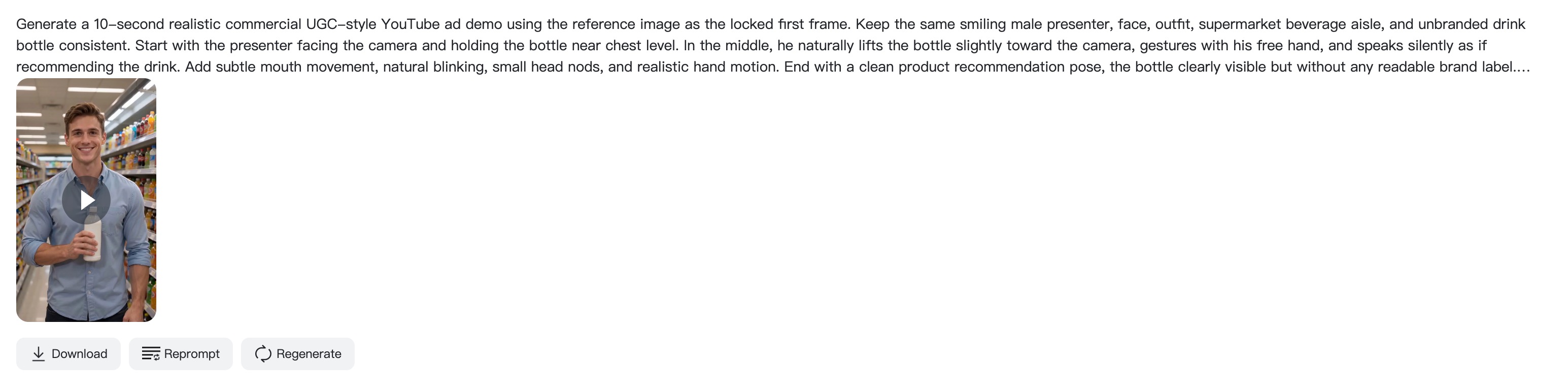
Click Generate and let insMind build the first video. Review the opening five seconds, product visibility, message order, motion, and overall pacing. Check whether the result still reads clearly on a small screen.
Step 4: Refine the Direction and Download
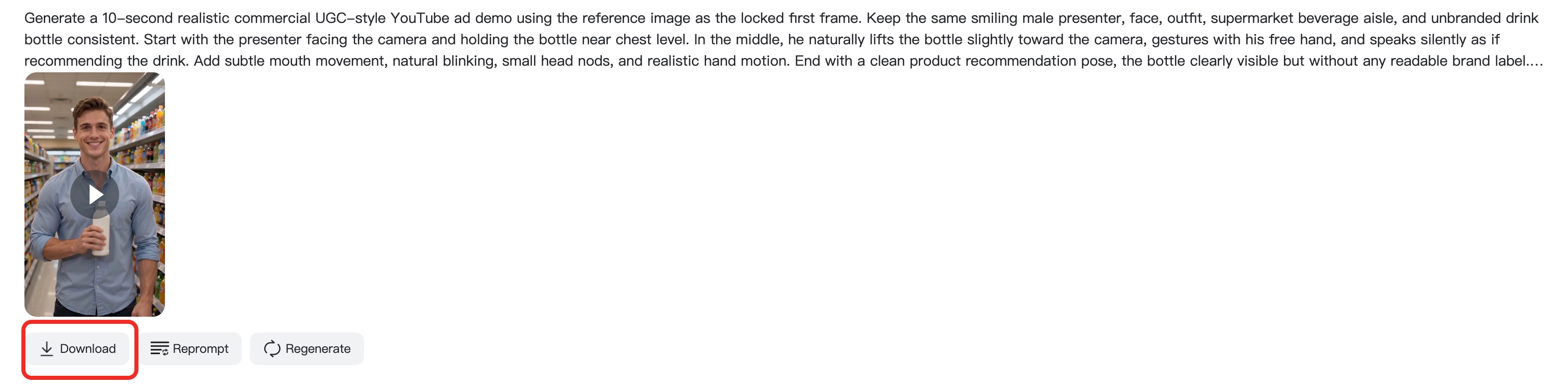
If the ad needs a stronger hook, a different scene, faster pacing, or a clearer CTA, adjust the prompt and regenerate. When the creative works, download it and complete your final compliance, audio, caption, and safe-zone checks before uploading to YouTube.
YouTube Video Ads Specs: Pre-Upload Checklist
Before you hand off or upload a file, run one final check. This catches expensive issues while they are still easy to fix.
- The aspect ratio matches the intended placement: 16:9, 9:16, or 1:1.
- The preferred resolution is 1080p: 1920 x 1080, 1080 x 1920, or 1080 x 1080.
- The file is a supported video format; MP4 is a dependable delivery choice.
- The duration fits the exact Google Ads campaign subtype and inventory.
- The brand or product appears early enough for skippable viewing behavior.
- Text, captions, logos, and CTA language stay inside the safe area.
- The video remains understandable on mobile and with sound off.
- The destination URL, offer, claims, and required disclosures are correct.
- The thumbnail is 16:9, sharp, readable, and below the applicable file limit.
If the first draft needs a different concept rather than a simple edit, use an AI video generator to test another hook or scene without rebuilding the production from zero.
FAQs About YouTube Ad Specs and Video Length
What are the best YouTube ad dimensions?
Use 1920 x 1080 for horizontal, 1080 x 1920 for vertical, or 1080 x 1080 for square. These are Google's recommended Full HD sizes and give the platform a strong source file for encoding.
What is the maximum YouTube video ad length?
There is no single maximum across every format. Bumpers are capped at six seconds, standard non-skippable inventory is commonly 7-15 seconds, and skippable limits vary by campaign type; reservation skippable ads run from 12 seconds to six minutes.
Can a YouTube ad be vertical?
Yes. Google recommends 9:16 at 1080 x 1920 for vertical video. It is the natural choice for Shorts and mobile-first campaigns, while 16:9 remains important for in-stream and connected-TV viewing.
Which YouTube ad format should I export?
MP4 is the most practical default because it is widely supported and easy to deliver. YouTube also accepts MOV, AVI, WebM, MPEG, and several professional formats. Export a clean 1080p master rather than an aggressively compressed file.
How long should a skippable YouTube ad be?
Many auction campaigns accept varied lengths, but concise ads are easier to hold and test. Start with a focused 15-30 second version, reveal the core value in the first five seconds, and use a longer cut only when the message genuinely needs it.
Can insMind make both standard and Shorts ad concepts?
Yes. Describe the desired ratio, duration, pacing, hook, benefit, and CTA in the prompt. Generate a 16:9 concept for standard placements and a separate 9:16 version for Shorts so each composition fits its screen.

Sarah Michelle
I'm a freelance writer with a passion for editing and designing photos. Here at insMind, I strive to educate users on image creativity, photography, and enhancing product photos to help grow their businesses.


