


Need a voice that gives listeners goosebumps without stepping into a recording booth? The good news is that creating an unsettling voice is no longer limited to professional voice actors or expensive audio studios. With the right script, the right voice type, and a focused AI workflow, you can produce a horror-ready voiceover in minutes.
If you have been searching for how to make a creepy voice, you are probably not just looking for a generic "scary" effect. You want a voice that fits a character, a scene, or a format. Maybe you are producing a haunted house announcement, scripting a monster for a short indie game, recording a Halloween voicemail for friends, or building narration for an analog horror series. This guide walks through what makes a voice feel creepy, how to write scripts that deliver, which voice types match which scenes, and how to use a scary voice generator to turn your words into spine-chilling audio.
Table of Contents
What Makes a Voice Sound Creepy?
A creepy voice is not just a low, slow, or growly voice. It is a voice that creates an emotional gap between what the listener expects and what they hear. The gap is what produces discomfort. When you understand what creates that gap, you can build creepy voices intentionally instead of hoping an effect does the work for you.
Most unsettling voices share three core traits: controlled delivery, unusual pacing, and a sense that the speaker knows something the listener does not. Think of the whispered confession, the official announcement that hides a threat, or the narrator who speaks calmly while describing something terrible. Each one pulls the listener in by making them lean closer, not by shouting.
Here are the building blocks that combine to produce a creepy sound:
| Element | What It Does | Why It Feels Creepy |
|---|---|---|
| Pacing | Slow, deliberate delivery with intentional pauses | Forces listeners to wait and imagine what comes next |
| Pitch | Lower than everyday speech, or breathy and unstable | Signals a shift away from a normal, friendly voice |
| Tone | Calm on the surface, with hidden intensity underneath | Creates the feeling that something is being held back |
| Emphasis | Stress on words that imply threat or knowledge | Plants ideas in the listener's mind without stating them |
| Texture | Whispers, rasp, hiss, echo, or controlled breath | Adds physical, almost tactile sound to the voice |
| Context | Words, setting, and soundtrack that match the voice | Tells the listener how to interpret what they are hearing |
The best part about modern AI voice tools is that you can test these elements quickly. You can write a calm, steady sentence and a breathy whisper of the same line, then compare the effect. That experiment is exactly where the next section begins.
Creepy Voice Types and When to Use Them
Before you generate anything, think about the role the voice plays. A ghost whispering from a wall sounds nothing like a hospital announcement that hides a warning, and neither sounds like a monster whispering a threat. Matching the voice type to the scene is the single fastest way to make AI voices sound intentional rather than random.
The Whisper
Soft, breathy, and intimate. Best for secrets, confessions, and unsettling proximity.
The Official Voice
Calm, institutional, and unhurried. Perfect for emergency broadcasts, public service warnings, and analog horror narration.
The Monster
Deeper, rougher, and more textured. Suited to villain dialogue, creature speech, and final-act reveals.
The Storyteller
Measured, mid-range, with controlled drama. Ideal for campfire tales, ghost stories, and paranormal narration.
The Medium
Slightly distant, slightly unstable, as if channeling a presence. Used for fortune teller scenes and spirit channeling.
The Child Voice
Higher pitched, but with phrasing that feels too aware. Powerful for horror game flashbacks and disturbing memories.
When you know which voice type you need, the script becomes much easier to write. A whisper wants short, fragmented lines. An official voice wants clean, full sentences. A monster voice wants dramatic verbs and short bursts. Pairing the right voice with the right writing style is the real secret behind how to make a creepy voice feel natural.
If you want to experiment with several of these styles in a single session, an AI voice generator with multiple voice options is the fastest way to compare them. You can test the same line read in a whisper, an announcer tone, and a monster voice, then decide which one fits your scene.
How to Write a Creepy Script That Sounds Natural
Even the best voice type will fall flat with a weak script. Horror voiceover writing has its own rhythm. Short lines, sharp imagery, and well-placed silence usually work better than long, descriptive paragraphs. The voice is doing the heavy lifting, so the writing should hand it clean material to perform.
Use this quick structure for most creepy scripts:
- Setting the room. One line that tells listeners where they are (a hallway, a basement, an empty broadcast booth).
- The signal. A short line that explains why the voice is speaking (a warning, a memory, a confession).
- The reveal. The key line that lands the mood. It should sound calm on the page but feel heavy in delivery.
- The exit. A final line that fades or freezes. End on a word that leaves an image in the listener's mind.
Here are three short examples you can copy and adapt:
For a Halloween Voicemail
Hey. It is me. I need you to listen carefully. The party is at 1342 Linden Street. Ring the bell only once. Do not knock. And whatever you hear on the stairs, do not turn around. We have been waiting for you since October.
For an Analog Horror Broadcast
This is station KR-9 broadcasting on the emergency band. Our signal continues from a location we are no longer permitted to name. If you can hear this recording, you are within the listening radius. Do not attempt to respond. We are not asking for help. We are simply still here.
For a Horror Game Boss
You closed the last door very quietly. I appreciate that. It tells me you have already learned to be afraid of small sounds. Now I want you to follow the sound of my voice to the end of the hallway. I will be there. I have always been there. Come closer.
Notice how each script is written in spoken language. The sentences are short. The punctuation guides pauses. The final line is calmer than the setup, which is what makes it unsettling. When you run these scripts through a scary voice generator, the AI uses your punctuation to decide where to slow down, pause, and stress.
For projects that also need a visual layer, pair the voice with Halloween-themed AI video effects for a more complete horror scene.
Pro Tips to Make a Voice Sound Even Creepier
Once your first draft is generated, small adjustments usually make the biggest difference. These are the techniques professional horror creators use to push an AI voice from "kind of spooky" to "I did not want to hear that alone at night."
Use Silence as a Tool
Commas and periods are your friend. The more you trust the AI to pause, the more tension you create. A line like "I am... still here." feels creepier than "I am still here" because the silence forces the listener to fill the gap.
Write the Lines, Not the Feelings
Avoid describing emotion in the script ("sadly," "in a terrified voice"). Describe the action and the words. The voice type and pacing handle the feeling. "I waited for you in the hallway every night for a year" is stronger than "I waited for you in the hallway sadly."
Test Short and Long Versions
A creepy one-liner is great for a jump scare. A slow, creeping paragraph works for atmosphere. Generate both versions and keep the one that matches your scene's tempo.
Match the Voice to the Channel
A whisper works on headphones. A calm institutional voice works through a TV speaker. A monster voice works in a theater. Where your audience hears the audio changes how the same line feels.
Layer Effects Only After the Voice Is Right
VHS noise, radio static, echo, and reverb can transform a voice, but only if the voice itself is already strong. Build the cleanest version first. Add effects in your editing app after you download the file.
Watch for Overused Cliches
Lines like "Come play with me" or "Did you miss me?" have been done many times. They can still work, but original phrasing usually produces stronger reactions. A fresh image tends to stay in the listener's memory.
Quick checklist before generating:
- Have you identified the voice type (whisper, official, monster, storyteller, medium, child)?
- Are your sentences short and spoken, not written?
- Have you placed pauses with commas and periods?
- Does the final line end on a strong word or image?
- Do you know where the audio will be played?
Run through this list once and your first generation is usually close to final. From there, the rest comes down to choosing the right AI voice tool and a clear workflow.
How to Make a Creepy Voice with insMind
insMind gives you a focused workflow for turning written horror scripts into finished voice audio. You do not need a microphone, a sound-treated room, or voice training. You write the words, choose a voice type that fits the scene, and generate the result. Here is the full process.
Step 1: Enter Your Creepy Script
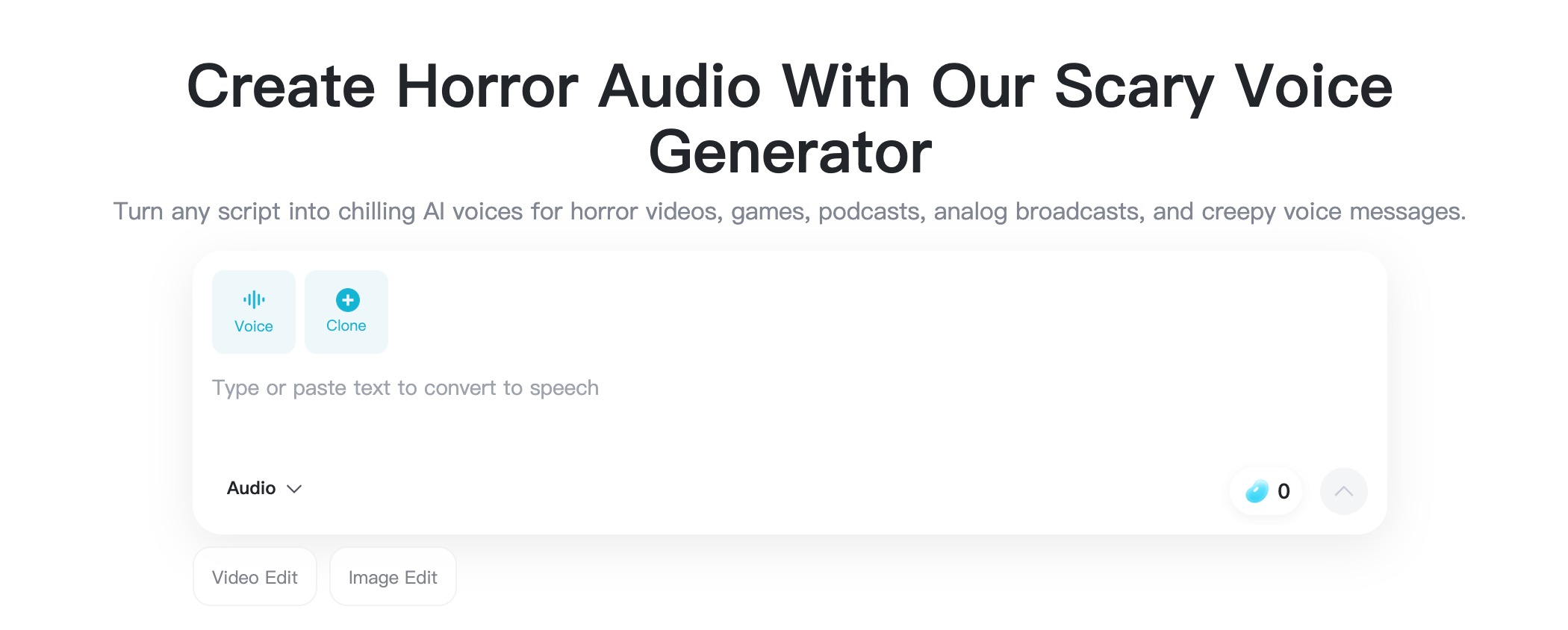
Open the insMind scary voice generator and type or paste your script into the text box. You can write narration for an analog horror broadcast, a warning for a haunted house queue, a Halloween voicemail, dialogue for a game villain, or the opening line for a ghost story podcast. The text field doubles as scary text to speech input, so every punctuation mark and line break you add directly shapes how the AI reads the scene.
Write the script the way it should be heard. Short sentences, natural pauses, and one image per line. If the line is supposed to be whispered, write it as if the listener is right next to the speaker. If it is supposed to be an official announcement, write it in clean, full sentences.
Step 2: Choose a Voice Type
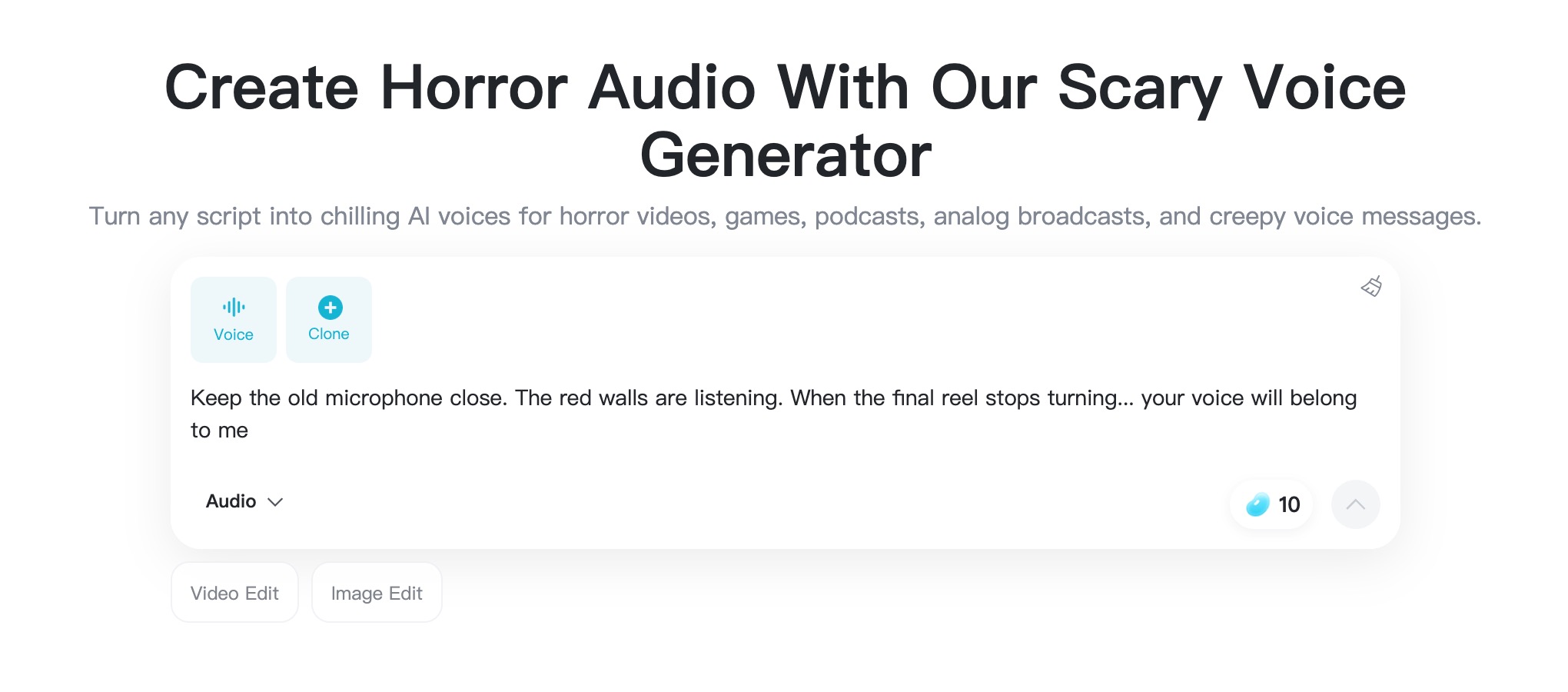
Once your script is in the box, it is time to pick the voice style that fits the role. A whisper works for confessions and secrets. An official, calm voice works for broadcasts and institutional warnings. A deeper, rougher voice works for monster dialogue and creature threats. A measured narrator voice works for ghost stories and paranormal series.
Match the voice type to the script, not the other way around. If your script is built around a calm emergency broadcast, a whisper voice will fight it. If your script is built around a creature confronting the listener, an official voice will feel wrong. The combination of script and voice type is what creates the final mood.
Step 3: Generate the Scary Voice
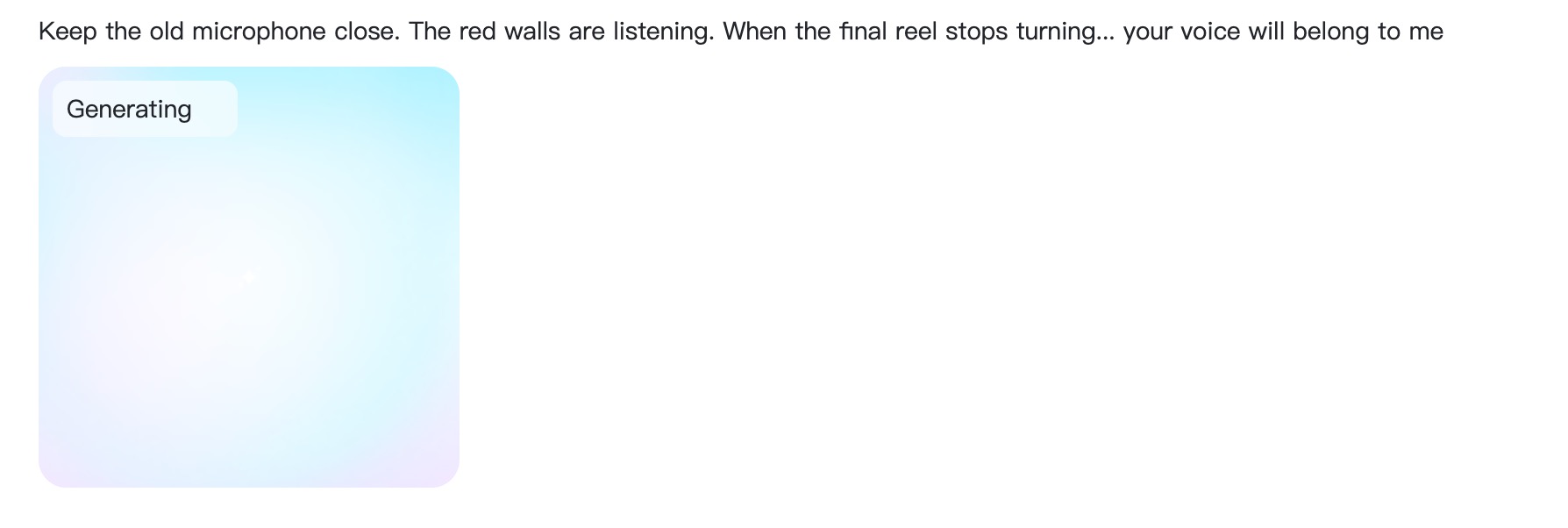
Click Generate and let insMind turn the text into creepy speech using your selected voice type. The first generation usually gives you a strong starting point. Play it through once without stopping to feel the overall mood, then play it again and listen for pacing, emphasis, and clarity.
If something is off, change one thing at a time. Try a different voice type. Add a comma to slow a line. Replace a long word with a shorter one. Make the final line more direct. Most of the time, a small edit in the script is enough to push the audio into the mood you want.
Step 4: Preview, Edit, and Download
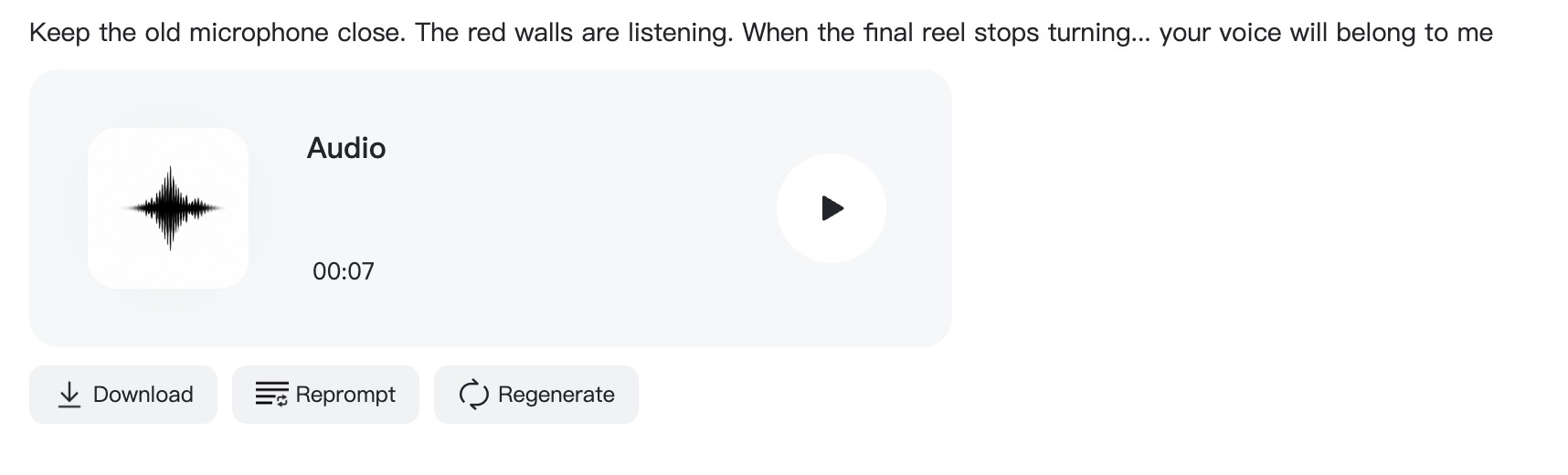
Use the preview to confirm the result is ready for your project. Check whether the first line hooks attention, whether the middle holds mood, and whether the final line lands. If needed, revise the text or switch the voice type and regenerate.
When the voiceover is ready, download the audio. You can drop it directly into a video edit, a podcast intro, a game prototype, a Halloween message, or an audio-only announcement. If you want to add VHS noise, echo, or static, layer those effects in your editing app so the original voice stays clean underneath.
FAQs About Making a Creepy Voice
What is the easiest way to make a creepy voice?
The easiest method is to write a short horror script, choose a voice type that fits the scene (whisper, official, monster, or narrator), generate the audio with an AI voice tool, and download the result. You can complete the entire workflow in a few minutes without recording equipment.
Can AI really make a voice sound creepy?
Yes. Modern AI voice tools are trained on a wide range of delivery styles, including horror-friendly tones such as whispers, calm institutional voices, and rougher creature voices. When you pair the right voice type with a focused script, the result can sound genuinely unsettling.
Do I need a microphone to make a creepy voice?
No. AI text-to-speech tools let you create creepy voices from written text, so you do not need a microphone, a quiet room, or voice acting experience. You only need a clear script and a good voice type.
What should I write in a horror voiceover script?
Write in spoken language with short sentences, clear punctuation, and one strong image per line. Describe actions and statements, not emotions. Let the voice type and pacing do the emotional work. A final line that ends on a single image usually lands best.
Which voice type is best for analog horror?
An institutional, calm, official voice usually works best for analog horror because it sounds like a transmission rather than a performance. Pair it with deliberate pacing, controlled pauses, and a final line that hints at something the listener should not know.
Can I use creepy AI voices in videos, podcasts, or games?
Yes, but review the platform's terms, licensing rules, and any content policies before publishing. Avoid using AI voices for harassment, impersonation, threats, or misleading messages. For commercial projects, confirm that your account plan covers the intended use.
Can I add effects like static or echo after generating?
Yes. Most creators download the clean AI voice first and then layer VHS noise, radio static, echo, or reverb in a video or audio editor. Keeping the original voice clean makes it easier to control the final mix and keeps the words understandable.


