Want people to feel the game before the first whistle? A strong sports hype video can turn one athlete photo, one matchup, or one team announcement into a moment that feels bigger than a routine post. The best clips do not simply show a player. They build tension, reveal confidence, and give viewers a reason to care about what happens next.
You no longer need a camera crew, a full editing timeline, or hours of footage to create that feeling. With insMind, you can turn a clear sports image and a focused prompt into a short AI-generated clip. This guide explains how to make a sports hype video from start to finish, how to shape the pacing, and how to adapt the idea for basketball or football.
Table of Contents
- 01How to Make a Sports Hype Video That Feels Cinematic
- 02Plan a Beat-by-Beat Sports Hype Sequence
- 03Sports Hype Video Examples for Basketball and Football
- 04Prompt Formula for Better Sports Hype Videos
- 05How to Make a Sports Hype Video with insMind
- 06Edit for Pace, Sound, and Publishing
- 07FAQs About Making Sports Hype Videos with AI
How to Make a Sports Hype Video That Feels Cinematic
A hype video is a compact emotional story. It usually begins with anticipation, increases the pressure, and ends with a payoff: the athlete steps into the light, the tunnel opens, the crowd rises, or the team takes the floor. That arc matters more than adding a large number of random effects.
Before opening a generator, answer four questions:
- Who is the hero of the clip: one athlete, a full team, or the rivalry itself?
- What is the emotional promise: confidence, redemption, intensity, or celebration?
- Where will viewers watch it: a vertical social feed, a wide venue display, or a website?
- What single visual moment should they remember after the clip ends?
If you can answer those questions in one sentence, you already have the core of your prompt. The insMind hype video maker then gives you a direct place to translate that concept into motion.
Plan a Beat-by-Beat Sports Hype Sequence
Even a five-second video benefits from a simple structure. Think in beats instead of a long list of shots. A short AI clip can create a complete sense of momentum when each second has a purpose.
| Beat | What viewers see | What it accomplishes |
|---|---|---|
| Hook | Tight crop, shadow, shoe detail, helmet, or focused eyes | Stops the scroll immediately |
| Rise | Camera pushes in, lights switch on, haze moves, crowd becomes visible | Builds pressure and scale |
| Action | Athlete steps forward, grips the ball, turns, or takes a ready stance | Gives the subject intent |
| Payoff | Wide arena reveal, tunnel exit, team entrance, or victory pose | Delivers the memorable finish |
Keep the sequence visually possible. If you ask for a locker room, tunnel, field, aerial stadium shot, scoreboard, and celebration in five seconds, the model has too many scene changes to resolve. One environment and one decisive action usually produce a cleaner result.
Want more control from an existing player image? An image to video workflow is useful because the photo establishes the athlete, uniform colors, and starting composition before motion is added.
Sports Hype Video Examples for Basketball and Football
Basketball naturally supports dramatic close-ups, fast direction changes, vertical movement, and arena lighting. If you are learning how to make a basketball hype video, build the concept around one recognizable ritual or pressure moment rather than a generic montage.
How to Make a Basketball Hype Video
- Tunnel-to-court reveal: Start behind the player in a dark tunnel, then push toward the bright court.
- Tipoff focus: Show the athlete tightening wrist tape, lifting their eyes, and stepping into an overhead spotlight.
- Rivalry night: Use divided lighting, tense stillness, and a final head turn toward the opposing end.
- Starting lineup intro: Give each player a separate short clip with the same light, camera speed, and background.
- Playoff pressure: Begin with an empty arena in haze, then reveal the crowd and floor lights in the final beat.
- Recruiting spotlight: Use a clean hero angle and confident stance so the athlete remains the clear subject.
For better basketball motion, use concrete verbs: dribbles once, palms the ball, takes one step forward, lifts their chin, or turns toward the court. "Looks powerful" describes an impression. "Steps from shadow into a hard overhead spotlight" gives the model a visible action.
How to Make a Football Hype Video
Football hype often depends on weight, ritual, and collective identity. When people search how to make a football hype video, they may imagine a long highlight reel, but a short AI teaser works differently. It should sell the atmosphere around the game rather than imitate real broadcast footage.
Try one of these focused directions:
- A helmet close-up that expands into a tunnel walkout
- Cleats pressing into wet turf under stadium lights
- A quarterback stepping through smoke as the camera tracks backward
- A defensive unit standing shoulder to shoulder before kickoff
- A wide field reveal with the athlete centered under the lights
Keep equipment and body position clear in the source image. Football helmets, face masks, hands, and shoulder pads can create complex edges, so avoid a crowded starting frame. If the result distorts gear, simplify the action and reduce the camera speed. A controlled step forward often looks stronger than an instruction to sprint, collide, turn, and celebrate in one shot.
You can also use a broader AI video generator when you want to test prompt-first scenes before committing to a specific athlete photo.
Prompt Formula for Better Sports Hype Videos
Not sure how to make sports hype videos consistently? Reuse a prompt framework, not the same finished prompt. Fill in the brackets with details from the team, sport, and publishing channel:
Create a [duration] [sport] hype video from the provided [athlete/team] image. Begin with [opening composition]. The athlete [single action] while [environmental change]. Use a [camera move] and [lighting style]. End on [final reveal]. Keep [identity/uniform/equipment] consistent. Use [aspect ratio]. No [unwanted elements].
Here is a football version:
Create a five-second football hype video from the provided quarterback photo. Begin with a tight helmet reflection under dim tunnel lights. The athlete takes one controlled step forward as white stadium light floods the tunnel. Use a smooth backward tracking shot and finish on a wide field entrance. Keep the uniform and face mask consistent. Use 9:16. No text, logos, flicker, or extra players.
Use exclusions sparingly. A long negative list can compete with the main action. Prioritize the most important restrictions: no extra people, no text, no logos, no watermark, and no distorted equipment.
How to Make a Sports Hype Video with insMind
The landing page supports a practical image-and-prompt workflow. You provide the visual direction, select the available generation settings, and let the model create the motion. Here is the exact four-step process.
Step 1: Open the Hype Video Maker and add your sports photo
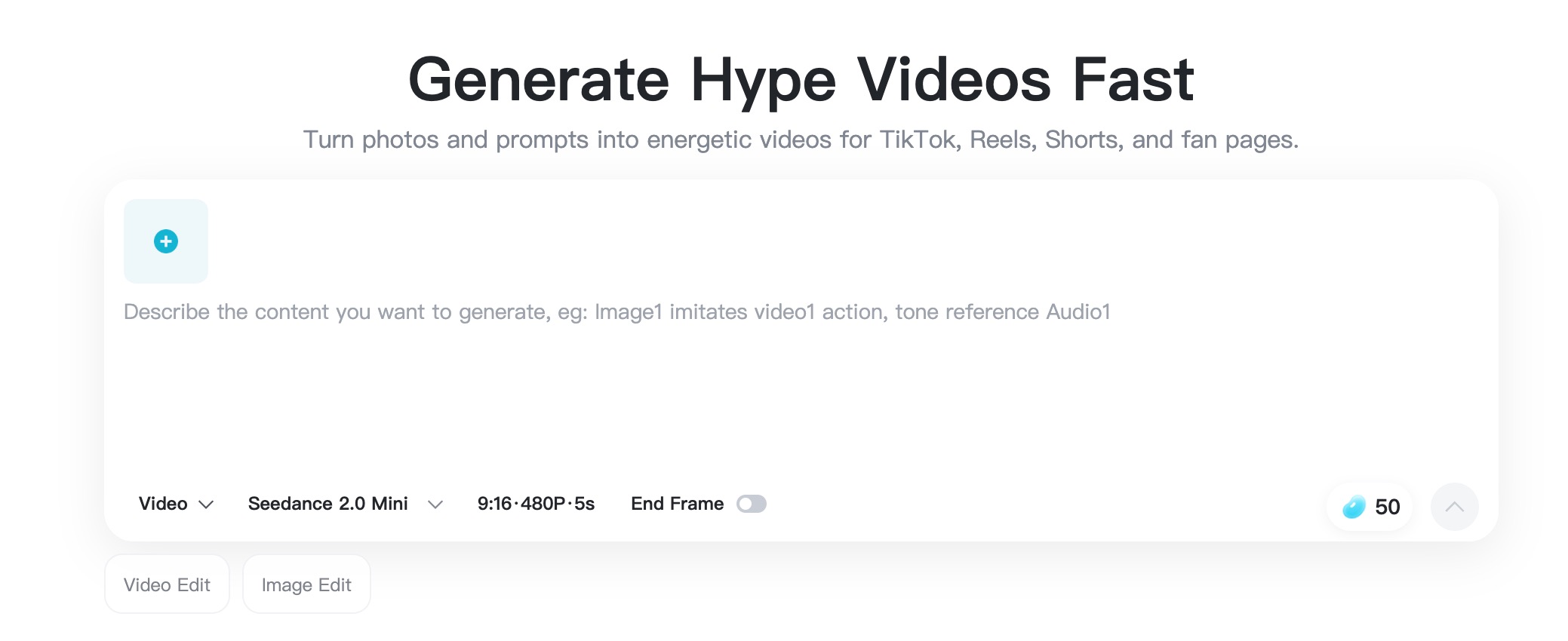
Open the insMind Hype Video Maker and choose the Image to Video workspace. Add a clear athlete or team photo using the plus icon in the prompt panel. Use an image with one obvious subject, good lighting, and enough space around the body for camera movement.
For a player entrance, a three-quarter or full-body image gives the model more room to create a step, turn, or stance. For a close-up intensity clip, a sharp portrait can work well. Avoid images where arms, equipment, or faces are already cropped in awkward places.
Step 2: Describe the sports action and emotional payoff
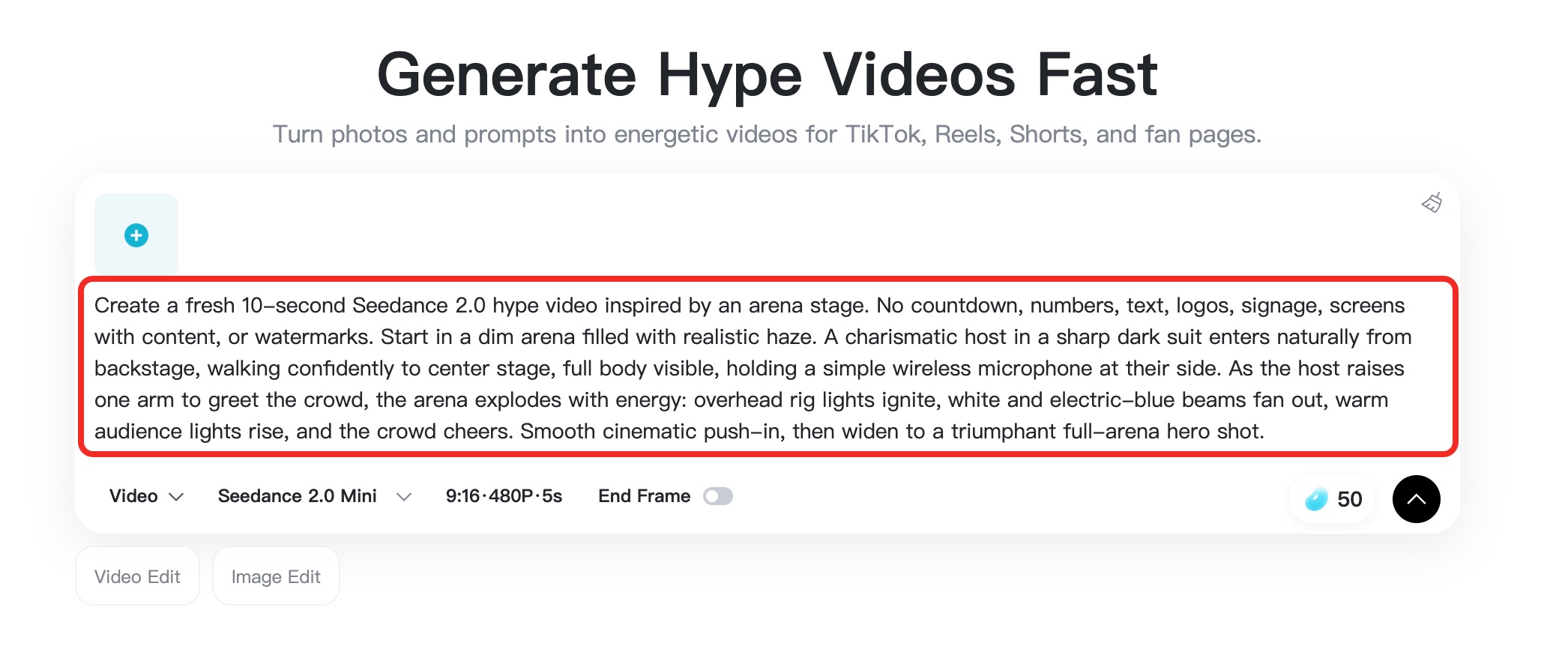
Write a prompt that connects the subject, action, camera, environment, and ending. A useful example is: "Create a seven-second basketball hype video. Start with a tight low-angle push-in, add arena lights and light haze, then reveal the player stepping onto the court as the crowd rises. Keep the athlete recognizable, use crisp motion and bold contrast, and add no text, logos, or watermark."
Notice what the prompt does not do. It does not ask for ten cuts or several locations. It gives the model one scene, one camera path, and one clear reveal. You can replace basketball with football, volleyball, hockey, soccer, or another sport while keeping the same prompt logic.
Step 3: Choose settings, generate, and review the result
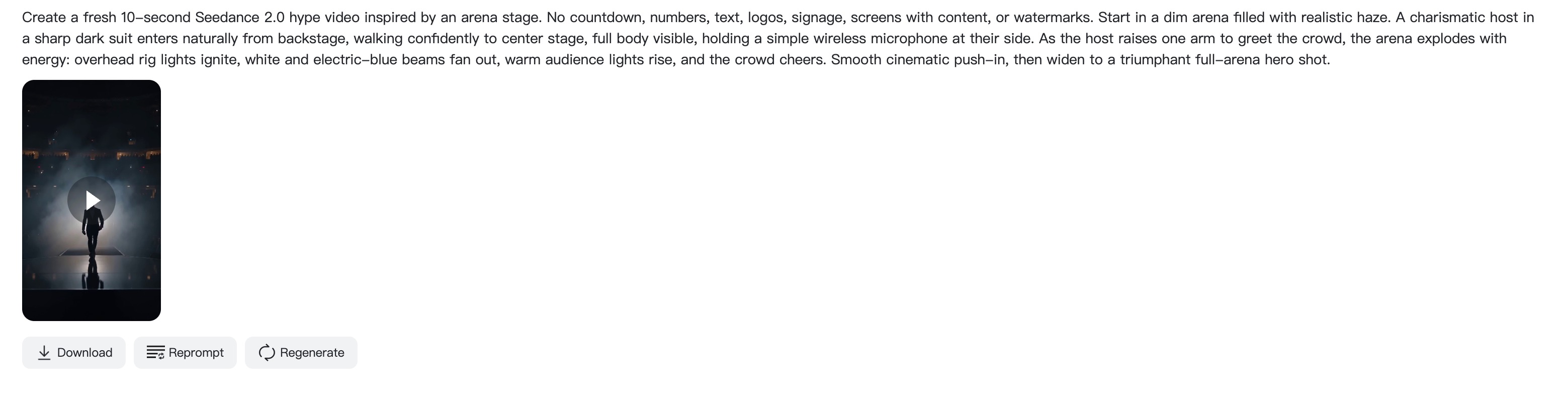
Open the model menu and choose an available option that suits your desired motion. The current interface displays models such as Seedance 2.0 Mini and Wan options. Set the aspect ratio, duration, and quality, then select Generate and wait for insMind to create the clip.
Use 9:16 for TikTok, Reels, Shorts, and Stories. A landscape format is more suitable for YouTube, websites, email banners, and venue displays. When the result appears, play it and check the subject, camera motion, lighting, and final reveal.
Step 4: Download or refine your best version
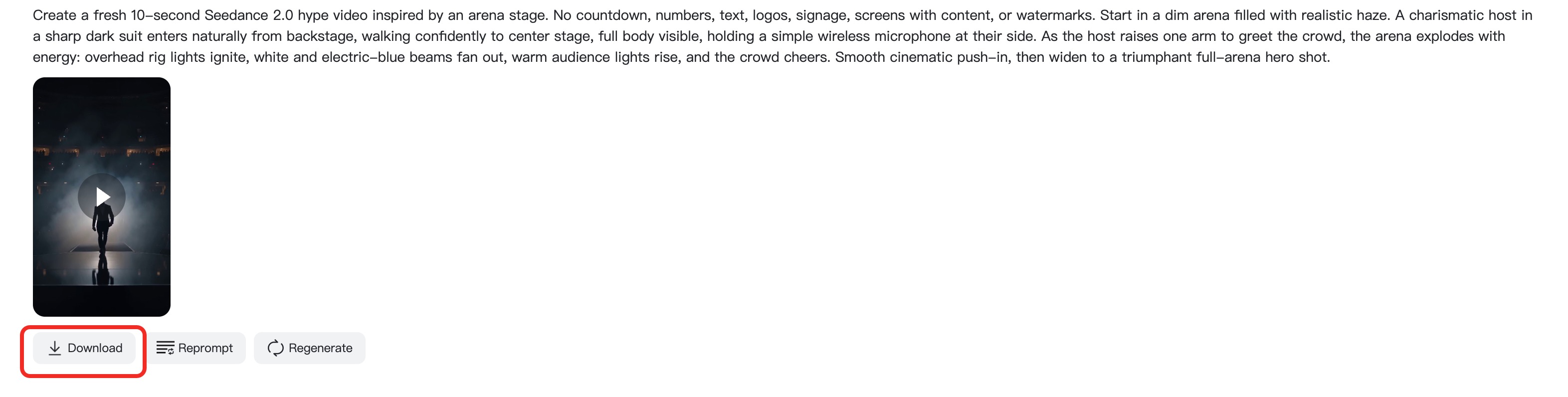
When the video looks right, select Download beneath the result card. If the direction needs work, use Reprompt to change the instructions or Regenerate to explore another variation before saving the final clip.
Review the first and last frames carefully. Does the opening create curiosity? Does the final image feel intentional enough to hold for a team name or game date in a later edit? If the clip feels flat, revise one variable at a time rather than rewriting everything.
Edit for Pace, Sound, and Publishing
The generated clip is the visual foundation, not necessarily the entire finished post. After download, you can add licensed music, a team mark you have permission to use, a game date, or several athlete clips in an AI video editor.
For a stronger final edit:
- Put the first visual change in the opening second.
- Cut on a musical hit, light change, footstep, or camera acceleration.
- Keep text readable for at least one second and inside mobile safe areas.
- Use one or two type styles, not a different effect on every word.
- End on a clean frame that can hold the matchup, date, or call to action.
Music should support the curve of the video. A rising pulse works for anticipation; a single bass impact can sell the reveal. Make sure you have the right to use the audio, player likenesses, team logos, league marks, and game footage in the context where you plan to publish.
FAQs About Making Sports Hype Videos with AI
How long should a sports hype video be for social media?
For a single AI-generated moment, five to ten seconds is often enough to create a hook, a rise, and a reveal. A finished team promo can combine several short generations into a 15- to 30-second edit. Match the length to the channel and avoid holding a shot after the emotional payoff has passed.
Can I make a sports hype video from one photo?
Yes. Choose a sharp image with a clear subject and room for movement, then describe one realistic action, a camera move, atmosphere, and the final frame. One-photo workflows work especially well for athlete introductions, tunnel walkouts, lineup reveals, and recruiting posts.
What is the best source image for a basketball hype video?
Use a well-lit portrait, three-quarter view, or full-body photo where hands, feet, and the ball are visible when they matter to the action. Avoid heavy motion blur, overlapping players, blocked faces, and crops that cut through joints or equipment.
How do I keep a football uniform consistent in an AI video?
Start with a clear uniform and reduce the complexity of the motion. Tell the model to keep the jersey, helmet, face mask, and colors consistent. If details drift, use a shorter clip, a slower camera move, or a closer framing that asks the model to resolve fewer elements.
Can I use an AI sports hype video commercially?
Check the platform terms and confirm that you have rights to every source image, athlete likeness, logo, trademark, and audio track. AI generation does not automatically grant permission to use protected team or league assets. Generic sports scenes and properly licensed materials reduce legal risk.
Should I generate a vertical or horizontal sports video?
Use vertical video for Reels, TikTok, Shorts, Stories, and mobile fan pages. Choose horizontal video for YouTube, websites, presentations, and venue screens. Decide before generation so the athlete and action are composed correctly inside the frame.