


Trying to publish a Facebook video ad that looks sharp everywhere, but keeps getting cropped, compressed, or awkwardly framed? That usually means the creative missed a placement rule, not that the idea was bad. The trick is to match the facebook video ad specs to the placement first, then shape the edit around the screen the viewer will actually see.
This guide breaks down facebook video ad size, facebook ad video size, video dimensions for facebook ads, facebook video ad dimensions, and facebook ad video length in plain English. You will also see how insMind helps you build a polished ad faster, whether you are making a product promo, a UGC-style offer, or a simple awareness clip.
And yes, we are talking about the real-world facebook ad video pixel size 2026 question too. In practice, that means exporting clean 1080-based masters, choosing the right ratio, and giving Meta enough detail to encode well without fighting the layout.
Facebook Video Ad Specs at a Glance
Want the short version before you export? The safest approach is to start with the placement, then pick the ratio and length that fit it. Facebook video ads are not one-size-fits-all, because feed, stories, reels, and in-stream inventory all ask for slightly different framing.
Think of the specs as two layers: the upload layer and the creative layer. The upload layer covers file type, codec, file size, and maximum duration. The creative layer covers ratio, subject placement, safe zones, and how quickly your message lands. If you ignore the second layer, even a technically valid file can feel off.
| Placement | Recommended ratio | Recommended pixel size | Practical length | Best use |
|---|---|---|---|---|
| Facebook Feed | 4:5 or 1:1 | 1080 x 1350 or 1080 x 1080 | Up to 60 minutes, but 15 to 30 seconds is usually easier to watch | Product demos, offers, UGC clips, awareness ads |
| Facebook Stories and Reels | 9:16 | 1080 x 1920 | Short cuts work best; Stories support 1 to 15 seconds in Meta help docs | Fast hooks, vertical brand spots, creator-style ads |
| In-stream mobile | 16:9 | 1920 x 1080 | 5 seconds to 10 minutes | Longer explainers, reviews, and story-led ads |
| In-stream desktop | 16:9 | 1920 x 1080 | 5 to 15 seconds | Concise brand spots and short calls to action |
For the format side, Meta generally supports MP4 and MOV, and its guidance also points to H.264 video with AAC audio as a strong default. That is why most teams treat MP4 as the safest facebook video ad format when they need fewer upload surprises and smoother playback across devices.
If you only remember one practical rule, remember this: choose a clean 1080p master and then let the ratio do the placement work. A Facebook ad video that is crisp at 1080 pixels wide will usually survive compression much better than a cramped file that was over-edited before upload.
Which Facebook Video Ad Size Should You Choose?
What is the right facebook ad video size for your campaign? The answer depends on where the ad will appear most often. If you are aiming at the feed, 4:5 is the sweet spot because it fills more screen real estate without forcing a full vertical composition. If you are aiming at mobile-first placements, 9:16 is usually the smarter move.
Here is a simple way to think about the most common facebook ads video size choices.
- Choose 4:5 when you want a feed ad that feels tall, clean, and modern.
- Choose 1:1 when you need a balanced square asset that can travel across placements.
- Choose 9:16 when the campaign is built for Stories or Reels first.
- Choose 16:9 when you expect in-stream inventory, product walkthroughs, or a more cinematic layout.
The real question is not only which ratio looks good, but which ratio protects your message. A logo in the corner of a 16:9 frame can disappear in a vertical crop. A subtitle bar that looks fine in a feed ad can collide with interface elements in Stories. So when you plan facebook video ad dimensions, treat the composition as part of the spec, not an afterthought.
That is also where the phrase facebook video ad pixel size matters. Meta does not reward bigger numbers for their own sake. It rewards clarity, enough room for text, and a file that stays sharp after compression. In 2026, a strong 1080p build is still the most useful starting point for most advertisers.
Need a fast starting point? Use AI video generator tools to test the idea, then refine the strongest version into the final Facebook ad. If your creative depends on a script or spoken explanation, the text to video AI workflow is often a better fit than trying to edit a long manual timeline.
Facebook Video Ad Format and Length Rules
Let us talk about the part most marketers care about after the dimensions: how long the video can be. The exact facebook ad video length depends on placement. Meta help pages show very different caps for feed, stories, and in-stream inventory, which is why you should always check the final placement in Ads Manager before launch.
For feed placements, Meta allows videos up to 60 minutes, with a maximum file size of 4 GB in the current help guidance. That does not mean a 60-minute ad is a good idea. It simply means the platform can handle long-form video when the campaign needs it. For most performance ads, shorter is still better because attention drops fast and your hook has to earn the next second.
For Stories, current Meta help notes show 1 to 15 seconds as the practical story range. For Reels, vertical 9:16 creative is the expected shape, and short, punchy edits tend to fit the feed behavior better than stretched-out explanations. In-stream placements are different again: mobile in-stream can run from 5 seconds to 10 minutes, while desktop in-stream is commonly 5 to 15 seconds.
So what does that mean in plain language? The best specs for facebook video ads are not just about meeting the maximum. They are about matching the pace of the placement. A Reel should open quickly, a feed ad should show value without waiting, and an in-stream ad should give the viewer a reason to stay through the full message.
When people search for facebook video ad specs, they usually want a technical answer. But the creative answer matters more: use the right opening frame, keep essential text inside a safe zone, and make sure the ad still works if someone sees it muted, half-watched, or on a small screen while scrolling.
Format basics that keep uploads healthy
- Use MP4 or MOV when possible.
- Export H.264 video with AAC audio when you can control the encoder.
- Keep subtitles readable and avoid tiny text near the edges.
- Do not cram multiple aspect ratios into one canvas unless the placement truly needs it.
Length basics that keep ads watchable
- Use 6 to 15 seconds for quick awareness and offers.
- Use 15 to 30 seconds for product storytelling.
- Use longer cuts only when the message needs a walkthrough.
- Put the product or promise on screen early.
If you also want the same creative logic across multiple AI workflows, a broader AI product video generator workflow can help you adapt the same message to different placements. That is especially useful when you want one concept for Facebook feed, another for Stories, and a third for a landing page or paid social test.
How to Create Facebook Ads with insMind
Want to turn the specs into an actual ad instead of just reading about them? Here is a simple How to workflow for the insMind Facebook video maker. The idea is to help you move from placement thinking to a finished video without getting lost in editing software.
Step 1: Open the Facebook video maker and choose your starting point
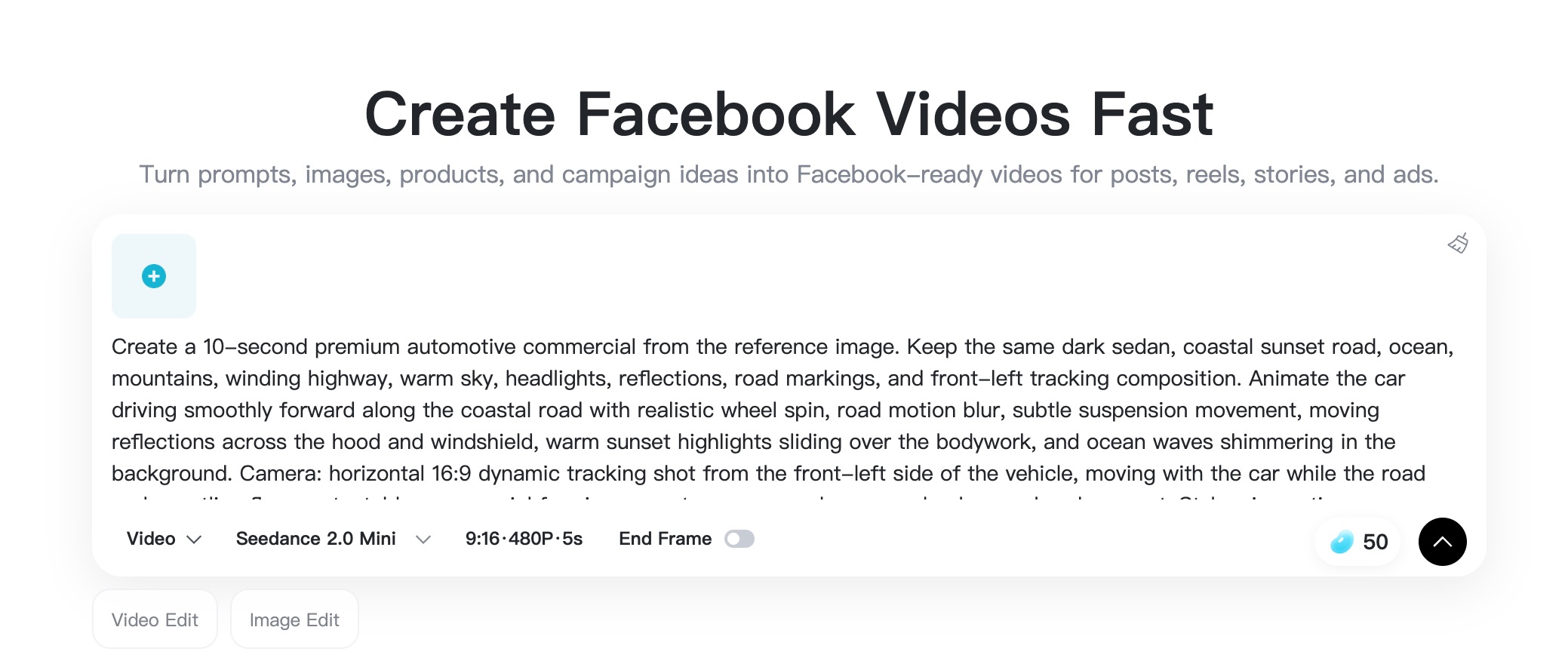
Start inside the Facebook video maker page. If your ad needs to be built from a prompt, begin there. If you already have a visual concept, product image, or campaign image, use the generator workflow that matches your source material so you can keep the final composition aligned with the placement.
Step 2: Enter a prompt that matches the ad and the placement
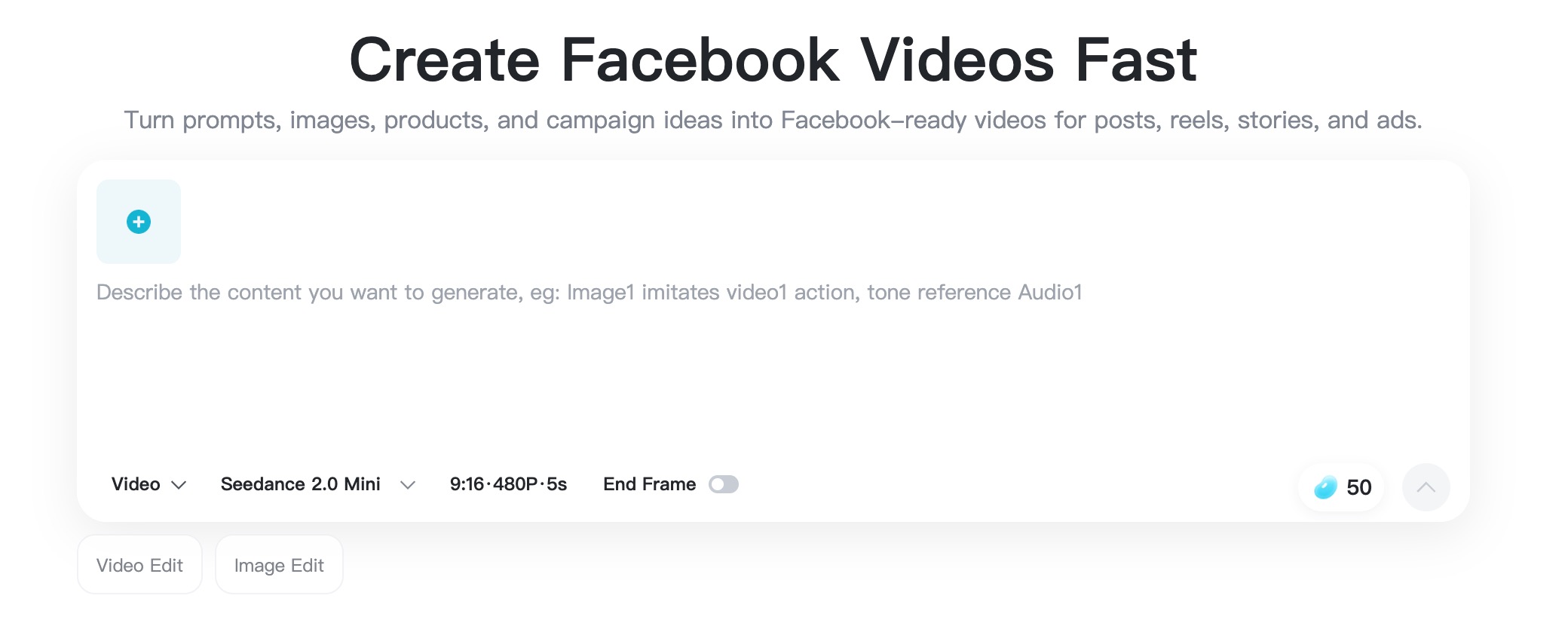
Write a prompt that names the product, audience, hook, mood, and screen shape. For example, ask for a vertical beauty ad with a fast opening, clean captions, and a bold closing CTA. If you are testing a feed ad, say that directly so the composition does not drift into a tall reel layout.
This is the moment to describe the facebook video ad format in plain language: 4:5 feed, 9:16 stories, or 16:9 in-stream. Clear instructions here save you from fixing the crop later.
Step 3: Set the look, pace, and output goal
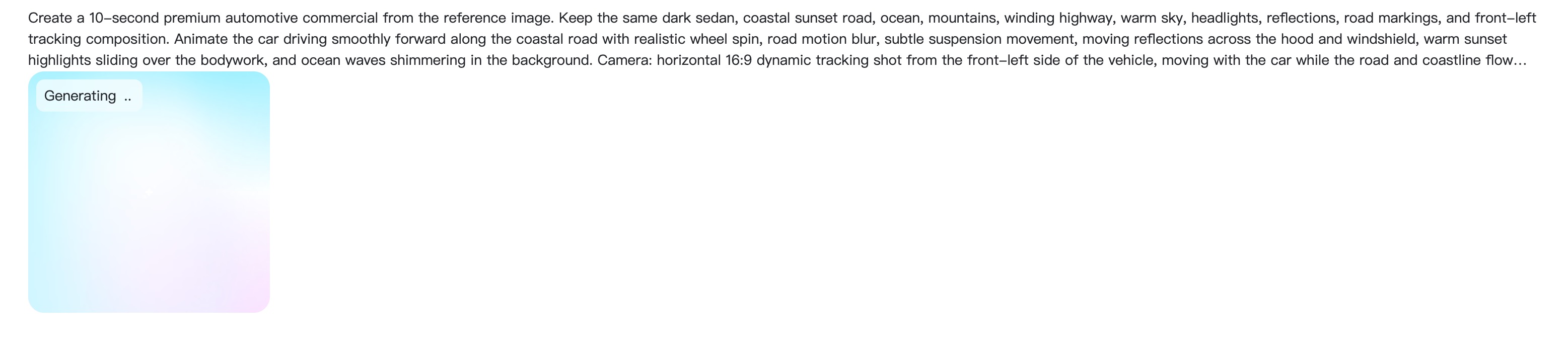
Adjust the creative direction so the result matches your campaign. Keep the pace tight for a short promotional ad, or add more room for a product explanation. If the ad will live in Stories or Reels, make sure the important action stays centered and the on-screen text stays readable.
You can also treat this step as a simple QA pass. Ask yourself whether the video still makes sense if the viewer only sees the first two seconds. If not, tighten the prompt before generating the final version.
Step 4: Generate, review, and download the ad draft
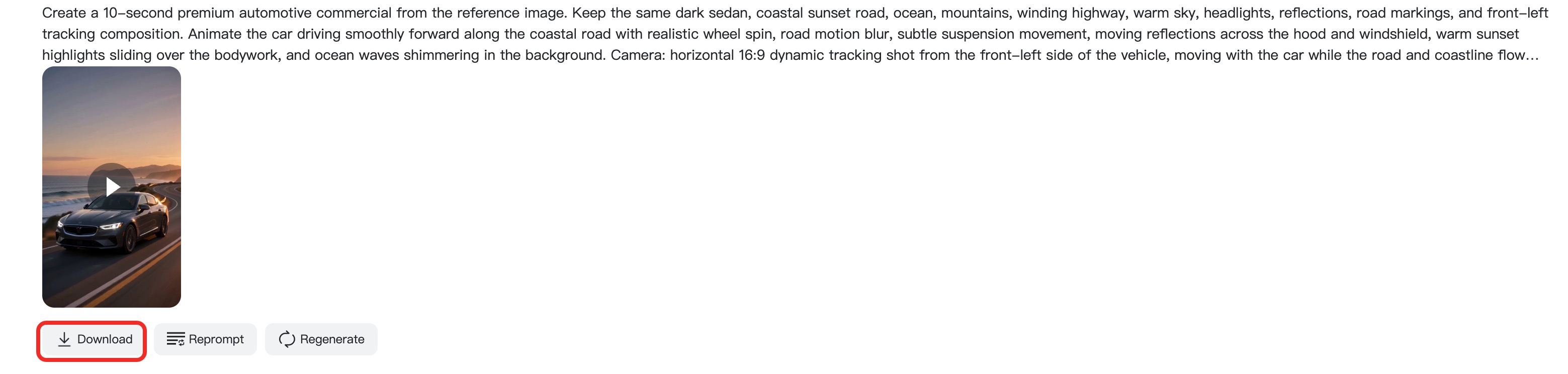
Generate the first cut, check how the video frames the main subject, and confirm that the text is not too close to the edge. If the timing feels slow or the layout feels cramped, adjust the prompt and regenerate. When it looks right, download the video and upload it to Ads Manager in the placement you planned for.
The fastest way to make this workflow pay off is to create one clean master and then spin off placement-specific versions. That is where insMind can help you move from concept to campaign asset without rebuilding the ad every time the ratio changes.
FAQs About Facebook Video Ad Specs
What is the best Facebook video ad size for feed?
For feed placements, 4:5 at 1080 x 1350 is often the most practical choice because it gives you more screen coverage than square without requiring a full vertical build. 1:1 at 1080 x 1080 is still useful when you want a flexible cross-placement export.
What is the best Facebook video ad size for Stories and Reels?
Use 9:16 at 1080 x 1920. That is the most natural shape for vertical mobile viewing, and it keeps the video filling the screen instead of sitting inside awkward side margins.
What is the maximum Facebook ad video length?
It depends on placement. Feed ads can run up to 60 minutes, while mobile in-stream can run from 5 seconds to 10 minutes and desktop in-stream commonly runs from 5 to 15 seconds. Stories are much shorter, with Meta help pages showing 1 to 15 seconds.
What file format should I use for Facebook video ads?
MP4 and MOV are the safest choices, and H.264 with AAC audio is the most dependable export combo. That is usually the least risky facebook video ad format if you want smoother playback and fewer upload problems.
Do I need different video dimensions for Facebook ads and Reels?
Yes. You can sometimes reuse the same idea, but the frame should change. A feed ad may work at 4:5 or 1:1, while Reels and Stories want 9:16. Matching the ratio to the placement usually improves both completion rate and visual clarity.
Can insMind help me make multiple ad versions fast?
Yes. You can use insMind to generate a main concept, then make separate exports for feed, Stories, and Reels. That saves time when you need several cuts from one campaign idea and want each version to look native to its placement.

I'm a professional writer and amateur photographer, and I author insightful articles at insMind to help you integrate AI into compelling image creation.


