


 Ryan Barnett·July 16, 2026
A good outro does more than say goodbye. It gives viewers a clean final beat, reminds them what to do next, and makes your whole video feel finished instead of abruptly cut off.
If you have ever wondered how to make a YouTube video outro without opening a complicated timeline editor, the answer can be much simpler than building animated end screens from scratch. With insMind, you can start from a final image or closing frame, describe the last few seconds you want, and generate a short outro clip with AI.
Table of Contents
What Is a Video Outro?
A video outro is the ending section of a video. It can be a short goodbye, a subscribe reminder, a product wrap-up, a final logo moment, a soft call to action, or a closing scene that points viewers toward the next step. On YouTube, creators often use outros to encourage viewers to subscribe, watch another video, or remember the creator's brand.
For social videos, an outro may be even shorter. A creator waves at the camera, a product sits in a polished final shot, a recipe is presented on the table, or a travel clip pulls back from a scenic view. The best outros feel intentional but not forced. They help the viewer understand, "This is the finish."
Why Your Outro Matters
So why spend time on the final few seconds? Because endings shape memory. A messy cut can make a useful tutorial feel unfinished, while a polished outro makes the same video feel more professional. If you are publishing YouTube videos, Shorts, Reels, TikToks, product clips, or tutorials, the outro is also your last chance to guide the viewer.
A strong outro can help you ask for a follow, send viewers to another video, reinforce a product detail, or simply leave a warmer impression. Tools like Canva and Renderforest often focus on templates and end-screen layouts. That works well for static graphics, but if you want an outro that feels like part of the footage, an AI-generated closing clip can be more natural. You can also explore insMind's image to video workflow when you want to animate a still frame beyond outro use cases.
How to Make a Video Outro with insMind
Here is the easiest way to learn how to make a video outro with insMind. The workflow starts with your ending image, then uses a prompt to define the motion, pacing, and final action.
Step 1: Upload Your Ending Image
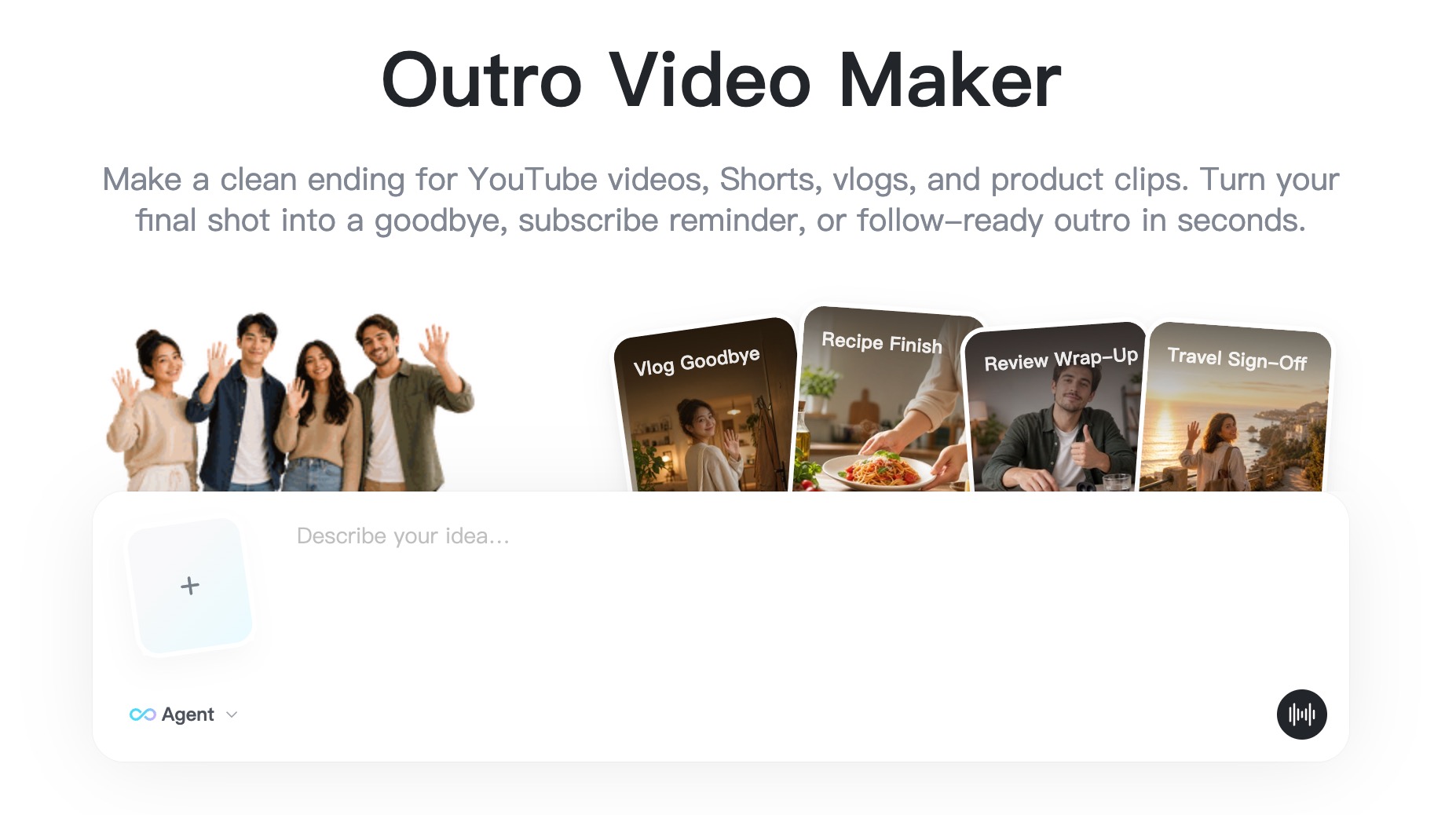
Open the outro video maker and upload the image or final frame you want to turn into an ending clip. This could be a creator waving goodbye, a finished dish, a product close-up, a travel sign-off, a group smile, or a review wrap-up shot.
Pick a frame that already looks like the end of the story. Clear faces, clean product placement, and simple backgrounds usually give the AI more room to create natural motion.
Step 2: Describe the Outro Action
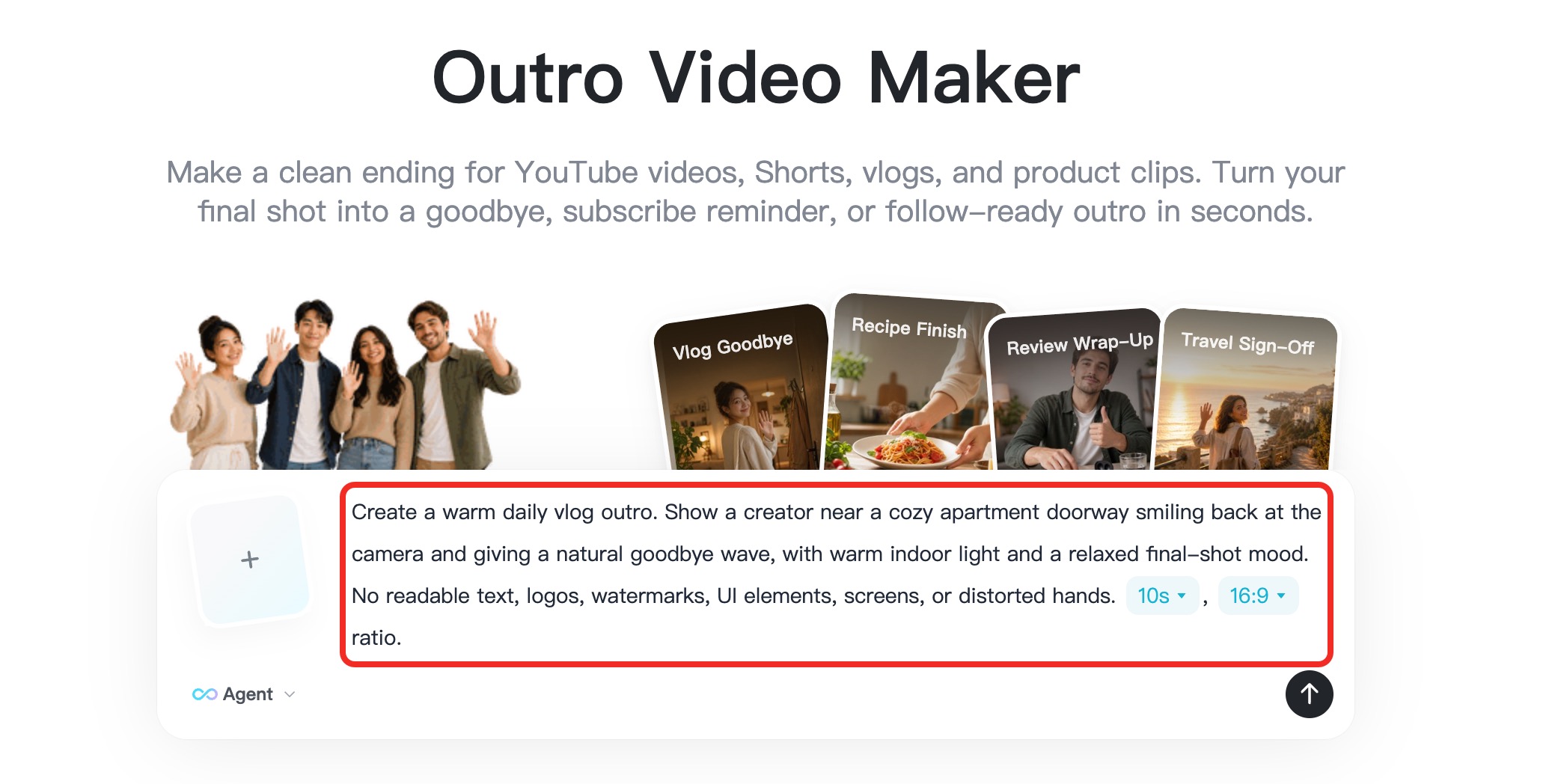
Next, write what should happen in the final seconds. Be specific: mention the goodbye gesture, the camera move, the lighting, the mood, the aspect ratio, and the length. For example, you might ask for a warm smile, a natural wave, and a slow cinematic pull-back in 16:9 for a YouTube ending.
If you are making mobile content, switch the prompt toward 9:16 and keep the action closer to the subject. For creators who also make short-form clips, insMind's AI YouTube Shorts generator can help shape vertical video ideas for social platforms.
Step 3: Generate the Outro Video
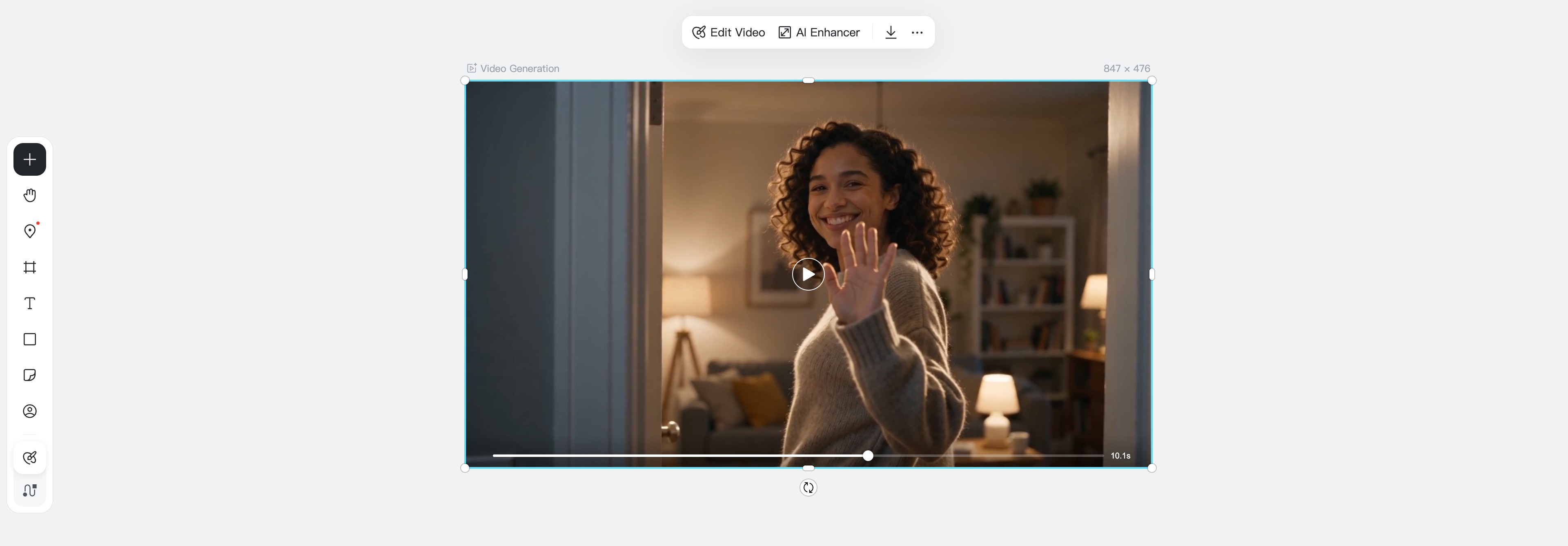
Click generate and let insMind turn the still image into a moving outro. The AI adds motion, pacing, and a final beat while keeping the scene aligned with your prompt. You do not need to cut keyframes by hand or build a separate animated template.
Review the first result with a simple question: does the ending tell viewers what to feel or do next? If the answer is almost, revise your prompt with concrete changes such as "slower pull-back," "warmer kitchen light," "clearer product placement," or "more natural hand wave."
Step 4: Download and Add It to Your Video
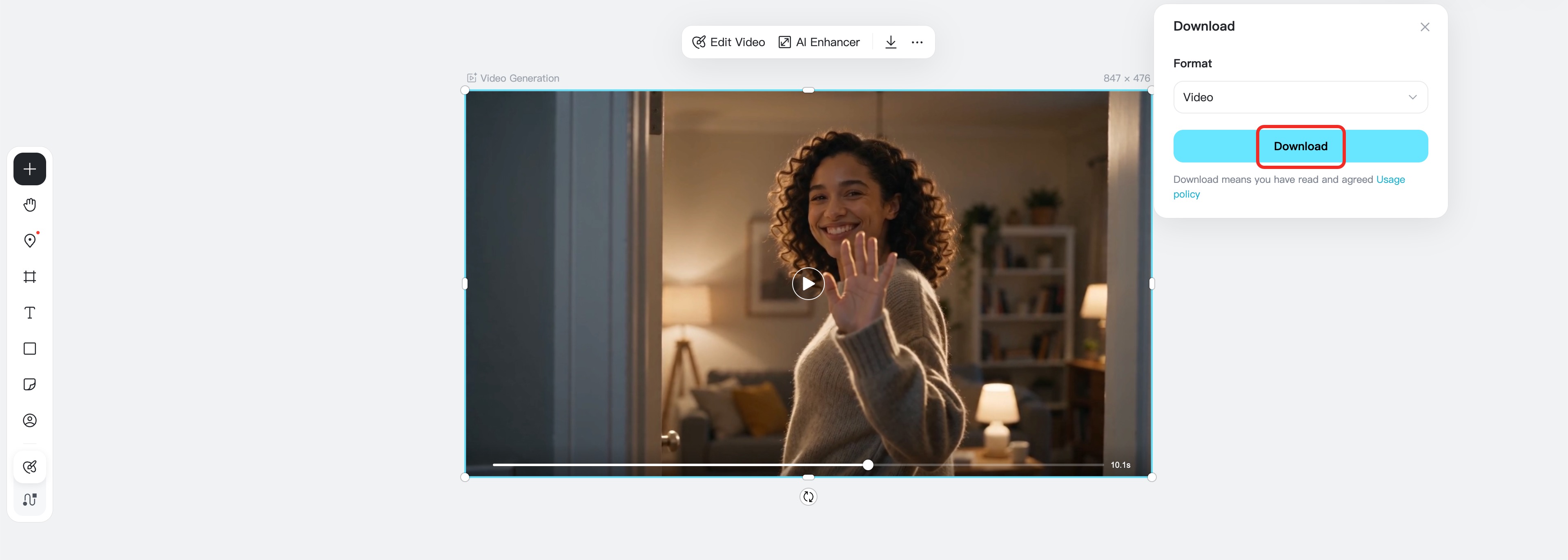
When the outro looks right, download the clip and add it to the end of your main edit. It can work as the final scene for YouTube videos, product demos, tutorials, vlogs, course clips, social ads, or website videos.
Want to create more than an ending? Try the broader text to video AI workflow when you want to generate scenes directly from a written prompt, or use the main AI video tools hub to explore more formats.
Tips for Better Outro Videos
- Start with a real ending moment. A frame that already feels like a goodbye, reveal, or wrap-up will usually outperform a random middle-of-video screenshot.
- Write the final action clearly. Instead of "make it cool," describe a wave, smile, hand gesture, product turn, camera pull-back, or final look toward the camera.
- Match the platform. Use 16:9 for standard YouTube and website videos. Use 9:16 for Shorts, Reels, TikTok, and other mobile-first posts.
- Keep text out of the generated scene. If you need subscribe buttons or end-screen text, add them later in your editor so they stay crisp and readable.
- Refine one thing at a time. If the first clip is close, change the camera move or gesture first instead of rewriting the whole prompt.
Mistakes to Avoid
Not getting the result you expected? The most common issue is an unclear source image. If the subject is tiny, cropped awkwardly, or hidden in a busy background, the final motion may feel less controlled. Another mistake is asking for too many actions in ten seconds. A good outro usually needs one clean idea: wave goodbye, present the product, pull back from the scene, or hold a final smile.
Also avoid relying on AI-generated text inside the video. For a professional YouTube outro, generate the motion first, then add end-screen elements, subscribe prompts, or next-video cards in your editing workflow. That gives you the best of both worlds: natural AI motion and crisp readable graphics.
Frequently Asked Questions
How do I make a YouTube video outro?
Upload a final image or closing frame to insMind's outro video maker, describe the goodbye action and camera movement, generate the outro clip, then download it and place it at the end of your YouTube edit. Use 16:9 if you are making a standard YouTube video.
Can I make an outro without editing skills?
Yes. With an image to video workflow, insMind lets you generate the moving outro from an image and prompt, so you do not need to animate keyframes or build a template manually. You only need to download the finished clip and add it to your video.
What should I include in an outro prompt?
Mention the subject, final gesture, mood, camera movement, length, and aspect ratio. If you want to build a scene from words only, a text to video AI workflow can help. A strong prompt might say: "The creator smiles, waves goodbye, and the camera slowly pulls back with warm light, natural hands, 10 seconds, 16:9."
Can I use the same outro for Shorts or Reels?
You can reuse the same idea, but it is better to generate a vertical 9:16 version for Shorts, Reels, and TikTok. For mobile-first endings, the AI YouTube Shorts generator is a useful related tool. Vertical outros keep the subject larger and make the final action easier to see on mobile screens.
Create Your Outro Today
Your final seconds are too valuable to leave as a hard cut. With insMind, you can turn one closing image into a polished outro that feels connected to the rest of your video. Upload the frame, describe the last action, generate the clip, and give viewers a better reason to remember you.
I'm a tech enthusiast and writer who loves exploring AI, digital tools, and the latest tech trends. I break down complex topics to make them simple and useful for everyone.


