Need one flexible format that can work across Facebook feed posts, ad placements, cover banners, and live video intros? That is exactly where Facebook video templates help. Instead of starting from scratch every time, you can build a repeatable layout, adjust the aspect ratio and pacing, and ship a cleaner result that feels made for the placement.
With insMind, you can turn a product shot, a campaign idea, or a short prompt into a Facebook-ready clip without wrestling with a full editing timeline. If you are comparing AI video generator options, this workflow is built for speed, flexibility, and social-first output.
Table of Contents
What Facebook Video Templates Actually Solve
A Facebook video template is not just a pretty frame. It is a practical starting point that helps you keep the right composition, motion, and message for a specific placement. That matters because a feed post, a paid ad, a cover banner, and a live video intro all ask for something slightly different.
Feed content needs a quick hook. Ads need clearer product focus and stronger CTA pacing. Cover and header videos need a wide composition that keeps the brand centered and readable. Live video visuals, on the other hand, often work best as a short intro loop, a waiting screen, or a branded announcement clip.
If you are comparing facebook template video ideas or looking for video templates for facebook that can flex across placements, the template approach saves time because you only have to solve the layout once.
If you have ever searched for a Facebook video templates style that works across placements, you already know the real problem: one export rarely fits every use case. A template system gives you structure first, then flexibility.
Which Facebook Placement Needs Which Template?
Different Facebook placements reward different visual choices. Want the fastest way to avoid awkward crops and dead space? Match the template to the surface before you generate.
| Placement | Best Ratio | Template Focus | What to Prioritize |
|---|---|---|---|
| Feed post | 1:1 or 4:5 | facebook video post template | Fast hook, clear subject, readable text zone |
| Paid ad | 4:5 or 9:16 | facebook ad video template | Product clarity, social proof, strong CTA frame |
| Cover / header | 16:9 or wide crop | facebook cover video template / facebook header video template | Brand identity, safe center space, smooth motion |
| Live video intro | 16:9 or 1:1 | facebook video cover template | Countdown feel, title card, looping pre-live energy |
For posts, the first two seconds matter most. For ads, the viewer needs to understand the offer before the scroll moves on. For cover videos and header videos, the composition should breathe more, because Facebook crops those surfaces differently on desktop and mobile. Live video templates are a bit like a waiting room for attention: they should feel branded, not busy.
If you want a broader starting point, a image to video workflow is useful when your Facebook video template starts from a product photo or campaign visual. If you only have a concept, text to video gives you a clean way to build the scene from a prompt instead.
Why insMind Fits Facebook Video Templates
insMind works well for Facebook content because it keeps the process simple. You do not need to jump between tools to create a template, shape the prompt, and refine the final clip. You can start with an image, start with text, and then use the same interface to control the visual direction.
That matters for social publishing. A Facebook video ad template may need a product shot with motion. A Facebook video post template may need a punchier opening line. A live video waiting screen may need a calmer background loop. With insMind, those variations stay close to one workflow instead of becoming separate production projects.
The same goes for final polish. If your template needs a tighter crop, a subtitle-safe frame, or a more balanced ending, a video editor style cleanup step can help you refine the result without rebuilding it from nothing. That is especially handy when you are testing multiple Facebook video templates free of friction and want to compare which version feels best.
Here is the short version: insMind gives you one production path for four Facebook jobs. That is why it is useful for posts, ads, covers, and live video promos all at once.
How to Create Facebook Video Templates with insMind
Here is the practical four-step workflow. The screenshots below show the real insMind interface flow, so you can follow the same sequence when you build your own Facebook template video.
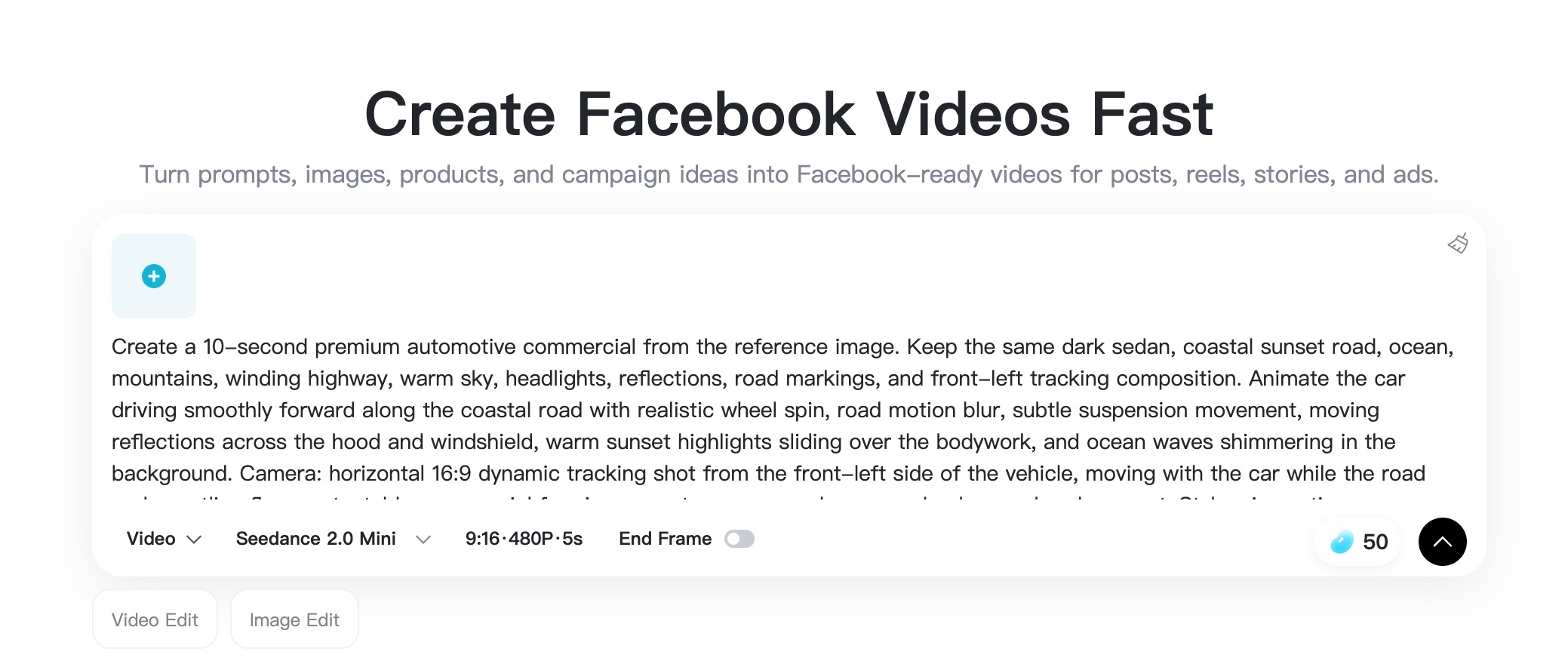
Step 1: Open the Facebook video maker and choose your starting mode
Start in the Facebook video maker and decide whether your template begins with an image or with a prompt. If you already have a product photo, logo visual, or brand shot, begin with image-to-video. If you want the whole clip built from a concept, begin with text-to-video.
For Facebook posts and ads, this choice matters. A product photo gives you a very clear anchor for motion. A prompt-only start is better when you want a custom promo or a campaign concept that does not depend on an existing image.
Step 2: Write a Facebook-specific prompt
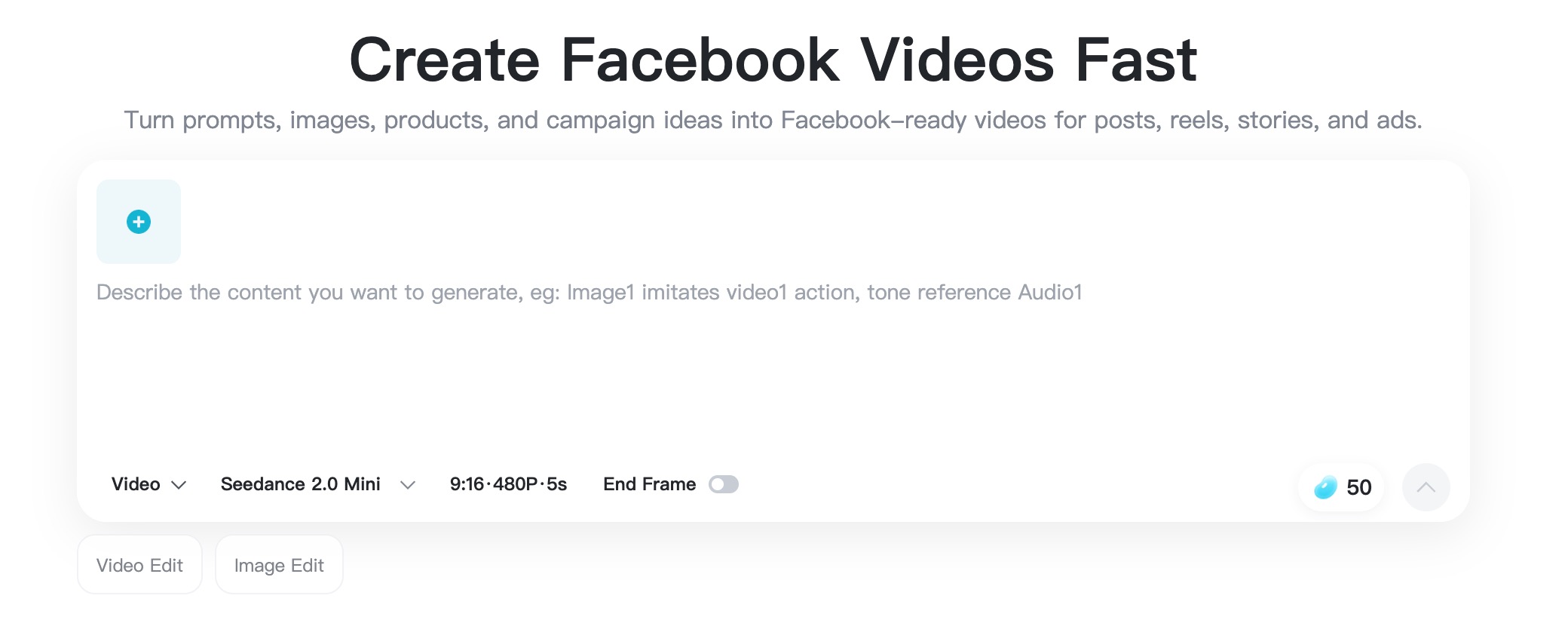
Now describe the exact use case. Do not just say “make a Facebook video.” Say whether it is a feed post, an ad, a cover banner, or a live intro. Add the mood, motion, and composition you want to protect. That is what keeps the output from looking generic.
For example: “Create a 6-second Facebook ad video for a skincare serum. Keep the bottle centered, use soft camera movement, leave space for a short headline, and end with a clean product frame.” That is much easier for the model to follow than a vague idea like “make it look premium.”
Step 3: Set the right format, duration, and quality
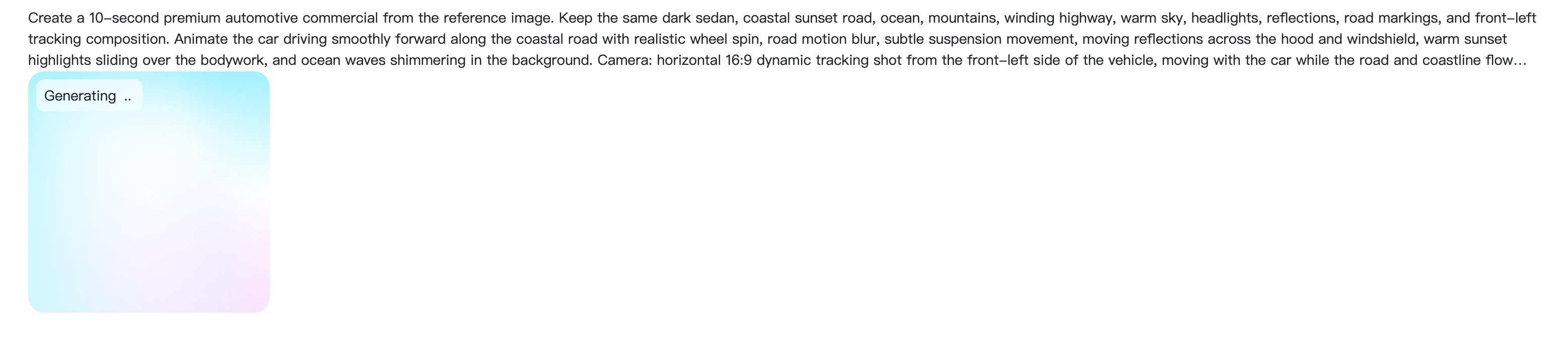
Open the video settings and match the output to the placement. Feed posts usually work well in 1:1 or 4:5. Ads often perform better in 4:5 or 9:16. Cover and header videos typically need a wider composition. Live video templates should leave enough visual room for titles or scheduling overlays.
Keep the clip length tight unless the format really needs a loop or intro. Shorter is usually safer for Facebook because the preview window is small and the opening frame has to do more work. Once the settings are right, generate the clip and let the model build the motion.
Step 4: Generate, preview, and download
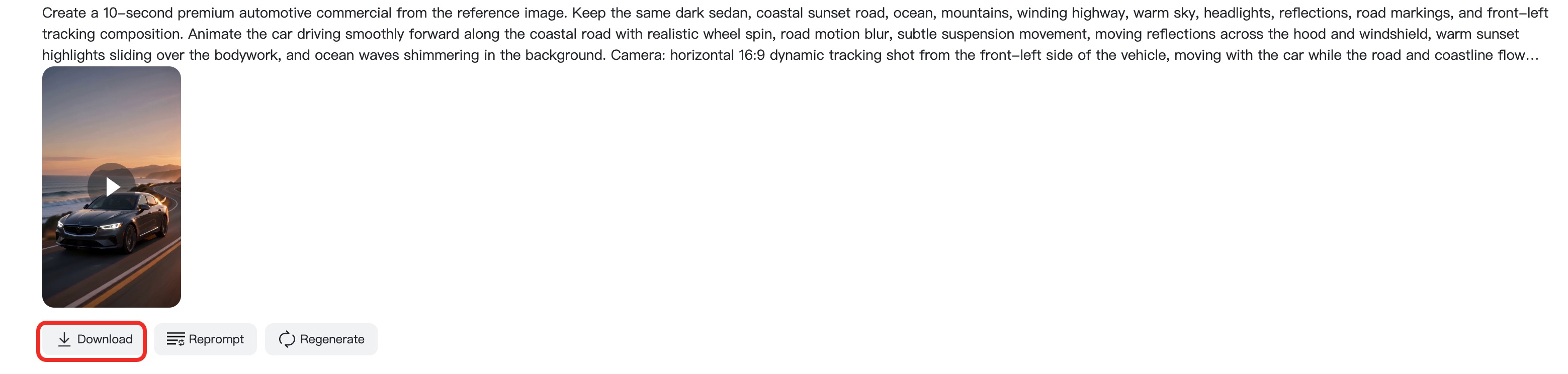
After generation, review the first and last frames before you export. Is the main subject still centered? Is the headline space clean? Does the motion feel right for the placement? If the answer is yes, download it and reuse the template structure for your next Facebook post, ad, or cover video.
If the result feels too busy, make one adjustment at a time. Change the ratio first, then the camera movement, then the prompt wording. That is the fastest way to improve the template without losing the part that already works.
How to Customize Templates for Posts, Ads, Covers, and Live Video
One Facebook template is not enough for every job, but one workflow can handle the variations. Want the smartest way to customize? Start by thinking about the viewer’s intent on each surface.
For feed posts
Feed posts need quick recognition. Use the subject early, keep the camera movement simple, and leave enough breathing room for a short caption or on-image line. A facebook video post template works best when the opening frame already looks clear at thumbnail size.
For ads
Ads should feel more decisive. Use one offer, one product, and one action. A facebook ad video template often benefits from a stronger ending frame because the viewer needs a reason to pause, click, or remember the message.
For covers and headers
Cover videos and header videos should feel broader and calmer. This is where a facebook cover video template or facebook header video template helps you keep the brand centered without crowding the edges. If the motion is too fast, the banner can feel chaotic instead of premium.
For live video
Live video templates usually serve as pre-live identity pieces. Think countdown loop, title screen, event teaser, or “going live soon” card. A facebook video cover template can work nicely here because it gives viewers a polished waiting screen before the stream begins.
That is also where a little restraint pays off. Facebook templates for live content do not need to do everything. They just need to set tone, brand, and timing clearly enough that the audience knows what is coming next.
FAQs About Facebook Video Templates
What is the best Facebook video template for feed posts?
A feed post template should usually be built around a clear subject, a quick opening frame, and a 1:1 or 4:5 ratio. The goal is to stop the scroll in the first second and keep the message readable on mobile. If you have one product or one announcement, keep the composition simple.
Should a Facebook ad video template be vertical or square?
Both can work, but vertical and 4:5 formats usually give ads more screen presence in mobile feeds. Square still works well when you want a balanced layout or when the same video needs to fit multiple placements. The right choice depends on where the ad will run most often.
Can I use one facebook cover video template for both header and live promo?
Yes, as long as the composition stays wide and the center area remains clean. A strong header video template can also double as a live promo intro if the text and branding are simple enough. Just make sure the motion is calm and the key message is not cropped on smaller screens.
How do I make a live video template feel polished before going live?
Use a clear title frame, a simple loop, and a visual cue that tells viewers the stream is intentional. Countdown energy, event branding, and a short animated background work better than a busy montage. A good live template should feel like a branded waiting screen, not just a random teaser.
Can I turn a product photo into a Facebook video template?
Yes. That is one of the easiest ways to build a facebook video template because the image already establishes the product, framing, and visual style. From there, you can add motion, adjust the prompt, and export a version tailored to posts or ads.
Are Facebook video templates free to experiment with in insMind?
If you are exploring ideas, it is smart to start with a simple template structure and test a few versions before you finalize anything. That gives you a low-pressure way to compare hooks, ratios, and motion styles. The real win is speed: you can move from idea to preview without building every frame by hand.