


 Ryan Barnett·May 26, 2026
Want to build a YouTube channel without showing your face, recording your voice, or filming every scene yourself? A faceless YouTube channel lets you publish educational videos, listicles, tutorials, stories, product explainers, or niche entertainment while staying behind the scenes.
The challenge is making it feel original, not low-effort. Viewers still expect a strong idea, useful script, clear visuals, and consistent editing. In this guide, you will learn how to make a faceless YouTube channel, choose better video ideas, use AI tools for YouTube video creation, and turn a script into a video with insMind.
Table of Contents
What Is a Faceless YouTube Channel?
A faceless YouTube channel is a channel where the creator does not appear on camera as the main visual personality. Instead of a talking-head setup, the video may use narration, screen recordings, AI visuals, product clips, stock footage, animated scenes, captions, infographics, or generated video clips.
This format works because many viewers care more about the information, pacing, story, and visual clarity than the creator's face. Think about channels that explain finance concepts with charts, tell historical stories with maps, review products with B-roll, summarize books with animated visuals, or create relaxing ambient videos. The creator is present through the editing and point of view, even if they are not visible.
A faceless YouTube channel can be useful if you:
Feel uncomfortable appearing on camera
Want to protect your privacy
Need a faster production workflow
Prefer writing, editing, or research over filming
Want to test multiple niches before building a personal brand
Create content in a language or style where visuals matter more than identity
The best faceless channels are not faceless because they lack personality. They are faceless because the channel has a repeatable visual system, strong voice, and clear audience promise.
How to Start a Faceless YouTube Channel
Starting a faceless YouTube channel is easier when you treat it like a small media system instead of a one-off video experiment. Here is a practical workflow.
1. Pick a Specific Niche
Do not start with "finance," "AI," or "health" as a broad category. Start with a viewer problem. For example, "AI tools for small business owners," "beginner personal finance for college students," or "quick history stories for busy adults" is more useful than a vague niche.
A strong niche has three qualities:
People search for it regularly
You can make many videos without running out of ideas
You can explain it better, faster, or more visually than existing channels
Before choosing, look at search results, YouTube suggestions, comments, and top-performing videos. What questions keep coming up? What videos feel outdated? What topics get views but could be explained more clearly?
2. Choose a Repeatable Video Format
Faceless creators grow faster when each video follows a repeatable format. The format helps you plan scripts, visuals, intros, pacing, and thumbnails.
Popular faceless formats include:
"Top 7" or "Best tools" listicles
Step-by-step tutorials
Explainer videos
Product comparisons
Myth-versus-fact videos
Case studies
Storytelling documentaries
Motivational or educational Shorts
Screen-recorded software walkthroughs
If you are just starting, pick one main format and publish 10 videos before changing everything. A repeatable format gives your audience a reason to recognize your channel.
3. Build a Simple Production Stack
You do not need dozens of tools. You need a clean workflow. A basic faceless YouTube production stack may include:
Research and outline tool
Scriptwriting assistant
Voiceover or narration tool
Visual generation or footage source
Video generator or editor
Thumbnail design tool
Analytics tracker
For videos that begin with a written script, a script to video AI workflow can save time because you can move from script to visual scenes without building every clip manually. For prompt-first videos, an AI video generator from text can help you create visual drafts from written ideas.
4. Write Scripts for Retention
Faceless videos live or die by scripting. Your opening has to make viewers feel that the video is worth their time. Avoid slow intros like "Welcome back to my channel." Start with the problem, promise, or curiosity gap.
A simple retention-friendly structure looks like this:
Hook: name the problem or surprising result.
Context: explain why the viewer should care now.
Payoff preview: tell them what they will get.
Main points: deliver value in clear sections.
Pattern breaks: add examples, visuals, questions, or quick transitions.
Close: summarize and lead to the next action.
For example, a video about AI tools could open with: "Most faceless channels fail because they automate the wrong part. The script, not the video editor, is usually the real problem."
5. Publish, Measure, and Improve
After publishing, watch your analytics. Look at click-through rate, average view duration, retention dips, traffic sources, and subscriber conversion. If viewers leave in the first 20 seconds, improve your hook. If impressions are high but clicks are low, test thumbnail and title concepts. If viewers watch but do not subscribe, make the channel promise clearer.
One video will not tell you everything. Publish in batches, compare patterns, and improve one variable at a time.
Best Faceless YouTube Channel Ideas
Not sure what kind of channel to start? Choose an idea that fits your knowledge, production speed, and audience demand. Here are practical faceless YouTube channel ideas you can adapt.
AI Tool Tutorials
This niche works well because new tools launch constantly, and viewers want simple walkthroughs. You can create videos like "Best AI tools for freelancers" or "How to automate product photos with AI." Screen recordings, captions, and generated B-roll can carry the video without showing your face.
Finance Explainers
Finance channels can use charts, simple animations, voiceover, and examples. Keep the content educational and avoid making unrealistic income claims. Topics can include budgeting, credit scores, investing basics, business models, and side hustle breakdowns.
History and Storytelling
Faceless storytelling can be powerful when the narration is strong. Use maps, archival-style visuals, timelines, and cinematic scenes. The key is structure: open with a mystery, build tension, and resolve with a memorable takeaway.
Software and App Reviews
These channels are practical because viewers search for tools before buying. You can review AI apps, design tools, productivity software, ecommerce platforms, or creator tools. Screen recordings plus voiceover are enough if your analysis is useful.
Motivational Shorts
Short-form faceless content can use captions, music, quotes, AI scenes, and quick editing. This format is competitive, so make the writing sharper than generic motivational clips. Specific stories usually perform better than broad advice.
Product Education
If you sell products or promote affiliate offers, faceless videos can explain features, comparisons, and use cases. Avoid turning every video into an ad. Lead with the viewer's problem, then show the product as the solution.
How to Make Faceless YouTube Videos with insMind
Once you have a niche and script, you need a fast way to turn ideas into watchable video. insMind helps creators generate AI video from scripts or prompts, which makes it useful for explainer videos, educational Shorts, social clips, and visual drafts for faceless channels.
Step 1: Paste or Write Your Faceless YouTube Script
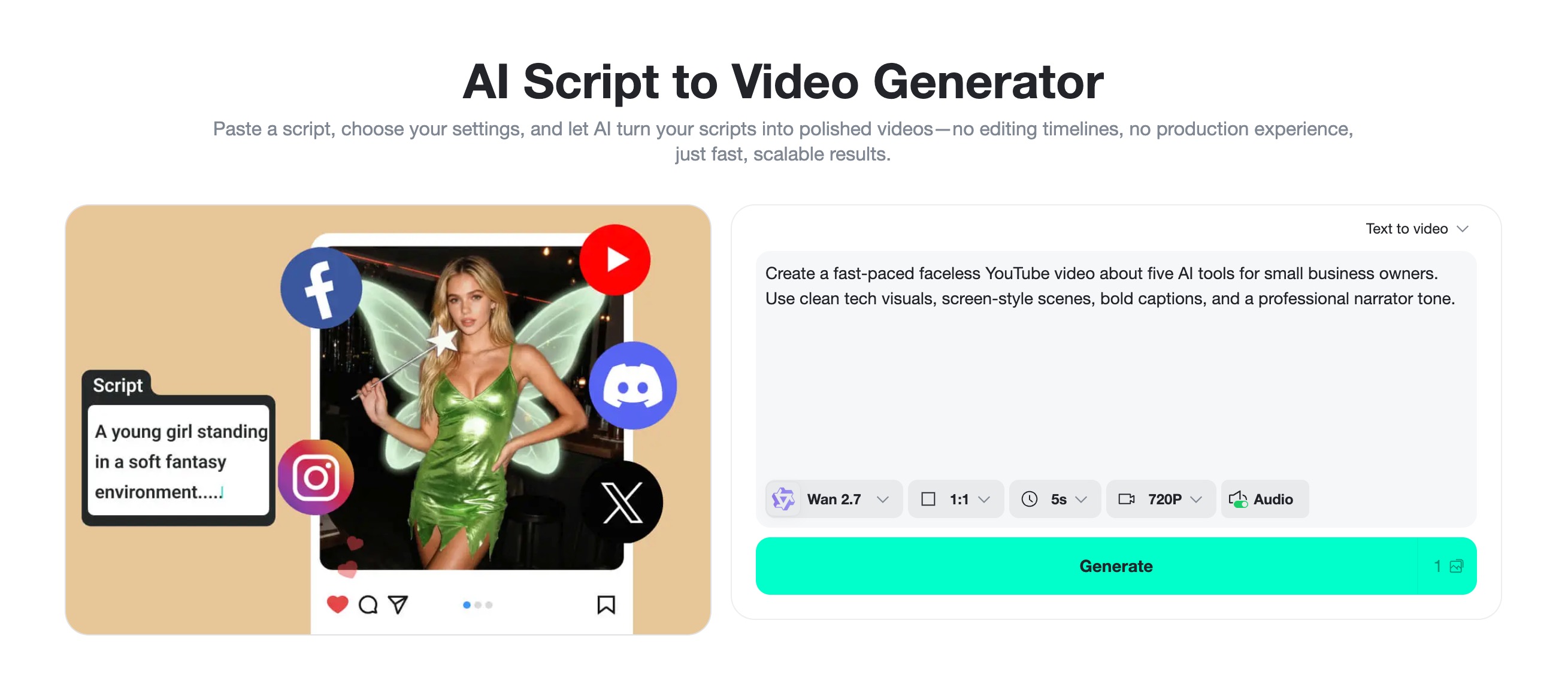
Start with a script that has a clear hook, sections, and visual cues. For example, if your video is about "5 AI tools for small business owners," write each tool as a short segment and include what the viewer should see on screen.
You can keep the script simple:
Create a fast-paced faceless YouTube video about five AI tools for small business owners. Use clean tech visuals, screen-style scenes, bold captions, and a professional narrator tone.
The clearer your script is, the easier it becomes to generate scenes that match your message.
Step 2: Choose YouTube-Ready Video Settings
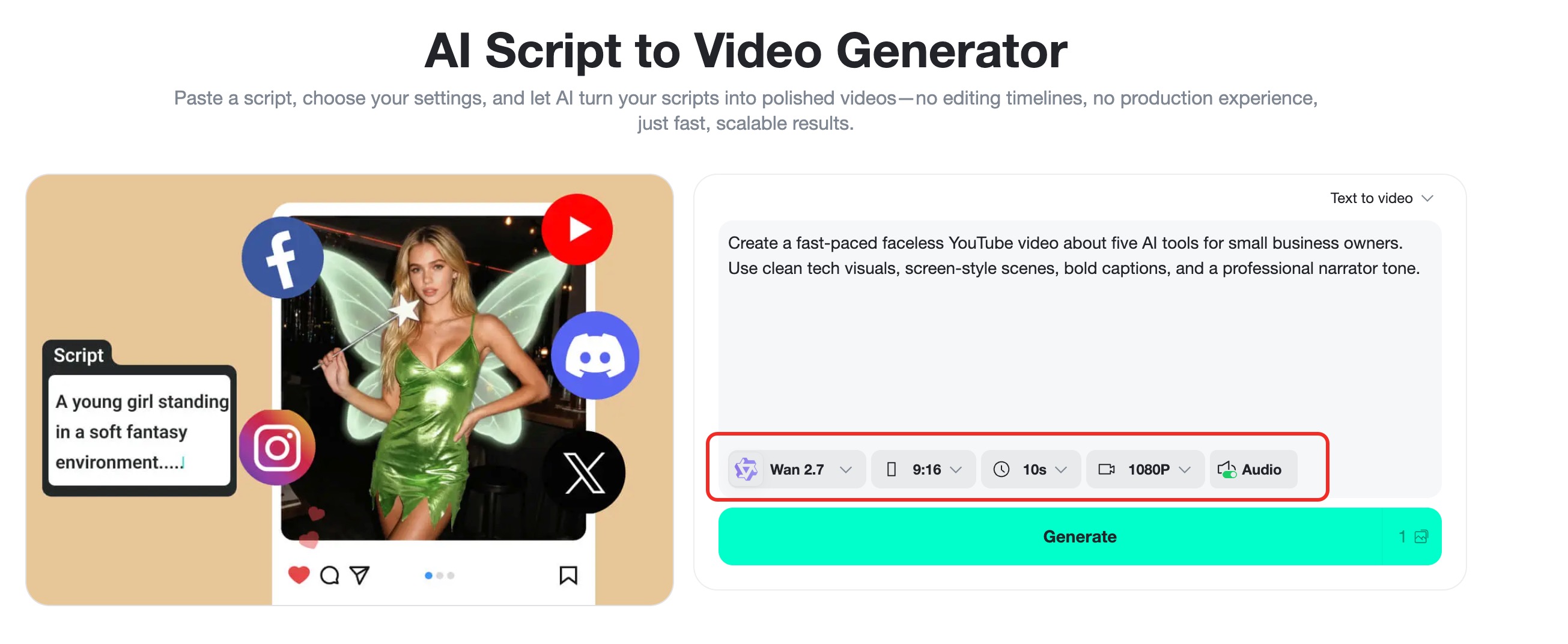
Next, open the video settings and choose the model, aspect ratio, duration, and output quality. If you are creating YouTube Shorts, use a vertical format. If you are creating a standard YouTube video, choose a horizontal format that works for the main feed.
Think about the channel before you generate. Do you want documentary-style visuals, clean software scenes, social media captions, cinematic B-roll, or animated explainers? Your settings and prompt should match that channel identity.
Step 3: Generate AI Video Scenes
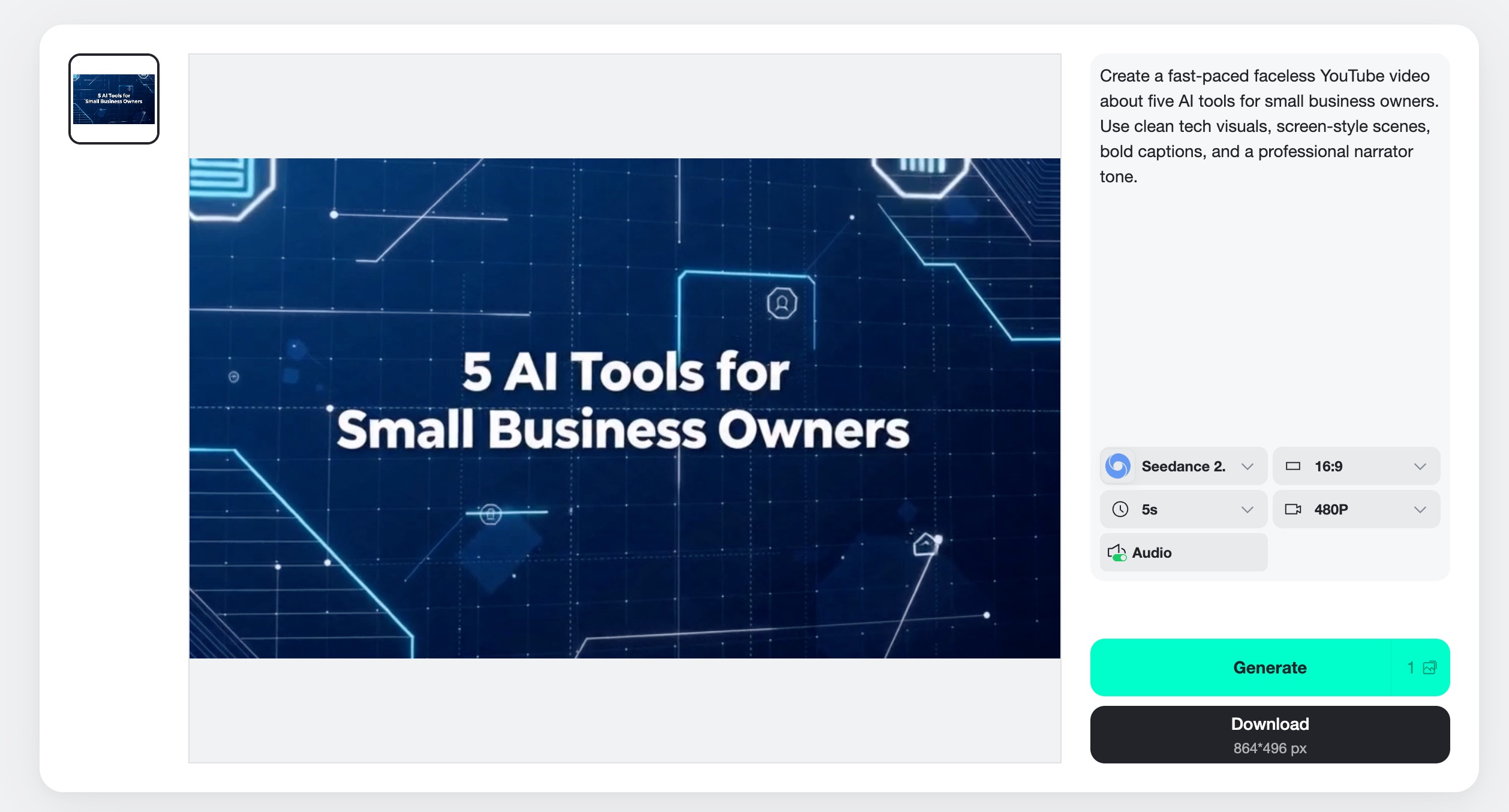
Click Generate to turn the script into video scenes. Review the output carefully. Does each scene support the narration? Are the visuals clear? Does the pacing feel right for YouTube? If a scene is too generic, revise the prompt with more specific visual direction.
You can also combine insMind with other creative pages. For example, use image to video when you want to animate a still graphic, product image, or character portrait. If your channel needs template-style transitions or social visual hooks, explore AI video effects to make clips feel less static.
Step 4: Download and Prepare for Upload
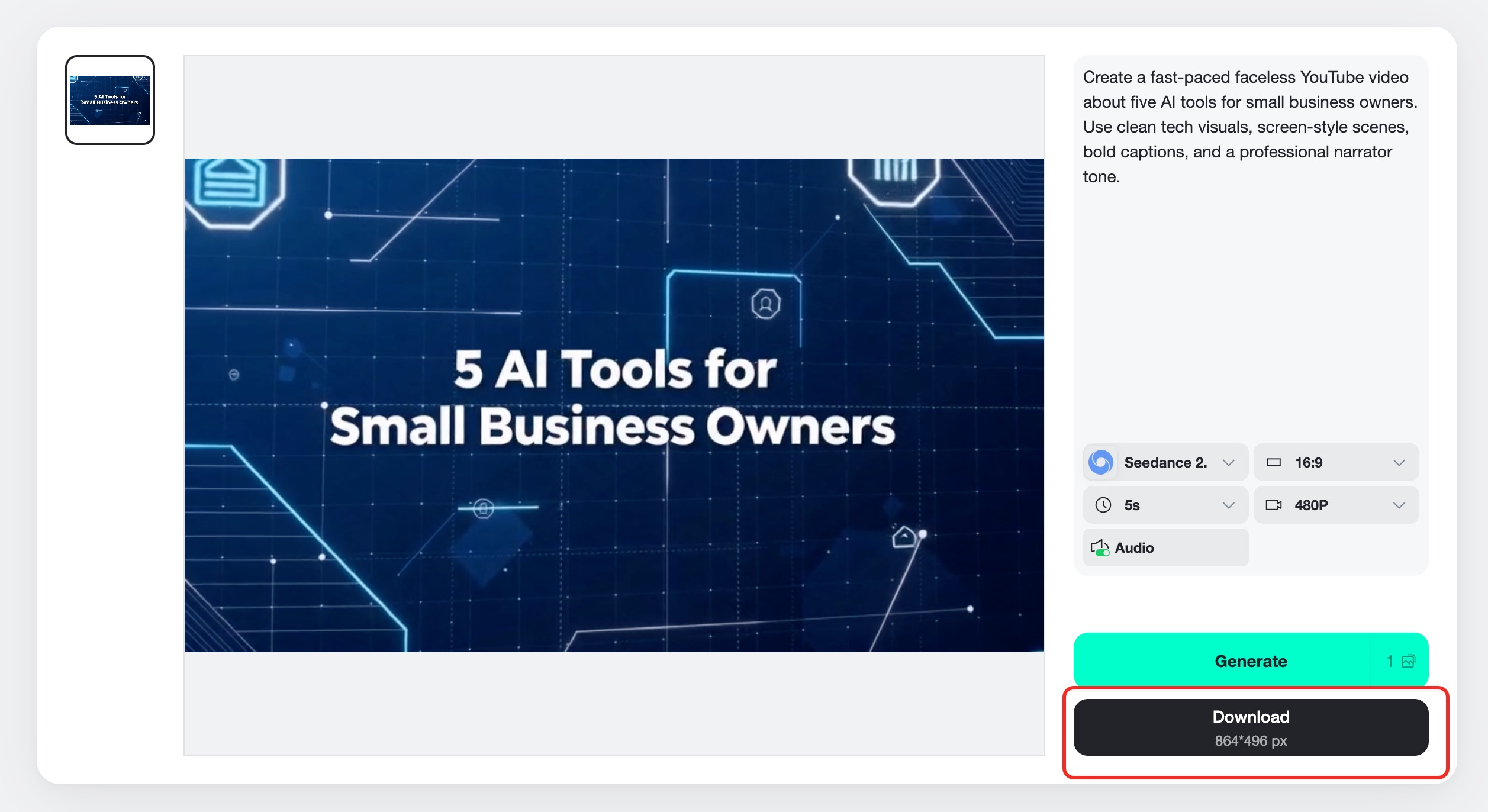
When the video is ready, download it and prepare your YouTube upload. Add a strong title, thumbnail, description, chapters if needed, and a short pinned comment. If the video uses realistic AI-generated people, places, or events, check YouTube's disclosure requirements before publishing.
AI Tools for YouTube Video Creation
The right AI tools depend on your format. A tutorial channel may need screen recording and editing more than AI visuals. A storytelling channel may need voiceover, image generation, and video generation. A Shorts channel may need captions, hooks, and fast batch production.
Here is a simple tool map:
| Workflow Need | AI Tool Type | What It Helps With |
|---|---|---|
| Topic research | Research assistant | Finds questions, angles, and content gaps |
| Scriptwriting | Writing assistant | Builds hooks, outlines, and narration |
| Visual creation | Text-to-video or image-to-video | Generates scenes, B-roll, or animated visuals |
| Editing | AI video editor | Cuts clips, adds captions, and improves pacing |
| Voiceover | AI voice tool | Creates narration when you do not record yourself |
| Thumbnail | AI image/design tool | Tests clickable visual concepts |
The goal is not to automate your judgment. The goal is to reduce repetitive production work so you can spend more time on the idea, script, positioning, and packaging.
If you need stronger prompt direction, collect reusable AI video prompts for intros, transitions, product scenes, explainer visuals, and Shorts hooks. A prompt library helps your channel stay consistent.
Mistakes to Avoid When Making a Faceless YouTube Channel
Many beginners fail because they chase automation before learning what viewers want. Avoid these common mistakes:
Choosing a niche only because someone said it has high RPM
Publishing generic AI videos with no original script or point of view
Using misleading thumbnails that do not match the video
Copying clips, scripts, or formats too closely
Ignoring audio quality
Making every video visually identical
Starting too many channels at once
Expecting monetization before building retention and trust
The safest long-term strategy is simple: make the content useful, original, and recognizable. Use AI as a production partner, not as a substitute for editorial thinking.
FAQs About Faceless YouTube Channels
Can you make money with a faceless YouTube channel?
Yes, faceless channels can make money through YouTube ads, sponsorships, affiliate links, products, memberships, and lead generation. Monetization depends on originality, audience value, watch time, policy compliance, and niche demand. A faceless format alone does not guarantee income.
How do I start a faceless YouTube channel as a beginner?
Start with one niche, one repeatable video format, and one simple production workflow. Research viewer questions, write a strong script, create visuals with AI or screen recordings, edit for retention, and publish consistently. Improve based on analytics instead of guessing.
What are the best AI tools for YouTube video creation?
The best AI tools are the ones that match your workflow. Most faceless creators need tools for research, scriptwriting, voiceover, video generation, editing, captions, and thumbnails. If your videos start from written scripts, insMind's script-to-video workflow is a practical place to begin.
Do faceless YouTube videos need AI disclosure?
Sometimes. YouTube says creators should disclose realistic altered or synthetic content when viewers could mistake it for a real person, place, scene, or event. Clearly animated, unrealistic, or production-assist AI may not always need the same disclosure, but you should review YouTube's current upload guidance before publishing.
Are faceless YouTube channels allowed for monetization?
Yes, but the content must be original and valuable. YouTube's monetization policies focus on issues like reused, repetitive, or low-effort content. Add meaningful commentary, editing, structure, education, or entertainment value instead of uploading mass-produced videos that look the same.
What faceless YouTube channel ideas are easiest to start?
Tutorials, tool reviews, listicles, explainers, Shorts, product education, and screen-recorded walkthroughs are beginner-friendly because they do not require complex filming. Choose the idea you can produce consistently while still adding a clear point of view.
Ryan Barnett
I'm a freelance writer with a passion for editing and designing photos. Here at insMind, I strive to educate users on image creativity, photography, and enhancing product photos to help grow their businesses.
Keep reading

How to Use Seedance 2.5 for AI Videos
Learn how to use Seedance 2.5 for text-to-video and image-to-video, write stronger prompts, guide motion with references, and review results.

How to Make a Creepy Voice for Horror Content Step by Step
Learn how to make a creepy voice for horror videos, podcasts, and games with insMind.

How to Remove TikTok Watermark: 4 Easy Steps for Clean Videos
Learn how to remove TikTok watermark from videos in four practical steps with insMind.

Top 10 Seedance 2.5 Alternatives for AI Video in 2026
Compare top Seedance 2.5 alternatives and learn how to create AI videos with insMind.

Seedance 2.5 vs. MiniMax H3: Which AI Video Model Should You Use?
Compare Seedance 2.5 and MiniMax H3 for AI video creation.

30 Instagram Reels Prompts You Can Copy and Try
Copy-ready Instagram Reels prompts for products, fashion, creators, travel, food, pets, and lifestyle videos.

How to Write Instagram Reels Prompts for AI Videos
Learn to write Instagram Reels prompts for polished AI videos, product clips, creator posts, and lifestyle content.

30 TikTok Video Prompts You Can Copy and Try
Copy-ready TikTok video prompts for ads, creators, products, fashion, pets, travel, and more.

How to Create an AI Micro-drama: A Step-by-Step Guide
Learn how to create an AI micro-drama with insMind.

How to Create a Short Film Using AI in 2026
Learn how to create a short film using AI with insMind.

Instagram Reel Ads: Examples, Specs, Sizes, and Best Practices
Learn Instagram Reel ad specs, examples, safe zones, and best practices.

YouTube Ads Best Practices: How to Create Video Ads
Learn YouTube ads best practices and create video ads with insMind.

YouTube Channel Trailer Examples: 15 Inspiring Ideas for Your Channel
Explore YouTube channel trailer examples and create a polished trailer with insMind.

15 Best YouTube Ad Examples and Templates to Inspire Your Next Campaign
Explore YouTube ad examples and templates, then create video ads with insMind.

How to Make a Hype Video with AI: The Easy Guide
Learn how to make a hype video with AI using insMind.

Instagram Ad Templates for Feed, Stories, Reels, and Carousel Ads
Learn Instagram ad templates for Feed, Stories, Reels, and Carousel Ads.

Facebook Video Ad Specs: Sizes, Formats, and Lengths for 2026
Learn Facebook video ad specs, sizes, formats, and lengths for 2026, then make ad-ready videos with insMind fast.

How to Create Facebook Video Templates for Posts, Ads, Covers, and Live Video
Learn how to use Facebook video templates for posts, ads, covers, and live video with insMind.

Instagram Ad Examples: 15 Creative Ideas That Convert
Explore 15 Instagram ad examples and learn how to make them with insMind.

Instagram Ad Sizes and Specs: Complete 2026 Guide
Find Instagram ad sizes, specs, ratios, and dimensions for every major placement.

10+ Video Resume Examples with Scripts for Every Career Stage
Explore video resume examples and scripts, then create a polished video resume with insMind.

How to Make a Sports Hype Video with AI: A 4-Step Guide
Learn how to make a sports hype video with AI.

YouTube Ad Specs for 2026: Sizes, Formats, and Lengths
YouTube ad specs for sizes, formats, dimensions, and lengths, plus a four-step insMind workflow.

30 Best Grok Imagine Video Prompts You Can Copy and Try
Copy 30 Grok Imagine video prompts and learn how to write better prompts for creative AI videos.

50 Scroll-Stopping AI Brainrot Prompts for Viral Meme Videos
Copy 50 scroll-stopping AI brainrot prompts for chaotic meme videos.

How to Turn Any Photo into a Brainrot Meme Video
Learn how to turn any photo into a brainrot meme video with AI.

How to Make a Retirement Video with AI
Learn how to make a retirement video with AI.

How to Make Your Own Graduation Video from Photos with AI
Learn how to make a graduation video from photos with AI.

How to Make Your Own Outro Video
Learn how to make your own outro video with insMind.

Higgsfield vs Pollo AI: Which Video Platform Fits You?
Compare Higgsfield vs Pollo AI for cinematic control, model choice, ease of use, and pricing.

Pollo AI Review 2026: Features, Pros, Cons, and Verdict
Read our Pollo AI review for 2026 and explore its features, pricing, strengths, limitations, ideal users, and practical tips for better results.

How to Create Cute Baby Talking Videos from Photos
Learn how to create baby talking videos from photos with text, audio, and AI lip sync.

How to Make Your Own Talking Avatar with AI
Learn how to make your own talking avatar with AI from a portrait and script.

Seedance 2.0 Mini vs Seedance 2.0: Which Model Should You Use?
Compare Seedance 2.0 Mini and Seedance 2.0 for AI video creation.

How to Create Talking Animal Videos from Photos That Steal the Show
Learn how to create talking animal videos from photos with AI.

How to Turn a Character Image into a Consistent AI Video
Learn how to turn a character image into a consistent AI video with insMind.

10 Krea AI Alternatives for Creating and Editing AI Videos in 2026
Compare the best Krea AI alternatives for creating and editing AI videos, including insMind, Runway, Kling AI, Luma, Pika, VEED, and more.

Seedance 2.0 Mini Prompts to Copy: 20 Video Ideas
Copy Seedance 2.0 Mini prompts for cinematic AI videos with insMind.

Seedance 2.0 vs Seedance 2.5: What Changed?
Compare Seedance 2.0 and Seedance 2.5 with examples, prompts, and insMind workflow.

10 Best Pollo AI Alternatives for AI Video Creation in 2026
Compare the best Pollo AI alternatives for AI video creation, including insMind, Runway, Kling AI, Luma, Pika, VEED, and more.

How to Make an AI Video of Yourself That Actually Feels Like You
Create a realistic AI video of yourself from a photo and script.

How to Turn Old Photos into a Beautiful Tribute Video with AI
Turn old photos and memories into beautiful AI tribute videos.

How to Make a Daily Vlog with AI in Minutes
Create daily AI vlogs from photos, prompts, or ideas in minutes.

How to Create 2026 FIFA World Cup Highlights with AI
Create 2026 FIFA World Cup highlights, fan clips, and football videos with AI.

Best AI Video Extender for Creators: Top Tools Compared
Compare the best AI video extender tools for creators in 2026 and learn how to make short videos longer with insMind.

How to Edit YouTube Videos Faster with AI
Edit YouTube videos faster with AI background and style tools.

How to Create Training Videos with AI: A Complete Guide for Beginners
Create clear training videos from images and prompts with AI.

Create Product Reveal Videos with an AI Unboxing Video Maker
Learn how to create AI unboxing videos for product reveals, UGC, teasers, and ecommerce demos.

Create Smooth AI Video Transitions with Kling Start/End Frame
Learn how to create smooth AI video transitions with Kling Start/End Frame.

What Can You Choose for the Best InVideo Alternatives in 2026?
Compare the best InVideo alternatives and see why insMind is a strong AI video generator for creators and marketers.

10 Best Animaker Alternatives in 2026: New Trends in AI Video Creation
Compare the best Animaker alternatives for AI video creation, including free and open-source picks.

10 Best HeyGen Alternatives in 2026: Create AI Videos with More Freedom
Compare the best HeyGen alternatives for AI video creation, including free and open-source picks.

How to Make a Faceless YouTube Channel with AI
Make a faceless YouTube channel with AI tools, scripts, video ideas, and insMind.

Best CapCut Alternatives: 8 AI Video Editors Compared
Compare the best CapCut alternatives for iPhone, Android, PC, and AI video editing.

How Ecommerce Brands Replace Products in Videos with AI
Replace products in ecommerce videos with AI for ads, listings, and creative testing.

How to Change Video Background Without Green Screen: Step-by-Step Guide
Learn how to change video backgrounds without a green screen using simple AI editing steps.

How to Seamlessly Replace Objects in Videos with AI
Step-by-step guide on replace objects in videos with AI: how it works, best practices, and how to do it free with insMind.

How to Identify AI-Generated Videos: A Comprehensive Guide
Learn how to identify AI-generated videos using expert tips and insMind's tools for authenticity verification.

Can AI Really Edit Videos For You? A Deep Dive Into AI Video Editing
Discover how AI can edit videos effectively, using insMind and other top tools. Learn workflows, compare features, and explore future trends.

Crafting Viral Bigfoot AI Videos: A Step-by-Step Guide
Create viral Bigfoot AI videos with insMind. Learn how to optimize for TikTok and YouTube, avoid common mistakes, and more.

Discover the Versatility of Happy Horse 1.0 for AI Video Creation
Happy Horse 1.0 review explores AI video generation, integration with insMind, and practical applications for content creators.

Seedance 2.0 vs. Happy Horse 1.0: Which AI Video Generator Fits Your Needs?
Discover the differences between Seedance 2.0 and Happy Horse 1.0. Learn which AI video generator suits your needs best.

How to Make Educational Videos for Kids with AI (4 Easy Steps)
Write a structured script, choose model and audio, generate, and download—a step-by-step guide to making AI educational videos for kids with prompt templates.

Best AI Prompts for Explainer Videos (Proven Templates)
Four proven AI prompt templates for explainer videos—presenter, product demo, faceless brand, and tutorial—plus how to use insMind in 3 steps.

Best AI Explainer Video Generator for Business (2026 Guide)
Choose text-to-video or image-to-video, configure model and audio, generate and download—a complete 2026 guide to AI explainer videos for business with insMind.

Best Prompts for Wan 2.7: Multi-Shot Guide for Cinematic AI Video
Choose text or image mode, write scene-block prompts for Wan 2.7, set duration and audio, then download—plus 40+ language narrative tips.

How to Create Kids Videos with AI: A Parent-Friendly Guide
Upload art or start from text, write kid-safe prompts, pick Google Veo 3.1, generate and download—steps for parents and teachers.

From Script to Screen: How to Create Engaging Story Videos with AI Tools
Learn how to create story videos with AI: split scripts into scenes, optional reference images, generate clips in insMind, then merge. No pro editor required to start.

How to Make a Baby Dance Video with AI: Step-by-Step Guide
Turn a baby photo into a cute AI dance clip. Upload, write a motion prompt, pick model and duration, generate—no editing skills needed.

How to Make a Cat Dance Video with AI: Step-by-Step Guide
Turn a cat photo into a funny dance clip with AI image to video. Upload, write a motion prompt, generate, and download—no editing skills.

Best AI Tool for Pet Dance Videos (2026 Compared)
Compare top AI pet dance video tools with real screenshots, pros and cons, and a tested insMind image-to-video workflow plus copy-ready prompt.

Top 20 AI Fruit Video Prompts to Copy & Paste
Discover top AI fruit video prompts for creating engaging, trendy videos. Perfect for TikTok and other platforms, these prompts inspire creative content.

Funny AI Video Prompts That Work (Tested Examples)
Get 20+ tested funny AI video prompts that actually make people laugh. Copy-paste prompts for TikTok, Reels, and YouTube Shorts with step-by-step instructions.

Affordable AI Video Solutions for E-commerce Startups
Discover affordable AI video solutions for e-commerce startups. Learn about budget-friendly tools and maximize ROI with AI-generated content.

Transforming Marketing with AI Video Ads
Discover how AI video ads are transforming online marketing with personalized, efficient, and creative solutions. Learn techniques and examples.

Mastering Cinematic Ad Creation with Seedance 2.0
Create cinematic ads with Seedance 2.0, a powerful AI tool for video advertisements. Learn how to make stunning video ads using Seedance 2.0.

Mastering Viral Video Creation with Seedance 2.0
Discover how to create viral videos using Seedance 2.0 with tips, prompts, and insights on social media trends.

Close-Up Shot: Definition, Story Uses & Tighter Framing
What is a close-up shot? Definition, when to use tight framing for emotion and detail, and tips for shooting cleaner inserts on any camera.

YouTube Equipment for Beginners: Gear, AI Video & Your First Upload (2026)
Beginner YouTube equipment: priority order for mic, light, and camera; clear audio on a budget; phone vs dedicated camera; Shorts and 16:9 basics.

How to Create Anime Videos with AI (Step-by-Step Guide)
Learn how to create anime videos with AI step by step. Use text-to-video and image-to-video to generate stunning anime animations with insMind.

How to Make Viral Funny Videos with AI in 5 Minutes
Learn how to make viral funny videos with AI in minutes. Step-by-step guide to creating hilarious TikTok and Instagram clips using insMind AI funny video generator.

How to Create Talking Old Photo Videos with AI
Learn how to animate old photos with AI. Turn vintage portraits into talking videos with realistic motion using insMind free photo animation tool.

7 Best Sora 2 Alternatives for AI Video Generation in 2026
Discover the best Sora 2 alternatives for AI video generation. Compare insMind, Runway, Kling AI, Pika, and more to find the right tool for your needs.

AI Prompts for TikTok Video Generator: Complete Guide
Discover the best AI prompts for TikTok video generation. 20+ ready-to-use prompts plus a step-by-step guide to creating viral TikTok content with AI.

How to Upscale Anime Video to 4K with AI (Step-by-Step)
Learn how to upscale anime video to 4K using AI. Step-by-step guide to enhancing low-res anime with sharper lines and cleaner colors.

AI Marketing Video Generator: Create Promo Videos from Text
Learn how to turn text into professional marketing videos using AI. Step-by-step guide to creating promo videos in minutes.

Text-to-Video AI Ranked: Which Generator Wins in 2026?
Compare the 7 best text-to-video AI generators in 2026 including insMind, Sora 2, Runway, Kling AI, Pika, and more.

Animate Anime Images with AI: Turn Static Art into Dynamic Anime Videos
Learn how to animate anime images with AI. Turn static anime art into stunning animated videos easily.

How to Remove Kling Watermark from AI Videos
Explore the best ways to remove Kling AI watermark. Compare editing methods and discover watermark-free Kling generation options.

AI Video Editor: Edit Videos Instantly with Prompts
Use insMind AI Video Editor and prompts to edit videos, remove objects, change backgrounds and more.

Control the Narrative: Create Cinematic AI Videos with Start & End Frames
From start to finish, take control of AI video storytelling with Start & End Frames.

How to Create a Stranger Things Transition Video (Step-by-Step Guide)
Create a Stranger Things–style Upside Down transition with AI in just a few steps using insMind.

Transform Your Ideas: Generate Videos from Text Instantly
Turn text into videos in seconds with InsMind's AI—ideal for social media, ads, and presentations. No editing skills required.

Tralalero Tralala: How to Animate the Italian Shark Meme with AI Flair
Animate the viral “Tralalero Tralala” Italian Shark meme with AI for fun, shareable content.

Top TikTok Memes 2025: 'Tung Tung Tung Sahur' & Viral Trends You Can't Miss
2025 TikTok trends: AI-generated Italian Brainrot memes and creepy Tung Tung Tung Sahur dominate viral humor.