


Want to make a short film but don't have a crew, camera setup, or editing timeline? Learning how to create short film with AI is now a practical path for creators who want to move from idea to vertical video faster. You still need a story. You still need taste. But AI can help you turn a simple premise into scenes, character beats, storyboard frames, and a finished short drama.
That's where insMind fits naturally. Its AI short drama workflow is built for creators who want a direct way to make cinematic micro-stories without stitching together five separate tools. In this guide, you'll learn how to make a short film using AI, what to prepare before you generate, and how to use insMind to produce a 9:16 short film that feels clear, emotional, and watchable.
Table of Contents
What Is an AI Short Film?
An AI short film is a compact video story made with help from generative AI. Instead of filming every shot manually, you use AI to help build the concept, visualize scenes, generate motion, and export a finished video. Most AI short films are built for social feeds, so they often run as micro-dramas, vertical story clips, product mini-films, comedy sketches, or emotional character scenes.
How is that different from a normal AI video? A standard AI clip might show one subject doing one action. An AI short film needs structure: a hook, a character, a problem, a turn, and a payoff. That story shape is what keeps viewers watching beyond the first few seconds.
If you already use an AI video generator, the short-film mindset simply adds narrative planning. You are not only generating a pretty clip. You are guiding AI toward a beginning, middle, and ending.
What You Need Before Generating
Before you click generate, pause for a minute. What should the viewer feel by the end: surprise, heartbreak, curiosity, relief, or laughter? A clear emotional target makes every prompt stronger.
For a short AI film, prepare these four ingredients:
| Short Film Element | What to Write | Example |
|---|---|---|
| Character | Who is the story about? | A young chef closing her restaurant for the last time. |
| Conflict | What changes the moment? | A stranger arrives with a letter from her late father. |
| Visual Style | How should it look? | Cinematic, warm neon, handheld close-ups, rainy street exterior. |
| Ending | What is the final turn? | The letter reveals her father secretly bought the restaurant back. |
Want a simple structure? Try this: ordinary moment, unexpected problem, emotional choice, and twist ending. This works especially well for short drama, suspense, romance, and comedy formats.
What Competitor AI Film Tools Teach Us
Looking at other AI filmmaking and storyboarding pages reveals a useful pattern: strong short films are not made from a single vague command. Invideo's storyboard tools emphasize script-to-frame planning and recognizable characters. Pixo focuses on scene-level storyboards, camera angles, narrative flow, and model choices per scene. Topview's drama studio positions the process as story planning, asset review, storyboard approval, and episode production. Adobe Firefly and other storyboard tools also push creators to review, organize, and refine scenes before export.
What does that mean for you? If you want to learn how to create short film with AI, think like a director before you think like a prompt writer. Your job is to give the AI a clear story spine, then check whether each generated scene supports that spine.
| Production Need | Why It Matters | How to Apply It in insMind |
|---|---|---|
| Script structure | A short film needs a hook, conflict, and payoff. | Write a full story idea instead of a one-line visual prompt. |
| Scene control | Each shot should advance the story, not just look cinematic. | Review the storyboard and revise weak or redundant beats. |
| Character consistency | Viewers need to recognize who the story follows. | Describe age, outfit, hair, emotion, and role clearly in the prompt. |
| Camera direction | Shot type changes pacing and emotion. | Add close-ups, wide shots, tracking shots, and reveal shots where needed. |
| Quality review | AI can drift in logic, faces, or timing. | Preview the output and regenerate with more specific corrections. |
This is also where insMind is useful for beginners. You do not need to build a professional storyboard from scratch before you start. You can describe the short drama, inspect the AI-generated storyboard, and improve the idea before producing the video.
Plan Your Script and Shot List
The easiest way to make a stronger AI film is to break the story into small beats before generation. Many short-form dramas work because every 3 to 5 seconds changes the viewer's question. Who is this person? What just happened? Why did they react that way? What is behind the door?
Use this 8-beat structure before you enter your idea into insMind:
| Beat | Purpose | Example Direction |
|---|---|---|
| 1. Hook image | Stop the scroll immediately. | A soaked delivery driver stands outside a dark apartment door. |
| 2. Setup | Show the normal situation. | He checks the order on his phone and sees an old timestamp. |
| 3. Mystery | Create a reason to keep watching. | The door opens by itself, but the room is empty. |
| 4. Clue | Reveal one meaningful detail. | A family photo on the table includes the driver as a child. |
| 5. Emotional turn | Move from plot to feeling. | He finds a note written by his late mother. |
| 6. Escalation | Make the moment bigger. | The lights flicker and an old voicemail starts playing. |
| 7. Reveal | Answer the story question. | The order was scheduled years ago as a final birthday gift. |
| 8. Final frame | Leave viewers with an image. | He sits at the table, crying quietly as rain hits the window. |
You do not need to paste all eight beats if you want a short result, but planning them gives your prompt more direction. When you review the storyboard, check whether the generated scenes follow this emotional climb.
If you are writing a commercial short film, use the same structure with a product problem. Show the pain point, introduce the product, reveal the benefit, and end on a clean branded moment. The format changes, but the storytelling logic stays the same.
A Simple AI Short Film Prompt Template
Not sure how to make a AI film prompt that gives you a coherent result? Use a repeatable structure. AI tools respond better when your prompt separates story, visuals, and technical format.
Create a [duration] vertical short film about [main character]. The story begins with [opening hook], then [conflict], and ends with [twist or emotional payoff]. Use [genre] tone, [lighting], [camera style], and [location]. Keep the story clear, cinematic, and easy to understand on mobile.
For example, instead of writing "make a sad short film," write: "Create a 45-second vertical family drama about a teenage boy cleaning out his grandfather's workshop. He finds an old cassette tape labeled with his name. Use warm afternoon light, close-up shots, quiet pacing, and a hopeful final reveal."
This kind of prompt gives the AI a story lane to follow. It also makes revision easier because you can improve one part at a time: character, conflict, style, or ending.
For more reliable results, add a "do not" line at the end of the prompt. For example: "Do not add extra characters. Do not change the main character's outfit. Do not make the ending comedic." Negative direction helps keep the film closer to your concept.
How to Create Short Film with AI Using insMind
So how do you actually make a film using AI in insMind? The workflow is direct: open the short drama generator, describe the story, let the AI build a storyboard, then generate the finished vertical video. The steps below match what you can do on the insMind AI short drama generator page.
Step 1: Open the Short Drama Generator
Start on the insMind short drama page and choose the option to create a short drama video. This gives you a dedicated workspace for story-first video generation, rather than a blank editor that expects you to manage every scene manually.
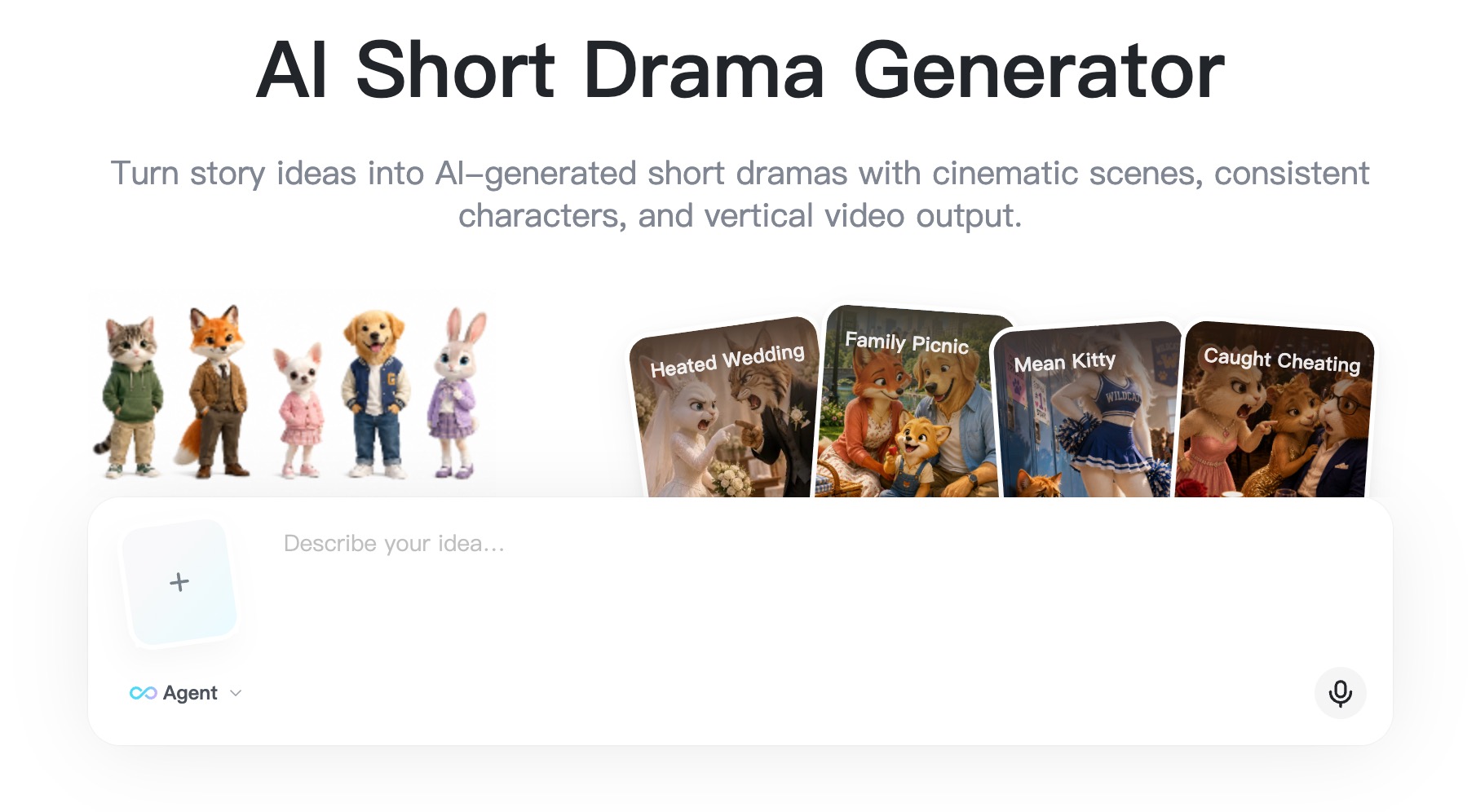
Before you type, decide your output format. For most short-film social content, a vertical 9:16 video is the strongest choice because it fits TikTok, Reels, and Shorts. If you are creating a concept video for a pitch deck, you can still write the story vertically first and later adapt the idea for horizontal edits.
Step 2: Enter a Complete Story Idea
In the prompt box, write your core story idea with enough detail for the AI drama agent to understand the tone. Include the main character, setting, conflict, and ending style. If you want to know how to make a short film with AI that feels less random, this is the most important step.
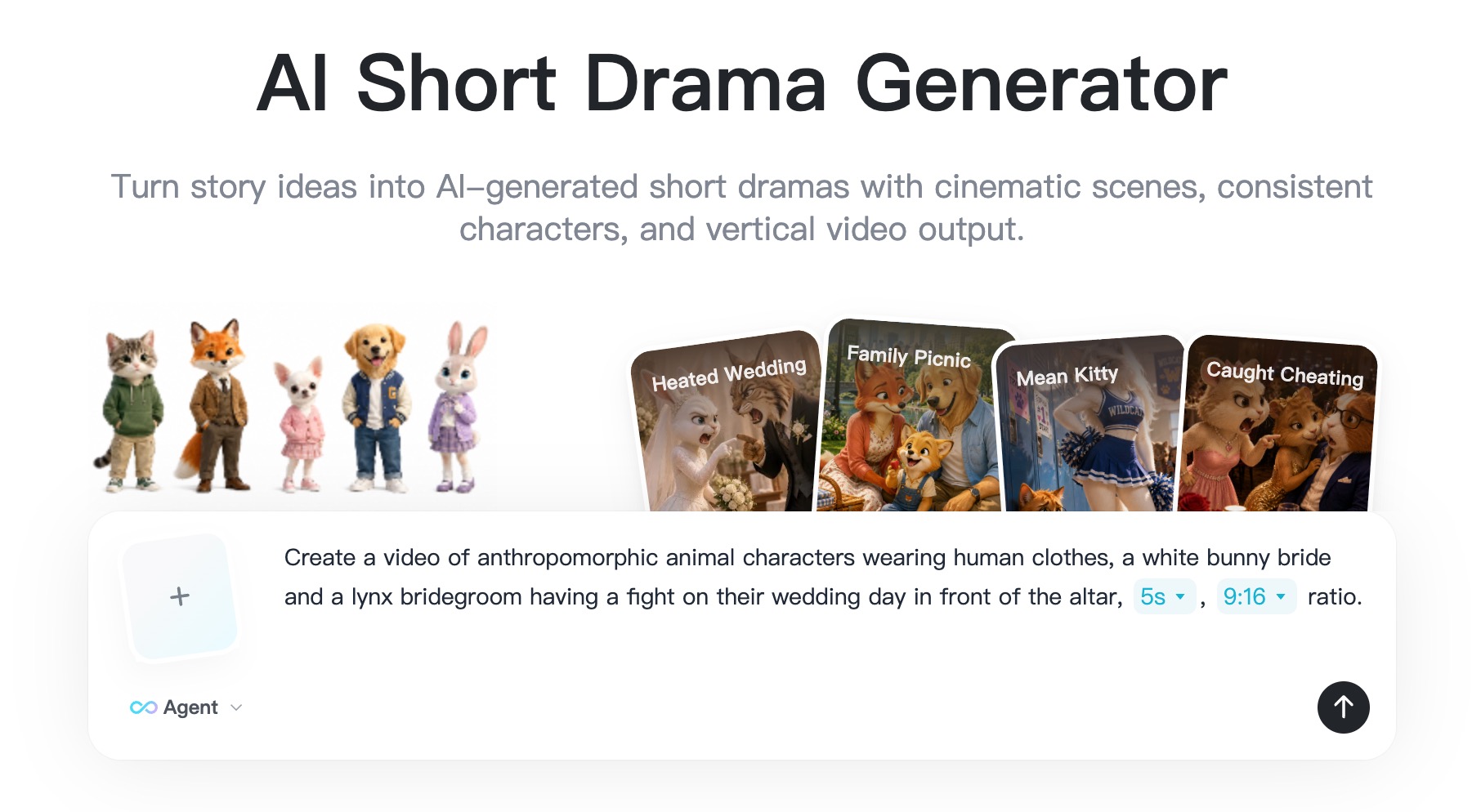
Create a 60-second vertical short drama about a delivery driver who brings one final meal to an empty apartment, then discovers the order was placed years ago by someone trying to say goodbye. Make it emotional, cinematic, rainy, and suspenseful, with a quiet twist ending.
If your script is already written, paste a concise version of it. If you only have a concept, write it like a mini brief. For creators who start from text, a text to video AI workflow can also help turn written scenes into visual motion.
A strong prompt should include five pieces of information: the main character, the location, the emotional problem, the visual style, and the final reveal. If one of those is missing, the output may still look polished, but the story can feel thin.
Step 3: Review the AI Storyboard
After you send the story idea, insMind can help you move into a storyboard-style planning stage. Read the panels before you export or continue editing. Are the characters consistent? Does the first scene hook the viewer? Does the ending land clearly?
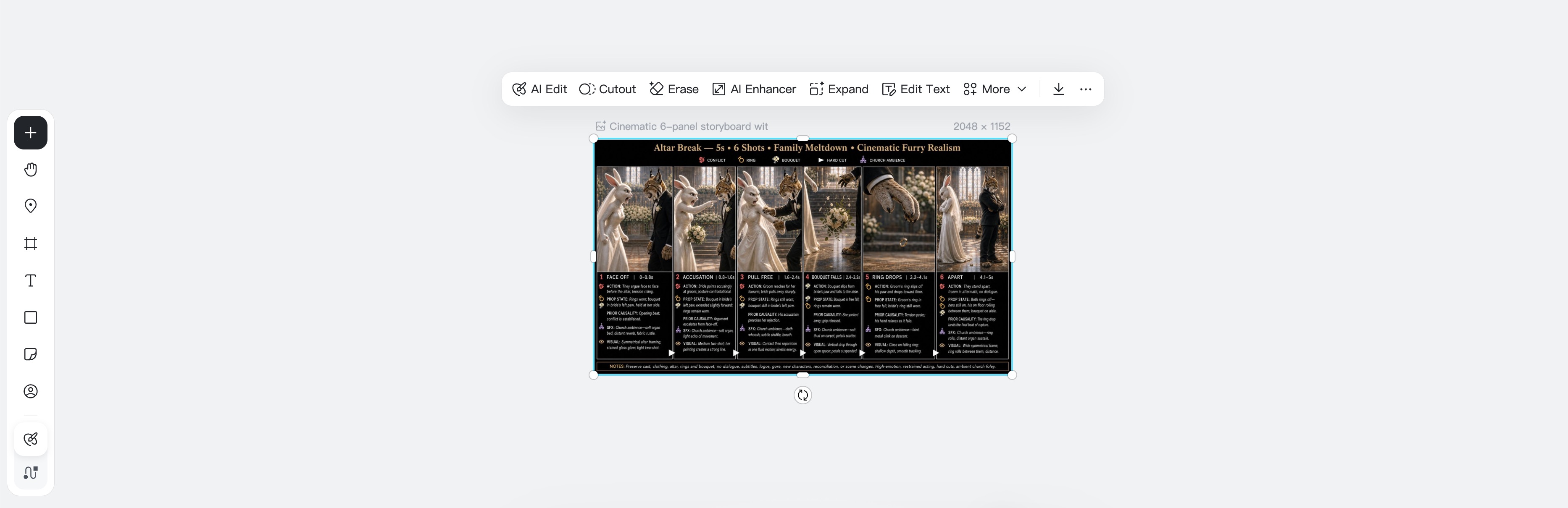
This is your chance to shape the film. If a panel feels vague, adjust the story direction with more specific visual cues, such as close-up of trembling hands, wide shot of a lonely train platform, or fast cut to the phone screen.
Use this quick storyboard review checklist:
- Does the first shot create curiosity in under three seconds?
- Can viewers identify the main character immediately?
- Does each scene add new information?
- Is the twist or payoff visible, not only implied?
- Are the location, mood, and character details consistent?
Step 4: Generate, Preview, and Download
Once the storyboard looks right, generate the video. Preview the result and check the key points: character readability, pacing, scene order, emotional clarity, and ending impact. If a moment feels confusing, revise your story prompt and generate again with tighter direction.
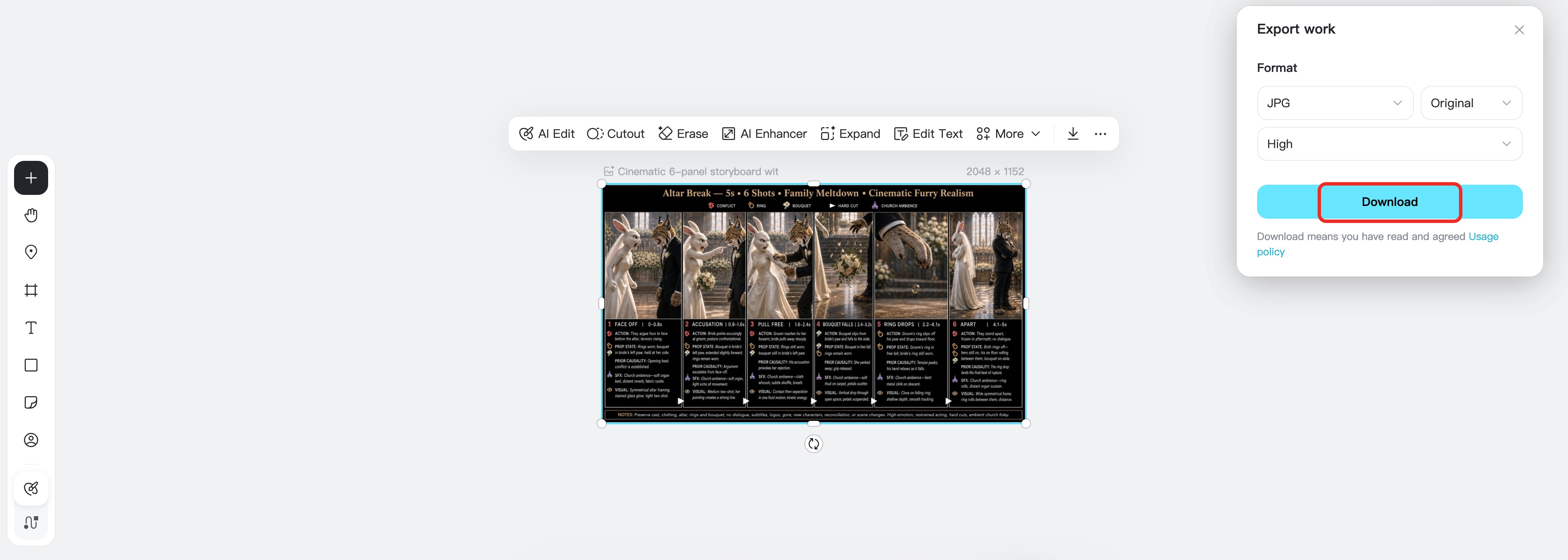
When the film or storyboard asset works, use the export panel to download it and prepare it for your target platform. For a social-first version, consider adding captions, a stronger opening line, or a thumbnail frame that shows the main character's dilemma.
If the first generation is close but not perfect, revise one thing at a time. Ask for a clearer ending, fewer characters, a more emotional close-up, or a slower camera move. Specific revisions usually beat broad commands like "make it better."
Improve the Video After Generation
Knowing how to make a short film using AI does not stop when the video is generated. The final 10% of polish can make the difference between a rough AI test and a clip that feels ready to share.
Add Captions or On-Screen Text
Short-form viewers often watch without sound. Add captions for dialogue, but keep them short. If your film has no dialogue, use one or two text beats to clarify the emotional turn: "He had delivered this meal before" or "The order was placed five years ago."
Choose Music That Matches the Arc
Use quiet tension for mystery, soft piano for emotional drama, fast percussion for action, and minimal ambient sound for suspense. Do not let music fight the story. The track should rise at the same moment the conflict rises.
Create a Strong Opening Frame
Your first frame is the thumbnail in motion. Pick a shot with a face, object, or mystery. A character looking at a sealed envelope is stronger than a generic city skyline because it instantly creates a question.
Export for the Platform
For TikTok, Reels, and Shorts, keep the frame vertical and make sure key faces or objects stay away from UI areas. For a portfolio or website, export a clean version without extra social text so it can sit beside your other work.
FAQs About Creating AI Short Films
How do I create AI short film ideas that are not generic?
Start with a specific emotional contradiction. For example, "a thief returns what he stole" is stronger than "a man feels sad." If you want to know how to create AI short film concepts that feel fresh, add a setting, a visual object, and a twist ending before you generate.
How do I make a short film using AI if I only have one sentence?
Use that sentence as your premise, then expand it into character, conflict, mood, and ending. insMind can help turn the idea into a storyboard, but your prompt should still explain what happens and why viewers should care.
Can I make a film using AI for TikTok, Reels, or Shorts?
Yes. A vertical 9:16 short drama is a natural fit for mobile platforms. Keep the hook immediate, make the story readable without sound, and use captions if dialogue or narration matters.
What is the easiest way to make a film using AI?
If you are wondering how to make a film using AI, the easiest workflow is to write a short premise, turn it into a scene-by-scene prompt, review the storyboard, and generate the finished video. insMind keeps those steps in one short drama workflow, so beginners can move from idea to output without building a full editing pipeline.
What is the difference between an AI short film and an AI micro-drama?
An AI short film is the broader format. An AI micro-drama is usually a short, emotionally driven episode designed for fast mobile viewing. Many creators use micro-drama structure when learning how to make a short film with AI.
How long should an AI short film be?
For social content, 30 to 90 seconds is a useful range. It is long enough for a hook, conflict, and reveal, but short enough to keep pacing tight.
Do I need separate storyboard software before using insMind?
No. Separate storyboard tools are useful for large productions, but insMind can help you create and review the short drama structure inside the workflow. For most creators, a clear story prompt plus storyboard review is enough to start.
Can AI short films be used for product marketing?
Yes, especially for product teasers, launch stories, founder moments, and problem-solution ads. Use owned or licensed assets, avoid unsupported claims, and make sure any people, logos, or music are cleared for commercial use.
Keep reading

How to Use Seedance 2.5 for AI Videos
Learn how to use Seedance 2.5 for text-to-video and image-to-video, write stronger prompts, guide motion with references, and review results.

How to Make a Creepy Voice for Horror Content Step by Step
Learn how to make a creepy voice for horror videos, podcasts, and games with insMind.

How to Remove TikTok Watermark: 4 Easy Steps for Clean Videos
Learn how to remove TikTok watermark from videos in four practical steps with insMind.

Top 10 Seedance 2.5 Alternatives for AI Video in 2026
Compare top Seedance 2.5 alternatives and learn how to create AI videos with insMind.

Seedance 2.5 vs. MiniMax H3: Which AI Video Model Should You Use?
Compare Seedance 2.5 and MiniMax H3 for AI video creation.

30 Instagram Reels Prompts You Can Copy and Try
Copy-ready Instagram Reels prompts for products, fashion, creators, travel, food, pets, and lifestyle videos.

How to Write Instagram Reels Prompts for AI Videos
Learn to write Instagram Reels prompts for polished AI videos, product clips, creator posts, and lifestyle content.

30 TikTok Video Prompts You Can Copy and Try
Copy-ready TikTok video prompts for ads, creators, products, fashion, pets, travel, and more.

How to Create an AI Micro-drama: A Step-by-Step Guide
Learn how to create an AI micro-drama with insMind.

How to Create a Short Film Using AI in 2026
Learn how to create a short film using AI with insMind.

Instagram Reel Ads: Examples, Specs, Sizes, and Best Practices
Learn Instagram Reel ad specs, examples, safe zones, and best practices.

YouTube Ads Best Practices: How to Create Video Ads
Learn YouTube ads best practices and create video ads with insMind.

YouTube Channel Trailer Examples: 15 Inspiring Ideas for Your Channel
Explore YouTube channel trailer examples and create a polished trailer with insMind.

15 Best YouTube Ad Examples and Templates to Inspire Your Next Campaign
Explore YouTube ad examples and templates, then create video ads with insMind.

How to Make a Hype Video with AI: The Easy Guide
Learn how to make a hype video with AI using insMind.

Instagram Ad Templates for Feed, Stories, Reels, and Carousel Ads
Learn Instagram ad templates for Feed, Stories, Reels, and Carousel Ads.

Facebook Video Ad Specs: Sizes, Formats, and Lengths for 2026
Learn Facebook video ad specs, sizes, formats, and lengths for 2026, then make ad-ready videos with insMind fast.

How to Create Facebook Video Templates for Posts, Ads, Covers, and Live Video
Learn how to use Facebook video templates for posts, ads, covers, and live video with insMind.

Instagram Ad Examples: 15 Creative Ideas That Convert
Explore 15 Instagram ad examples and learn how to make them with insMind.

Instagram Ad Sizes and Specs: Complete 2026 Guide
Find Instagram ad sizes, specs, ratios, and dimensions for every major placement.

10+ Video Resume Examples with Scripts for Every Career Stage
Explore video resume examples and scripts, then create a polished video resume with insMind.

How to Make a Sports Hype Video with AI: A 4-Step Guide
Learn how to make a sports hype video with AI.

YouTube Ad Specs for 2026: Sizes, Formats, and Lengths
YouTube ad specs for sizes, formats, dimensions, and lengths, plus a four-step insMind workflow.

30 Best Grok Imagine Video Prompts You Can Copy and Try
Copy 30 Grok Imagine video prompts and learn how to write better prompts for creative AI videos.

50 Scroll-Stopping AI Brainrot Prompts for Viral Meme Videos
Copy 50 scroll-stopping AI brainrot prompts for chaotic meme videos.

How to Turn Any Photo into a Brainrot Meme Video
Learn how to turn any photo into a brainrot meme video with AI.

How to Make a Retirement Video with AI
Learn how to make a retirement video with AI.

How to Make Your Own Graduation Video from Photos with AI
Learn how to make a graduation video from photos with AI.

How to Make Your Own Outro Video
Learn how to make your own outro video with insMind.

Higgsfield vs Pollo AI: Which Video Platform Fits You?
Compare Higgsfield vs Pollo AI for cinematic control, model choice, ease of use, and pricing.

Pollo AI Review 2026: Features, Pros, Cons, and Verdict
Read our Pollo AI review for 2026 and explore its features, pricing, strengths, limitations, ideal users, and practical tips for better results.

How to Create Cute Baby Talking Videos from Photos
Learn how to create baby talking videos from photos with text, audio, and AI lip sync.

How to Make Your Own Talking Avatar with AI
Learn how to make your own talking avatar with AI from a portrait and script.

Seedance 2.0 Mini vs Seedance 2.0: Which Model Should You Use?
Compare Seedance 2.0 Mini and Seedance 2.0 for AI video creation.

How to Create Talking Animal Videos from Photos That Steal the Show
Learn how to create talking animal videos from photos with AI.

How to Turn a Character Image into a Consistent AI Video
Learn how to turn a character image into a consistent AI video with insMind.

10 Krea AI Alternatives for Creating and Editing AI Videos in 2026
Compare the best Krea AI alternatives for creating and editing AI videos, including insMind, Runway, Kling AI, Luma, Pika, VEED, and more.

Seedance 2.0 Mini Prompts to Copy: 20 Video Ideas
Copy Seedance 2.0 Mini prompts for cinematic AI videos with insMind.

Seedance 2.0 vs Seedance 2.5: What Changed?
Compare Seedance 2.0 and Seedance 2.5 with examples, prompts, and insMind workflow.

10 Best Pollo AI Alternatives for AI Video Creation in 2026
Compare the best Pollo AI alternatives for AI video creation, including insMind, Runway, Kling AI, Luma, Pika, VEED, and more.

How to Make an AI Video of Yourself That Actually Feels Like You
Create a realistic AI video of yourself from a photo and script.

How to Turn Old Photos into a Beautiful Tribute Video with AI
Turn old photos and memories into beautiful AI tribute videos.

How to Make a Daily Vlog with AI in Minutes
Create daily AI vlogs from photos, prompts, or ideas in minutes.

How to Create 2026 FIFA World Cup Highlights with AI
Create 2026 FIFA World Cup highlights, fan clips, and football videos with AI.

Best AI Video Extender for Creators: Top Tools Compared
Compare the best AI video extender tools for creators in 2026 and learn how to make short videos longer with insMind.

How to Edit YouTube Videos Faster with AI
Edit YouTube videos faster with AI background and style tools.

How to Create Training Videos with AI: A Complete Guide for Beginners
Create clear training videos from images and prompts with AI.

Create Product Reveal Videos with an AI Unboxing Video Maker
Learn how to create AI unboxing videos for product reveals, UGC, teasers, and ecommerce demos.

Create Smooth AI Video Transitions with Kling Start/End Frame
Learn how to create smooth AI video transitions with Kling Start/End Frame.

What Can You Choose for the Best InVideo Alternatives in 2026?
Compare the best InVideo alternatives and see why insMind is a strong AI video generator for creators and marketers.

10 Best Animaker Alternatives in 2026: New Trends in AI Video Creation
Compare the best Animaker alternatives for AI video creation, including free and open-source picks.

10 Best HeyGen Alternatives in 2026: Create AI Videos with More Freedom
Compare the best HeyGen alternatives for AI video creation, including free and open-source picks.

How to Make a Faceless YouTube Channel with AI
Make a faceless YouTube channel with AI tools, scripts, video ideas, and insMind.

Best CapCut Alternatives: 8 AI Video Editors Compared
Compare the best CapCut alternatives for iPhone, Android, PC, and AI video editing.

How Ecommerce Brands Replace Products in Videos with AI
Replace products in ecommerce videos with AI for ads, listings, and creative testing.

How to Change Video Background Without Green Screen: Step-by-Step Guide
Learn how to change video backgrounds without a green screen using simple AI editing steps.

How to Seamlessly Replace Objects in Videos with AI
Step-by-step guide on replace objects in videos with AI: how it works, best practices, and how to do it free with insMind.

How to Identify AI-Generated Videos: A Comprehensive Guide
Learn how to identify AI-generated videos using expert tips and insMind's tools for authenticity verification.

Can AI Really Edit Videos For You? A Deep Dive Into AI Video Editing
Discover how AI can edit videos effectively, using insMind and other top tools. Learn workflows, compare features, and explore future trends.

Crafting Viral Bigfoot AI Videos: A Step-by-Step Guide
Create viral Bigfoot AI videos with insMind. Learn how to optimize for TikTok and YouTube, avoid common mistakes, and more.

Discover the Versatility of Happy Horse 1.0 for AI Video Creation
Happy Horse 1.0 review explores AI video generation, integration with insMind, and practical applications for content creators.

Seedance 2.0 vs. Happy Horse 1.0: Which AI Video Generator Fits Your Needs?
Discover the differences between Seedance 2.0 and Happy Horse 1.0. Learn which AI video generator suits your needs best.

How to Make Educational Videos for Kids with AI (4 Easy Steps)
Write a structured script, choose model and audio, generate, and download—a step-by-step guide to making AI educational videos for kids with prompt templates.

Best AI Prompts for Explainer Videos (Proven Templates)
Four proven AI prompt templates for explainer videos—presenter, product demo, faceless brand, and tutorial—plus how to use insMind in 3 steps.

Best AI Explainer Video Generator for Business (2026 Guide)
Choose text-to-video or image-to-video, configure model and audio, generate and download—a complete 2026 guide to AI explainer videos for business with insMind.

Best Prompts for Wan 2.7: Multi-Shot Guide for Cinematic AI Video
Choose text or image mode, write scene-block prompts for Wan 2.7, set duration and audio, then download—plus 40+ language narrative tips.

How to Create Kids Videos with AI: A Parent-Friendly Guide
Upload art or start from text, write kid-safe prompts, pick Google Veo 3.1, generate and download—steps for parents and teachers.

From Script to Screen: How to Create Engaging Story Videos with AI Tools
Learn how to create story videos with AI: split scripts into scenes, optional reference images, generate clips in insMind, then merge. No pro editor required to start.

How to Make a Baby Dance Video with AI: Step-by-Step Guide
Turn a baby photo into a cute AI dance clip. Upload, write a motion prompt, pick model and duration, generate—no editing skills needed.

How to Make a Cat Dance Video with AI: Step-by-Step Guide
Turn a cat photo into a funny dance clip with AI image to video. Upload, write a motion prompt, generate, and download—no editing skills.

Best AI Tool for Pet Dance Videos (2026 Compared)
Compare top AI pet dance video tools with real screenshots, pros and cons, and a tested insMind image-to-video workflow plus copy-ready prompt.

Top 20 AI Fruit Video Prompts to Copy & Paste
Discover top AI fruit video prompts for creating engaging, trendy videos. Perfect for TikTok and other platforms, these prompts inspire creative content.

Funny AI Video Prompts That Work (Tested Examples)
Get 20+ tested funny AI video prompts that actually make people laugh. Copy-paste prompts for TikTok, Reels, and YouTube Shorts with step-by-step instructions.

Affordable AI Video Solutions for E-commerce Startups
Discover affordable AI video solutions for e-commerce startups. Learn about budget-friendly tools and maximize ROI with AI-generated content.

Transforming Marketing with AI Video Ads
Discover how AI video ads are transforming online marketing with personalized, efficient, and creative solutions. Learn techniques and examples.

Mastering Cinematic Ad Creation with Seedance 2.0
Create cinematic ads with Seedance 2.0, a powerful AI tool for video advertisements. Learn how to make stunning video ads using Seedance 2.0.

Mastering Viral Video Creation with Seedance 2.0
Discover how to create viral videos using Seedance 2.0 with tips, prompts, and insights on social media trends.

Close-Up Shot: Definition, Story Uses & Tighter Framing
What is a close-up shot? Definition, when to use tight framing for emotion and detail, and tips for shooting cleaner inserts on any camera.

YouTube Equipment for Beginners: Gear, AI Video & Your First Upload (2026)
Beginner YouTube equipment: priority order for mic, light, and camera; clear audio on a budget; phone vs dedicated camera; Shorts and 16:9 basics.

How to Create Anime Videos with AI (Step-by-Step Guide)
Learn how to create anime videos with AI step by step. Use text-to-video and image-to-video to generate stunning anime animations with insMind.

How to Make Viral Funny Videos with AI in 5 Minutes
Learn how to make viral funny videos with AI in minutes. Step-by-step guide to creating hilarious TikTok and Instagram clips using insMind AI funny video generator.

How to Create Talking Old Photo Videos with AI
Learn how to animate old photos with AI. Turn vintage portraits into talking videos with realistic motion using insMind free photo animation tool.

7 Best Sora 2 Alternatives for AI Video Generation in 2026
Discover the best Sora 2 alternatives for AI video generation. Compare insMind, Runway, Kling AI, Pika, and more to find the right tool for your needs.

AI Prompts for TikTok Video Generator: Complete Guide
Discover the best AI prompts for TikTok video generation. 20+ ready-to-use prompts plus a step-by-step guide to creating viral TikTok content with AI.

How to Upscale Anime Video to 4K with AI (Step-by-Step)
Learn how to upscale anime video to 4K using AI. Step-by-step guide to enhancing low-res anime with sharper lines and cleaner colors.

AI Marketing Video Generator: Create Promo Videos from Text
Learn how to turn text into professional marketing videos using AI. Step-by-step guide to creating promo videos in minutes.

Text-to-Video AI Ranked: Which Generator Wins in 2026?
Compare the 7 best text-to-video AI generators in 2026 including insMind, Sora 2, Runway, Kling AI, Pika, and more.

Animate Anime Images with AI: Turn Static Art into Dynamic Anime Videos
Learn how to animate anime images with AI. Turn static anime art into stunning animated videos easily.

How to Remove Kling Watermark from AI Videos
Explore the best ways to remove Kling AI watermark. Compare editing methods and discover watermark-free Kling generation options.

AI Video Editor: Edit Videos Instantly with Prompts
Use insMind AI Video Editor and prompts to edit videos, remove objects, change backgrounds and more.

Control the Narrative: Create Cinematic AI Videos with Start & End Frames
From start to finish, take control of AI video storytelling with Start & End Frames.

How to Create a Stranger Things Transition Video (Step-by-Step Guide)
Create a Stranger Things–style Upside Down transition with AI in just a few steps using insMind.

Transform Your Ideas: Generate Videos from Text Instantly
Turn text into videos in seconds with InsMind's AI—ideal for social media, ads, and presentations. No editing skills required.

Tralalero Tralala: How to Animate the Italian Shark Meme with AI Flair
Animate the viral “Tralalero Tralala” Italian Shark meme with AI for fun, shareable content.

Top TikTok Memes 2025: 'Tung Tung Tung Sahur' & Viral Trends You Can't Miss
2025 TikTok trends: AI-generated Italian Brainrot memes and creepy Tung Tung Tung Sahur dominate viral humor.