


Looking for the best text to speech tools, but tired of demos that all sound impressive for ten seconds? The real test is whether a voice still works across a full explainer, lesson, product video, podcast segment, accessibility track, or training module. Natural delivery matters, but so do pronunciation control, workflow speed, language choice, editing, and the rights attached to your output.
This guide compares eight useful options for different jobs. insMind comes first because it gives creators a direct browser-based route from script to downloadable speech, while the other picks cover specialized needs such as long-form listening, studio collaboration, voice libraries, transcript-based editing, expressive character voices, and real-time speech infrastructure.
Table of Contents
How We Evaluated These AI Voice Tools
A glossy sample does not tell you how a platform handles your script. To make this list useful, we focused on criteria that affect daily work rather than novelty.
Voice Quality
Does speech maintain believable rhythm, clear consonants, and stable tone beyond a short sentence?
Creative Control
Can you influence the speaker, language, pauses, pronunciation, and delivery without rebuilding everything?
Workflow Fit
Is the tool fast for one-off clips, capable for long projects, or designed for team review and editing?
Output Practicality
Can you preview, revise, and export usable audio with terms that fit personal or commercial projects?
We also considered learning curve and use-case clarity. The “best” platform is the one that removes friction from your actual project. That is why each review below names a specific best fit and includes an honest limitation.
The 8 Best Text to Speech Tools for Different Projects
1 insMind: Best for Fast, Creator-Friendly AI Speech
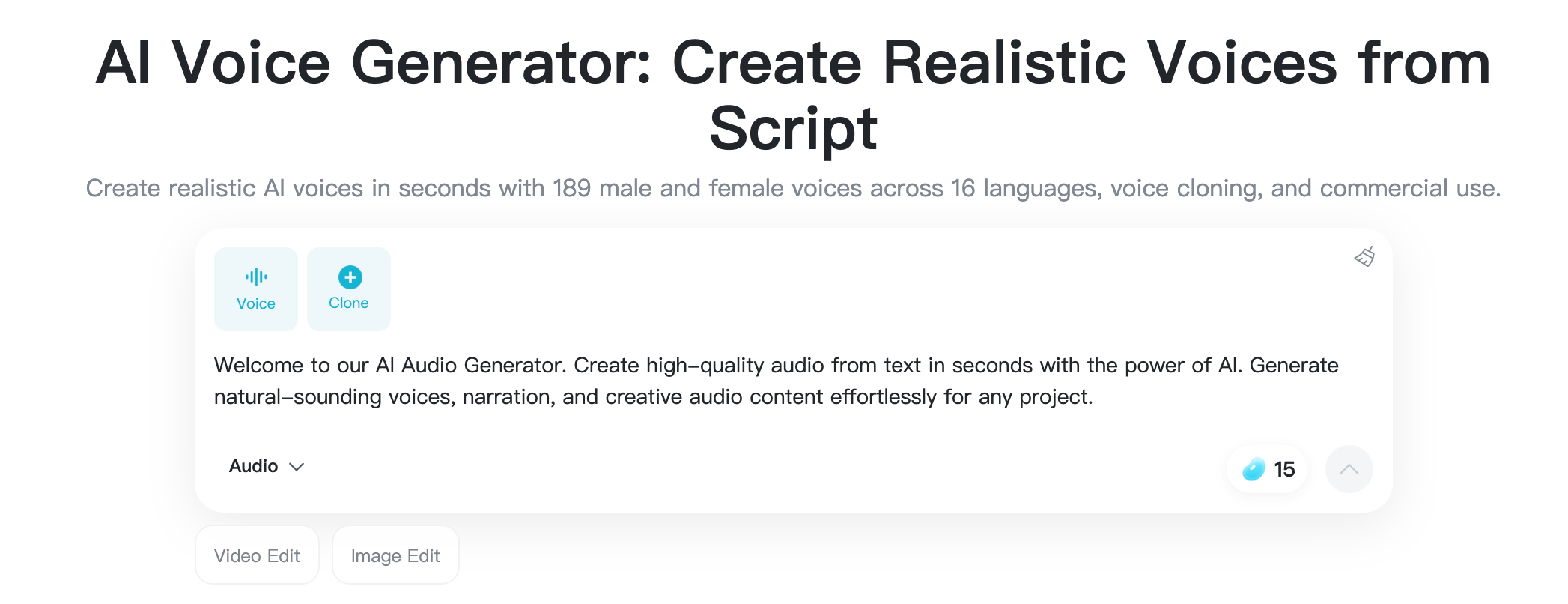
Best for: Video narration, character dialogue, social clips, product explainers, educational audio, and quick script testing.
insMind is the strongest starting point when you want to get from written copy to usable speech without building a complicated audio project. Its text to speech workflow keeps the essential controls together: add text, choose a voice, generate, listen, and download. That makes it approachable for a first voiceover and efficient for repeat work.
The broader toolset is helpful when your idea extends beyond standard narration. You can explore an AI voice generator for additional voice-driven projects or pair the audio with visual creation in the same creative ecosystem. You still need to write spoken-friendly copy and verify unusual pronunciations, but the path to a first result is short.
 Pros
Pros
- Clear browser-based workflow
- Good fit for creators and quick revisions
- No recording setup required
Cons
- Long scripts benefit from section-by-section generation
- Available voices and usage limits may vary
2 Speechify: Best for Turning Reading into Listening

Best for: Students, professionals, and readers who want articles, documents, or study material read aloud.
Speechify approaches text to speech from a listening and productivity angle. Instead of centering the experience on producing a finished voiceover, it helps users consume written material as audio. That distinction matters. If your primary goal is to hear a PDF or move through reading while commuting, a reader-focused tool can feel more natural than a creator studio.
For tightly directed marketing narration, however, you may prefer a workflow built around generating and exporting a specific script. Check which voices, speeds, and export options are included in the plan you are considering.
Pros
- Strong fit for reading and study
- Designed for everyday listening
- Useful across common content types
Cons
- Less centered on detailed voiceover production
- Premium voices may require an upgrade
3 Murf: Best for Business Voiceover Workflows
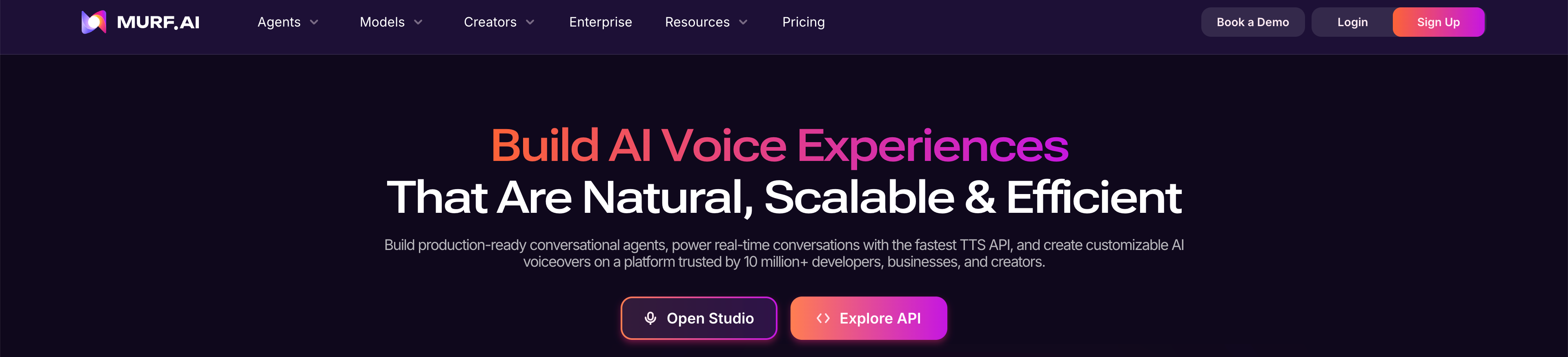
Best for: Training, presentations, explainers, product demos, and team-reviewed business content.
Murf packages AI narration in a studio-like environment. That is useful when a voiceover needs to align with slides, scenes, or a structured business presentation. Teams can organize a project more deliberately than they would in a bare text box, and the platform is oriented toward polished professional content.
The tradeoff is that a studio workflow can feel slower for a tiny request. If you only need one short line, insMind's direct AI voice over path may get you to a downloadable result with fewer project-management steps.
Pros
- Business-friendly project structure
- Useful for presentations and training
- Supports organized voiceover assembly
Cons
- More setup than a quick generator
- Best features may sit on paid plans
4 PlayHT: Best for Exploring Voices and Languages
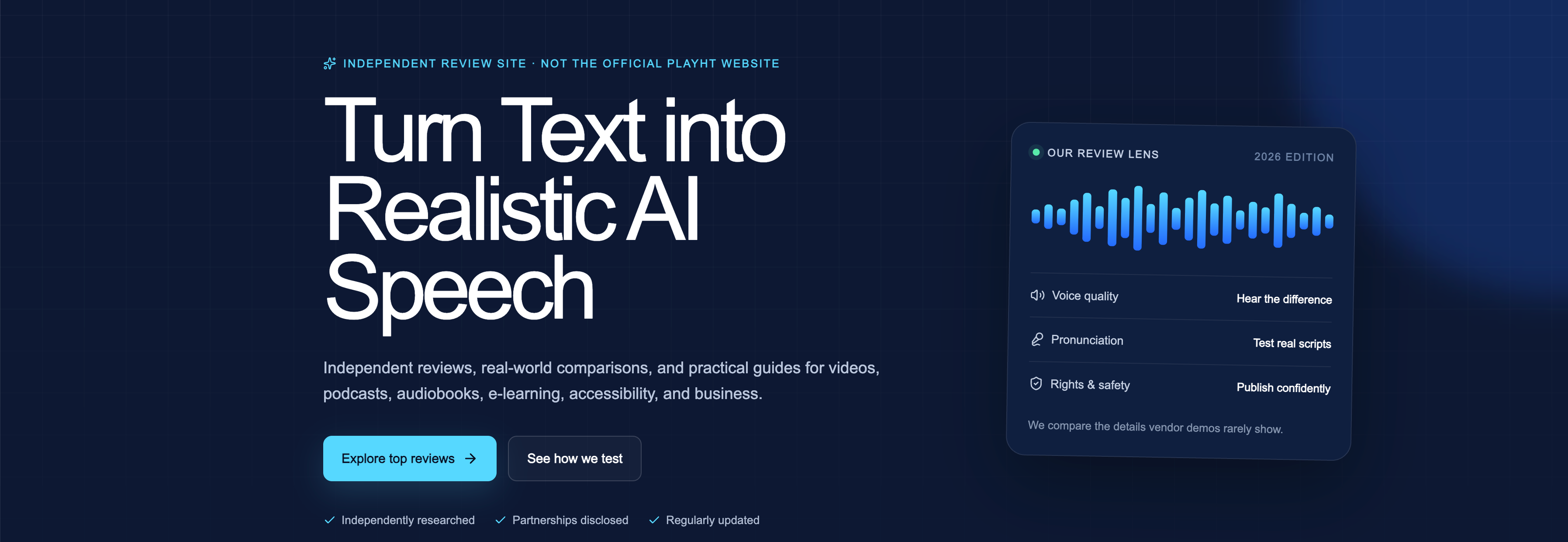
Best for: Teams comparing many voice options or building speech into digital products.
PlayHT is worth considering when breadth is central to the decision. A large catalog can help you compare vocal age, accent, language, and character before settling on a direction. It also appeals to technical users who want generated speech inside a product rather than only as a downloaded file.
A broad catalog can create its own friction: auditioning many similar voices takes time. Use the same 20- to 30-second test script for every candidate, then shortlist based on clarity, tone, and pronunciation instead of browsing indefinitely.
Pros
- Broad voice exploration
- Useful language coverage
- Options for production and technical use
Cons
- Voice selection can take longer
- Plan details matter for higher-volume use
5 NaturalReader: Best for Documents and Accessibility

Best for: Listening to documents, proofreading by ear, and making written information easier to consume.
NaturalReader has long focused on making written content audible. It is a practical option when your source is a document and your goal is access, comprehension, or review. Hearing a draft can also reveal missing words, awkward sentences, and repetition that your eyes skip.
Its strength is utility rather than a cinematic production environment. For a branded campaign, compare its export rights and voice controls with a creator-focused generator before deciding.
Pros
- Straightforward document listening
- Useful for proofreading and access
- Friendly for non-technical users
Cons
- Not primarily a full media editor
- Commercial permissions depend on product and plan
6 Descript: Best for Editing Speech with Video and Audio
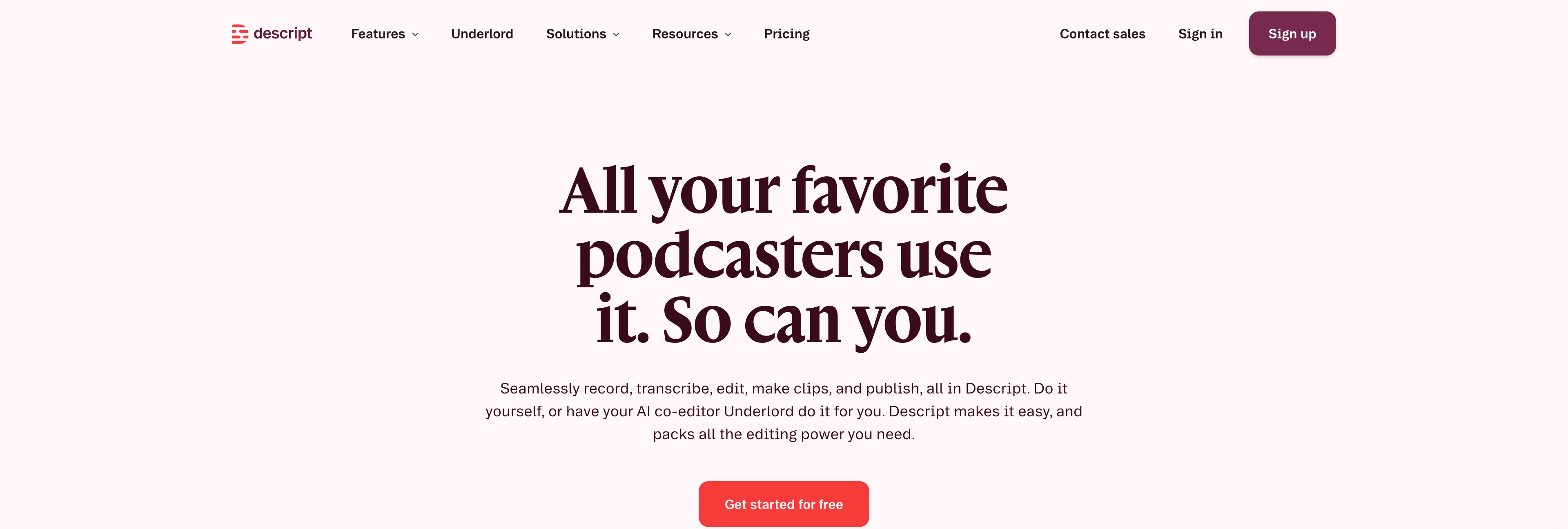
Best for: Podcasts, talking-head videos, interviews, and creators who edit media through a transcript.
Descript stands out because text-to-speech features live inside a broader editing workflow. If you already cut a podcast or video by editing words on a transcript, generating or correcting speech inside that environment can reduce tool switching. It is most compelling when speech generation is one stage in a larger edit.
That also makes it less direct for someone who only wants a quick audio file from a paragraph. Expect a broader learning curve than a focused text-to-speech page.
Pros
- Transcript-based audio and video editing
- Useful for corrections inside an edit
- Strong fit for podcast workflows
Cons
- Broader interface takes time to learn
- Overkill for a single short voice clip
7 ElevenLabs: Best for Expressive, Character-Driven Voices
Best for: Character dialogue, audiobook-style narration, multilingual projects, and creators who want highly expressive voice performance.
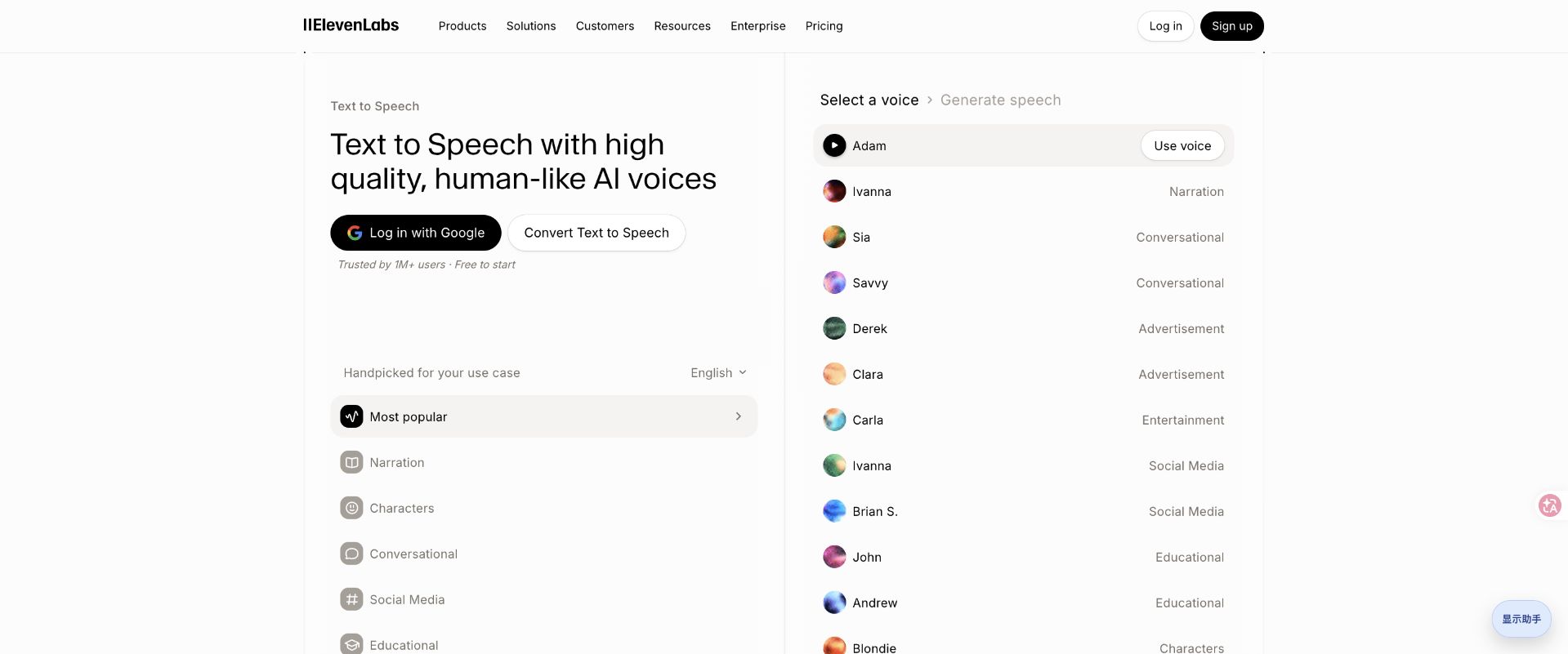
ElevenLabs built its reputation on voices that carry emotion and character instead of simply reading words aloud. The page is organized around choosing a speaker first: a long voice list tagged by use case, such as narration, characters, conversation, social media, and education, makes it easy to audition candidates that match your script's tone before you generate anything.
That expressiveness comes with a credit-based workflow, so longer scripts need planning. Estimate the character cost of your full script, generate section by section, and confirm the commercial terms attached to your plan before publishing client or monetized work.
Pros
- Highly expressive, characterful voices
- Use-case presets speed up voice choice
- Strong multilingual coverage
Cons
- Credit limits require script planning
- Advanced controls take time to master
8 Resemble AI: Best for Real-Time and Enterprise Speech
Best for: Real-time voice agents, product integrations, custom voice models, and teams that need cloud, on-premise, or air-gapped deployment.
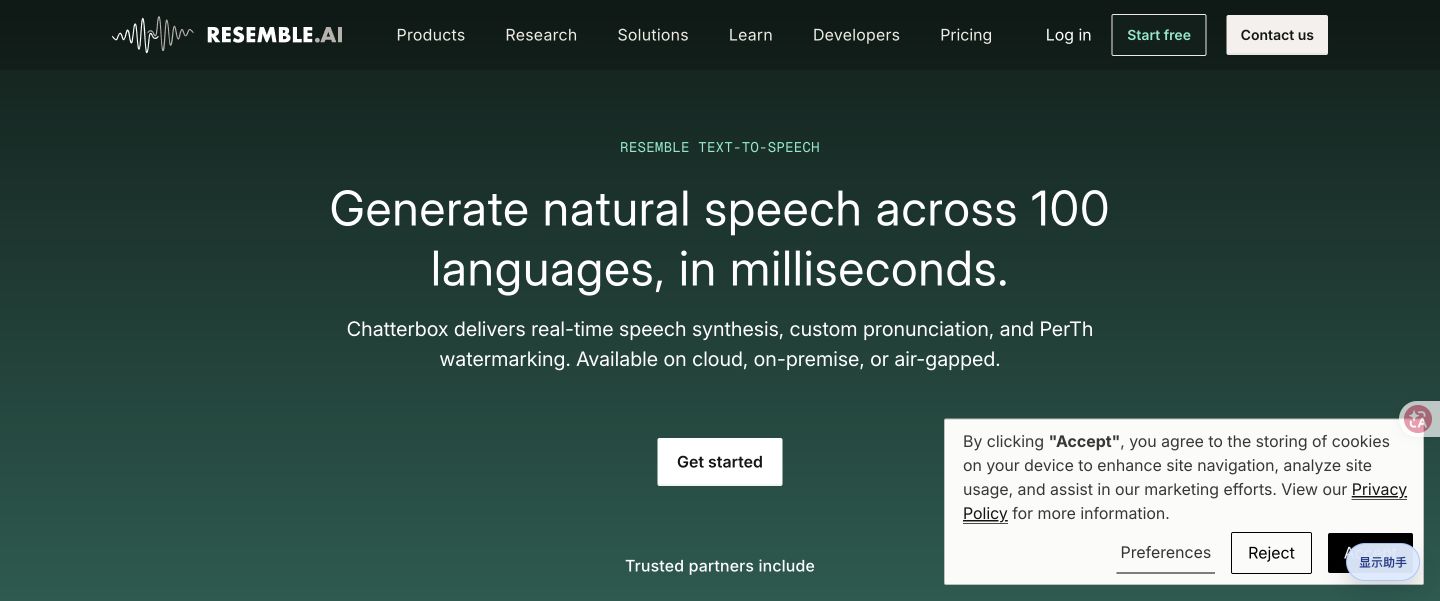
Resemble AI treats speech as infrastructure. Its Chatterbox models target low-latency synthesis with custom pronunciation controls and watermarking for provenance, and the platform can run on cloud, on-premise, or air-gapped environments. That makes it a natural fit when generated speech must live inside an application or satisfy strict deployment rules.
The flip side is convenience for one-off work. If you only need a downloadable narration from a paragraph today, a creator-facing generator gets you there with fewer decisions about models, keys, and deployment targets.
Pros
- Real-time, low-latency synthesis
- Flexible enterprise deployment options
- Custom pronunciation and watermarking
Cons
- More setup than a quick generator
- Overkill for single short clips
How to Choose the Right Text to Speech Tool
Still unsure which platform fits? Answer five questions before you compare plans:
What are you producing? A downloadable narration, a listening aid, a localized course, a podcast edit, or speech inside an app?
How long is the content? Short clips reward speed; books and courses need organization, consistency, and predictable limits.
How much direction do you need? Some projects only need a suitable speaker. Others need careful control over pronunciation and delivery.
Who must review the work? A solo creator can use a focused generator, while a team may value comments, projects, and shared assets.
What usage rights apply? Confirm commercial terms, voice permissions, and any restrictions before publishing client or paid work.
If you need fast narration with minimal setup, start with insMind. If you need immersive voice performance or an API-centered system, compare production platforms. If the goal is listening rather than publishing, prioritize a reader. For book excerpts and narrative samples, an audiobook generator provides a more focused long-form starting point.
Tips for More Natural AI Speech
Even the best text to speech software can sound stiff when the script was written for silent reading. Use these edits before blaming the model:
Replace long clauses with short spoken thoughts.
Use contractions when the character or brand voice should feel conversational.
Write numbers the way you want them spoken, especially dates and decimals.
Add a clear emotional turn instead of asking for “more emotion” everywhere.
Keep one voice and pronunciation sheet across a recurring series.
Mix background music below the narration, then check the result on phone speakers.
Useful test line: “On Thursday, March 12, the North Harbor team will launch version 3.5. Want a quick preview?” It tests dates, numbers, a proper name, pacing, and a question in one short sample.
Do not chase perfect human imitation at the expense of clarity. A clean, consistent synthetic narrator is often more useful than a dramatic voice that changes character halfway through a lesson.
FAQs About the Best Text to Speech Tools
What is the best text to speech tool for beginners?
insMind is a practical beginner option because the workflow is easy to follow: enter a script, choose a voice, generate the speech, preview it, and download. The best first tool should let you test a real script without requiring audio-editing experience.
Which text to speech tool sounds the most natural?
Naturalness depends on the voice, language, script, and use case. Compare tools with the same 20- to 30-second passage and listen for stable tone, sensible pauses, clear names, and believable emphasis. A tool that wins on a dramatic demo may not win on your training script.
Can I use AI-generated speech in commercial videos?
Often yes, but rights depend on the provider, plan, voice, and source material. Review current commercial-use terms before publishing ads, client work, courses, audiobooks, or monetized videos. Never clone or imitate a real person's voice without permission.
Are free text to speech tools good enough for YouTube?
A free tier can be enough for testing, short clips, or an early channel. Check export quality, attribution rules, monthly limits, and commercial rights. Consistency becomes more important as your channel grows, so save the exact voice and script conventions you use.
How should I handle mispronounced names and acronyms?
Try phonetic spelling, add spaces between letters, or rewrite an abbreviation the way it should be spoken. Generate a short test before processing the entire script. Keep a pronunciation list for recurring names, products, and technical terms.
Should I generate a long document all at once?
Usually not. Divide long content into meaningful sections so you can replace one flawed paragraph without regenerating everything. Section-based files are also easier to review, edit, and align with slides or video scenes.

Jayson Harrington
I am the Chief Editor of insMind. I provide tips and skills to help users design better photos with insMind, whether for e-commerce, social media, or any other use.
Keep reading

4 Best AI Video Tools for Multilingual Ads in 2026
Compare AI tools for localized video ads, lip sync, dubbing, and new market-specific creatives, plus a practical review checklist.

5 Best AI Video Generators for Marketing in 2026
Compare five AI video generators for product ads, presenter videos, cinematic clips, and campaign testing, with practical selection tips.

Dreamina AI Review: How Good Is It for Images and Videos?
Is Dreamina AI any good? Explore its image generator, video creation, AI avatars, strengths, limitations, and alternatives in this detailed review.

Flova AI Review: Is It Really Worth Using in 2026?
Is Flova AI worth using? Explore its video creation features, character consistency, pricing, limitations, and the best alternative for creators.

Higgsfield AI Review: What I Saw in a Studio Slide Demo
A close look at Higgsfield's Studio Slide image-to-video example: what happens to the subject, where the effect works, and where I'd be careful.

5 Best AI Voice Generators in 2026: Free & Paid Picks
Compare five leading AI voice generators for creators, marketers, podcasts, videos, and business narration.

Best Text to Speech Tools: 8 Picks for Natural AI Voices
Compare eight text to speech tools for natural AI voices, videos, learning, and business projects.

7 Best AI Avatar Makers in 2026: Top Tools Compared
Compare seven AI avatar makers for business, social, anime, and 3D profiles.

Best AI Audio Generators: 7 Tools for Voice Content in 2026
Compare seven AI audio generators for voice content, creative projects, and developer workflows.

Grok Imagine vs Veo: Which One Should You Use in 2026?
Compare Grok Imagine and Veo to choose the right AI video model for your workflow.

New Seedance 2.1 and Mini: Better Quality, Lower Price
Seedance 2.1 and Seedance 2.0 Mini updates, pricing, and insMind workflow.

Best AI Video Color Correction Tools for Fast Video Enhancement
Compare AI video color correction tools and fix video color online.

Top AI Highlight Video Maker Tools to Create Stunning Clips in 2026
Compare AI highlight video maker tools and create stunning clips with AI.

Make Your Vacation Photos Move with an AI Travel Video Maker
Turn travel photos into cinematic AI videos, Reels, and vacation clips.

How to Get More YouTube Subscribers for Free
Learn how to get more YouTube subscribers on YouTube for free with small-channel tactics, Shorts, thumbnails, playlists, analytics, and AI workflows.

How to Get More Views on YouTube: A Practical 2026 Growth Strategy
Learn how to get more views on YouTube with a practical strategy for topics, titles, thumbnails, Shorts, retention, analytics, and safer growth.

Best AI UGC Video Generator for TikTok Ads: Boost Engagement Fast
Step-by-step guide on Best AI UGC Video Generator for TikTok Ads: how it works, best practices, and how to do it free with insMind.

Seedance 2.0 vs Veo 3.1: Which AI Animation Tool Is Right for You?
Explore the strengths of Seedance 2.0 vs Veo 3.1 in animation, focusing on features, performance, and user experience.

Top 10 AI Meme Video Generators in 2026 (Free and Paid)
Compare the top 10 AI meme video generators for TikTok, Instagram Reels, and YouTube Shorts. Find the best free and paid tools to create viral meme videos with AI.

Best Seedance 2.0 Prompts: 5 Copy-Paste Examples for AI Video Creation
Discover 5 Seedance 2.0 prompt examples and learn how to create smoother, more cinematic AI videos with better control.

Seedance 2.0 Alternatives: 8 AI Video Models Worth Trying in 2026
Explore 8 Seedance 2.0 alternatives and learn how to choose the right AI video model for social content, ads, and storytelling.

Top 10 ID Card Maker Prompts to Create ID Cards Online
Discover the trending prompts to generate ID card photos.

How to Go Linve in Instagram (The Ultimate Guide in 2026)
Discover exactly how to do live video instagram broadcasts. We cover the setup steps, engagement tips, and how to use insMind AI to create stunning videos.

5 Hottest Nano Banana 2 Prompts to Create Stunning AI Images
Looking for the best Nano Banana 2 prompts? Discover 5 trending prompts and generate stunning AI images using insMind’s Nano Banana 2 AI Image Generator.

Nano Banana 2 vs Nano Banana Pro: Which AI Image Model Should You Use?
Discover the key differences between Nano Banana 2 and Nano Banana Pro. Compare features, pricing, and best use cases for each model.

AI Attractiveness Test: Discover Your Beauty Score with AI
Curious about your beauty score? Try the AI attractiveness test to analyze facial symmetry and proportions instantly using insMind’s AI tool.

Mocking SpongeBob Meme: Meaning, Origin, and How to Make It
Discover what the Mocking SpongeBob meme means, where it came from, why it went viral, and how to make your own version step by step.

Seedance 2.0 Review: Multimodal Control and Real-World Testing in 2026
Seedance 2.0 review with feature breakdown, pricing overview, and side-by-side comparison with Kling, Sora, Veo, and Wan AI video models.

Seedance 2.0 vs Kling 3.0: Which AI Video Generator Wins?
Seedance 2.0 or Kling 3.0 ? We compare both AI video generators on features, speed, and quality so you can pick the right model fast.

Is PixVerse AI Worth Using in 2026? Full Review, Pros & Cons Explained
An in-depth PixVerse AI review covering features, strengths, limitations, and how to use PixVerse on insMind for lower cost and more models.

30 Funny Text Meme Ideas That Will Make Anyone Laugh Instantly
Introduce 30 funny text meme ideas and learn how to generate meme images with insMind AI Image Generator.

Top 10 AI Discord Banner Ideas for Personalized Profiles
Your Discord banner sets the first impression. With AI Discord banner generator, you can create personalized banners in minutes.

Top 10 Discord Avatar Maker Ideas with AI
Your Discord profile picture is your personality. With AI avatar makers, you can create a unique avatar in seconds.

Top 10 Realistic Celebrity Selfie AI Prompts
Discover how celebrity AI image generators create realistic selfies. Learn how prompts turn photos into convincing celebrity-style images fast and easily.

Top 5 Local/Open-Source AI Image Generators in 2026
Discover the top 5 local/open-source AI image generators in 2026.

What Are Agent Skills? Everything You Need to Know
Introduce what are agent skills and how agent skills improve productivity.

Top 10 AI Collage Prompts for 3-Grid & 9-Grid Photos
Create professional 3-Grid and 9-Grid photo collages in seconds with our free AI generator. Upload images and let AI handle layout perfectly.

Top 10 Best AI Animation Tools in 2026 for Creators and Marketers
Discover the top AI animation tools in 2026, including text-to-video, image-to-video, and full AI video generators.

Top 10 AI Christmas Card Ideas for Custom Holiday Cards
Explore 10 AI-powered Christmas card ideas to create personalized holiday cards that feel festive, thoughtful, and easy to share with everyone.

Top 10 Christmas Elf AI Transformations to Try This Season
Create fun Christmas elf photos with AI. Turn yourself, family, kids, or pets into playful elves and share festive portraits this holiday season.

Top 10 Turn Me Into a Santa Ideas to Try This Christmas
Use AI to turn yourself into Santa this Christmas and create festive photos with a AI Santa Filter that are perfect for sharing, cards, and holiday laughs.

OpenArt Review: Honest Experience Using an AI Image Creator
Learn everything about OpenArt AI image generator in this article.

Kling O1 Prompt Bank: Everything you need to know
Learn everything about the Kling O1 Prompt Bank, including tips, examples, and AI video prompts.

Kling 2.6 Overview: Features, Benefits, and How to Use it Professionally
Explore Kling 2.6, the native audio-visual AI video model that creates videos with voice and sound in one seamless workflow.

50+ Hottest Nano Banana Pro Prompts for Viral Image Effects
Go through the guide to uncover the hottest list of Nano Banana Pro prompts to copy and use them as guided.

Nano Banana Pro vs. Seedream 4.0: How to Choose the Better One
Nano Banana 2 vs. Seedream 4.0? The clash between innovation and intelligence is outlined in the article below, with key differences and a guide on how to use it.

Black Friday Memes: The Funniest Internet Trend Taking Over Every Year
Explore the rise of Black Friday memes and learn how to create your own viral, funny posts with AI.

Zootopia Selfie: Turn Yourself into a Zootopia Character with AI
Transform your photo into a fun, animated Zootopia-style character instantly with AI.

Top 5 AI Video Generators in 2025: Create Stunning Videos with AI
Explore the best AI video generators of 2025 to create stunning, high-quality videos effortlessly. Learn more on insMind!

Top 5 Best Sora 2 AI Alternatives in 2025
Are you looking for some reliable Sora 2 AI alternatives? Here is a detailed guide with top 5 best Sora AI alternatives you can try in 2025.

Top Luma AI Alternatives for Video Creation
Are you searching for some reliable Luma AI alternatives that can generate high-quality AI videos? Here is a detailed guide that can help you.

Top 5 Hailuo AI Alternatives For Quality Video Generation
In this article, we'll provide you with the top 5 options for the best Hailuo AI Alternative so you can create your videos more quickly, easily, and with better quality.

Top 5 Veo 3 Alternatives: Best AI Video Generators You Can Try
Are you searching for the Veo 3 alternatives? Here is a guide with top 5 Veo 3 alternatives you can consider using according to your needs and budget.

Top 80 Attitude Captions for Instagram: Express your Personality
This article provides 80 powerful attitude captions to boost your Instagram engagement.

Nano Banana Tested, Complete Gemini 2.5 Flash Image Review
I have tested Nano Banana, and its AI image edits feel magical. Its realistic edits with consistency prove why it's the future of AI creativity.

Top 10 PixVerse AI Alternatives: Turn Image & Text to Amazing Videos
Top PixVerse AI alternatives for creating amazing videos from text or images, with insMind as the top pick.

Top 10 Kling AI Alternatives for Smarter AI Video Generation
Top 10 Kling AI alternatives for smarter, faster, and more accessible AI video generation.

Top 10 Best AI Art Generators in 2025: Features, Tips & Use Cases
Discover the best AI art generator tools for 2025

I Tested Higgsfield AI, Here is My Real Opinion
Higgsfield AI promises cinematic-level image and video creation. Read my hands-on review, test results, and verdict before you try it yourself.

Top 10 Most Popular Halloween PFP Ideas in 2025
Looking for an aesthetic Halloween PFP? Find the best spooky and fun ideas, plus tips to design eye‑catching profile pictures for the 2025 Halloween season.

5 Best Kling AI Alternatives for Fast HD Video Creation
Discover the best Kling AI alternative options for 2025. Ideal for creators needing fast, HD video generation without the hassle, and affordable for everyone.

Top 10 Female Anime Characters You Need to Know About
Explore the top 10 female anime characters, their charm, and learn how to turn yourself into a cute anime drawing with a reliable AI-powered tool.

Understand the Starbucks Logo Meaning and Get Inspired
If you don’t understand Starbucks logo meaning, read this article. It provides how it came to be and what makes it stand out from the other coffees.

Why a Red Logo Could Be the Perfect Choice for Your Brand?
If you are looking to expand your brand name, choose a red logo. This article highlights the different reasons why companies should go for it, and more.

Top 10 Trending Family Tattoo Ideas in 2025
Want to immortalize your family name or moments, but can't decide which one to get? Go through the top 10 family tattoo ideas in this article.

What Color is Mauve - Everything You Need to Know about Mauve
Learn what color mauve really is, its hex code, meaning, and how to style it.

10 Customizable Aesthetic Phone Wallpaper Ideas in 2025
Looking to upgrade your iPhone wallpaper aesthetic? Explore 10 customizable design ideas and learn how to create your stunning backgrounds using easy tools.

Best 10 Coverup Tattoo Ideas to Hide Regret with Style
Looking to hide or transform an old tattoo? Explore creative cover-up tattoo ideas, from floral designs to AI-powered previews, that help you turn ink into art.

Top 5 AI Pixel Art Generators in 2025: Instantly Make Pixel Art Online
Generate pixel art instantly with AI in 2025! Top 5 tools compared—insMind leads for speed and creativity.

Top 8 Kawaii Chibi Character Makers: Create Your Avatars
Are you looking for a good chibi maker to create the cutest avatars or stickers? Read this article to find the best 8 chibi avatar makers.

Top 5 AI Simpsons Character Generators: Transform Your Face into Yellow Toon Style
AI-powered Simpsons avatar maker: Instantly cartoonize any photo in classic yellow style!

Top 6 AI Tattoo Removal Tools: Erase Tattoos from Photos
Easily remove tattoos from any photo with the best AI tools. Fast, realistic, and perfect for clean edits.
![Top 5 AI Baby Podcast Generators in 2025 [Reviewed & Tested]](https://images.insmind.com/market-operations/market/side/9ed5a89e85ab457a9e8faace7bb25258/1750317475287.jpg?x-oss-process=image/resize,w_690,h_460,type_6/interlace,1,image/format,webp "Top 5 AI Baby Podcast Generators in 2025 [Reviewed & Tested]")
Top 5 AI Baby Podcast Generators in 2025 [Reviewed & Tested]
Discover the top 5 AI Baby Podcast generators and learn how they generate engaging content. Also, understand why this trend is all over social media.

10 Slimming Hairstyles for Round Faces—Try Them with AI!
Instantly try 10 slimming hairstyles for round faces using insMind's free AI tools. Discover flattering cuts that enhance your natural features.

Wolfcut: Details to Uncover Before You Decide a New Look
Choosing a Wolfcut becomes easier with face-based previews in real-time. Visualize your new hairstyle clearly and save results directly to your device.

20 Unique Trending Prom Hairstyles in 2025
Are you struggling to find the perfect prom hairstyle? Read this article and discover the top 20 prom hairstyles and trends that make a unique personality.

Embrace the Y3K Fashion with AI Tools
Discover Y3K fashion trends and create futuristic outfits with AI tools through any means of key aesthetic elements.

Virtual Hair Try-On: 5 Must-Have Styles of 2025 You Can Test Now
Preview 2025's trending hairstyles with virtual try-on tools before your salon visit. Try new looks online easily.

10 Best Baby Face Generators Online Free for Realistic Results
Explore lifelike baby predictions with best baby face generator online free. Upload photos, blend features, and simply see a glimpse of your future baby.

Try Before You Dye: Best Hair Color Try-On Tools in 2025
Discover top virtual hair color try-on apps for 2025. Find your perfect shade online—easy, fun, and free.

Top 5 Free Alternatives to GPT 4o Image Generation
Discover the top 5 free alternatives to GPT 4o for AI image generation. Explore tools to boost your creativity.

Top 10 Hair Color Trends 2025 for Men and Women
Discover 2025 hair color trends from dusty to bright skin tones. It is suitable for every hairstyle and season and perfect to refresh your look this year.

Top 25 Hair Trends of 2025: Styles to Look Out For!
Hair trends are always changing, and in 2025, fashion is at an all-time high. Here are the top 25 hair trends to study for the best and most unique look.

Top Ghibli AI Prompts to Create Fantasy-Style Images
Use these Ghibli-style prompts to create magical forests, cute characters, and fantasy cities. Learn how to use the insMind tool to bring your ideas to life.

Best Ghibli-Style Filters You Need to Try in 2025
Discover the best Studio Ghibli filter styles for photos and videos in 2025. Transform your content with dreamy, anime-inspired effects using insMind.

Ghibli vs. Pixar AI Styles: Find Out the Differences
Discover the trending Ghibli vs. Pixar AI art transformation, their differences, and how to use AI tools for the perfect transformation.

Top 5 Ghibli Style Image Generators in 2025
Looking for the best Ghibli AI image generator? We tested and reviewed the top 5 options—complete with pros and cons. Read on to find your perfect match!

Best Passport Photo Makers in 2025: Create Perfect ID Photos Online
Discover the best online passport photo makers of 2025. Create perfect ID photos quickly and easily.

5 Best Hairstyle Apps to Virtually Try New Haircuts and Colors
Want to try a new haircut without the risk? Discover the top 5 hairstyle apps that let you experiment with different haircuts, colors, and styles.

Top 5 Hair Color Apps to Try on Your New Look Virtually
Explore the top 5 hair color apps that let to try different shades and styles online to experiment with your look before making it a permanent change.

The Ultimate Guide to the Best 5 Discord Avatar Makers
Can't seem to find the idea avatar maker online? This article will offer the top 5 Discord avatar makers to make customized profile images on servers.

Pixelcut vs. Photoroom: Which One is Better?
Wondering which AI image editing tool is better? Compare Pixelcut vs. Photoroom in features, pricing, and find the best option for you.

Complete Walkthrough of Fooocus vs. Stable Diffusion
What is the best generator for an artist or professional? Read this article to find the best by looking at the Fooocus vs. Stable Diffusion comparison.

AIEase Review: Pros, Cons & A Smarter AI Editing Alternative
Go through an ultimate review to discover the pros, cons, and features of AIEase, and explore an AI-powered photo editor as a great alternative.

20+ Unique Valentine's Day Photo Ideas for Cherished Memories
Are you looking for Valentine's Day photo ideas to surprise your loved one? Explore this guide to learn the best options for crafting high-end images.

Unique Valentine's Day Gift Ideas for Creative Ways to Celebrate
Explore unique Valentine's Day gift ideas with insMind's unique digital gifts. Create custom gifts in just a few steps that will ultimately show you care.

Lemon8 vs. TikTok - What're the Differences?
Explore the Lemon8 vs. TikTok comparison, as well as their features and integration. Also, learn how an advanced editor can enhance your content creation.

A Must - Read! Lemon8 vs. Pinterest, Which One Is More Suitable for Your Content Sharing?
Which one is better, Lemon8 vs. Pinterest? Explore which platform is best for your sharing needs, find out the best photo editor for your content creation.

What is REDnote (Xiaohongshu) and Why Are TikTok Users Downloading It
Learn why TikTokers are going to Xiaohongshu, the alternative platform, as the ban approaches. Also, learn about a useful tool to create engaging images.

Discord Profile Picture Size and How to Make The Perfect Discord Profile Picture
Do you want to have a unique presence on Discord? Read this article and learn about the picture size and ways to create the best Discord profile picture.

Redbubble vs. Esty, Which Platform is Better for Sale
Which is right for you, Redbubble or Etsy? Explore the following informative article, and sort yourself related to Redbubble vs. Etsy queries.

Top 5 AI-Powered Christmas Card Maker
Discover 5 leading Christmas card makers to surprise your loved ones. Also, compare them regarding price, accuracy, and other terms to pick the best.

Top 10 Christmas Cards Ideas, Templates, and Wishes
Do you want to create the perfect Christmas card for your family and friends? Read this article to find the best 10 Christmas card ideas to get started.

An In-Depth Review of Reface AI: Features,Pricing,Prons &Cons
Are you thinking, "Is Reface AI worth the investment?" Check the article below, explore the expertise of Reface AI, and then find a cost-free solution.

Top 10 Profile Picture Ideas for Facebook, Instagram, Discord, TikTok and More
How can profile pictures be made more engaging? Run through the article below and reveal endless ideas for profile pictures to use on social media platforms.

Top 10 Creative Poster Ideas (With Ready-to-Use Templates)
Are you thinking about enhancing your poster design? Read the following article and expand your knowledge about top creative poster ideas.

How to Use Bing Image Creator to Uplift Your Creative Vision
Have you heard about Bing Image Creator? Read this article to learn how you can create stunning images using Microsoft Bing AI art generator.

Top 5 AI Clothing Model Tools to Save Your Cost and Time
Do you want to build your clothing brand but don't have the budget? Read this article to explore the best 5 AI clothing model tools and boost your brand.

5 Best Easy-to-use Online Photoshop Alternatives
Find Photoshop too complex to use? Discover the best free online alternatives to meet all your photo editing needs.

A Complete Overview of Lemon8: Features, Guide, & Insights into Its Popularity
What is Lemon8? How to create engaging posts on Lemon8? Read the article and learn everything about Lemon8, including its features, audience, guide, etc.

How to Effectively Use AI Generative Fill in Photoshop
Are you looking to discover the use of Photoshop AI generative fill? This article explores Photoshop AI in detail and its best alternative.

ThredUP vs. Poshmark - Which One is a Better E-Commerce Platform
Learn about the two best e-Commerce stores, ThredUP and Poshmark. This article will provide a complete guide on ThredUP vs. Poshmark.

Identifying the Differences Between Depop vs. Poshmark
Do you need to find the best e-Commerce store for your fashion needs? Go through this detailed guide on Depop vs. Poshmark to identify one.

What is AI Yearbook and How to Make One with AI
Are you looking to recreate your yearbook photos? Then, read this article to discover the best AI yearbook generators with comprehensive steps.

eBay Image Size and Requirements 2025 New Rules
Get informed about eBay image size and requirements for 2025 with our guide. Follow the new rules to improve your listings and attract more buyers effectively.

Finding the 10 Best Free Midjourney Alternatives - Complete Guide
Midjourney boasts the best-in-class AI integration. However, it is not the only application that offers realistic AI image generation. This article is ready to explore the ten best Midjourney alternatives.
![Exploring the 10 Best AI Photo Editors for Your Needs [2025]](https://images.insmind.com/market-operations/market/side/05ccfa0da4d64b43ba07065f731cf586/1724393978325.jpg?x-oss-process=image/resize,w_690,h_460,type_6/interlace,1,image/format,webp "Exploring the 10 Best AI Photo Editors for Your Needs [2025]")
Exploring the 10 Best AI Photo Editors for Your Needs [2025]
Want to make your images visually attractive? Read this guide to learn about the best AI photo editors providing features to create high-quality content.

The Best 5 Fotor Alternatives - The Ultimate List 2025
Looking for Fotor alternatives? This article will explore the five best applications to replace Fotor. Each application is unique in its features and performance. Compare our top picks in the comparison chart!

Top 5 AI Tools for Graphic Design
Do you want to uncover the best AI tool for designing? Discover the top 5 AI tools for graphic design that can boost creativity and streamline the design.

Facebook Profile Picture Size Guide: Make the Most of it
Optimize your online presence with insMind's Facebook Profile Picture Resizer. This guide ensures your picture is perfectly sized for maximum impact and engagement.

Top 100 Sad Bio Ideas for Instagram You Must Try
Discover 100 poignant Instagram bio ideas for a touch of melancholy. Express your deepest emotions with these creative and relatable snippets.

Top 5 Tools To Mix and Blend Images With AI Online
Looking for the right tool to mix multiple images with AI? Read this article to learn about the top 5 photo mixers and how to use them efficiently.

Free Online WhatsApp DP Converter without Losing Quality
Discover the best free online WhatsApp DP converter that preserves image quality, and learn how to convert your profile pictures with this top-rated tool.

The 5 Best Free AI Image Upscaler of 2025 - Complete Review
Finding the Free AI image upscaler? Our top pick is insMind- the AI genius for image enhancement. Fix your photos with AI within minutes.

50+ Best Birthday Wishes/Quotes/Messages for Grandson
Discover heartfelt and creative birthday wishes for your grandson by reading this article. You will find over 50 unique messages to make his special day memorable.

Say Your Love: 50+ Daughter-in-Law Birthday Wishes
Are you looking for heartfelt daughter-in-law birthday wishes? From sweet to funny, find the perfect message to celebrate her special day.

Uncover the 100+ AI Image Prompt Ideas for AI Art
Want to generate AI images for your campaign? Find out how makers use AI to create stunning campaigns with 100+ AI generator image prompt ideas for free.

Ultimate AI Image Generator Without Login: 3 Must-Try Tools
Do you want to create stunning visuals using advanced AI? Discover the best AI image generator without login or restrictions in this guide.

10 Twitter Bio Ideas in 2025 with Examples
Powerful Twitter bios turn account visitors into followers, and eventually followers into sales. Check out these resources and tips we've compiled to learn how to create an effective and interesting Twitter profile.

100+ Facebook Bio Ideas For You
Having a bio for Facebook is crucial for growing your social media following. See these 100+ Facebook bios ideas that complement both your personality and your brand.

Top 10 Best Free AI Image Generators From Text
Which AI image generator is the best? We study several factors, evaluate the advantages and disadvantages, and create a list of the top free AI image generators.

Top 10 AI Photo Effects Taking 2025 by Storm
Are you interested in transforming your pictures into stunning visuals using AI? Go through this guide to learn about the trending AI photo effects.

Top 5 Free Photo Collage Makers & Step-by-Step Guide
Looking for easy ways to create stunning photo collages? Explore the top free online photo collage makers and transform your photos effortlessly.

Explore Top 5 Free Mac Photo Editors for Professional Output
Do you want to upgrade the visual outlook of your dull photographs? Try these free Mac photo editors to improve the way your images look.

The Ultimate Guide to AI Photo Trend for Social Media
Are you interested in knowing about the famous AI photo trend on social media? Read this guide, which explains everything about it and the trending photo AI app.

Canva vs. Photoshop: What is the Best for Photo Editing?
The Canva vs. Photoshop debate continues among photo editors over which is the best. Discover which is the best photo editor for your needs.

Exploring the Meaning, History, Symbolism, and Code of Scarlet Color
Are you interested in learning about the famous scarlet color? Check out this guide to learn insights about it and how you can use this color in your photos.

Top 5 AI Selfie Generators to Turn Your Selfies Extraordinary
Do you want to make your selfie stunning effortlessly? Here are the top 5 free AI selfie generators that can help you.

Everything You Need to Know about the NYCxDESIGN 2025
If you're looking to join the NYCxDesign 2025 event and showcase your creativity, here is everything you need to know about the event.

6 Best Photoroom Alternatives You Can Try in 2025
Are you looking for a better and free Photoroom alternative? Read about the top 6 Photoroom similar apps to select the best photo editor.

GPT-4o vs GPT-4: Which One is Better?
Find everything you need to know about GPT-4o, including the comparison between GPT-4o and GPT-4.

10 Must-Try Canva Alternatives for Stunning Graphic Design
Looking for canva alternatives? Check out our top 10 picks!