


UGC ads work because they feel specific. A creator looks into the camera, names a real problem, shows a product in context, and gives the viewer one reason to care. But writing fresh UGC scripts for every beauty launch, fitness offer, and ecommerce product page can drain a creative team fast.
That is why AI UGC scripts are becoming a practical part of modern content production. The goal is not to make every ad sound robotic. The goal is to give your team repeatable script structures that can be adapted by niche, hook, product, audience, and platform. Once the script is clear, you can turn a product image into a UGC-style video with insMind and test the idea before booking a full creator shoot.
Table of Contents
What Makes an AI UGC Script Work?
A strong UGC script is not a mini commercial. It sounds like a real person noticing a real problem and showing a useful solution. The best-performing structure is simple: hook, problem, product moment, proof, and call to action. If one of those pieces is missing, the ad often feels incomplete.
The hook should create curiosity in the first three seconds. For beauty, that might be a before-and-after tension. For fitness, it could be a relatable routine problem. For ecommerce, it might be a product discovery moment: “I did not think I needed this until I used it for one week.”
The product moment matters most when you plan to generate video from a reference image. A script should tell the viewer what the product does visually: apply serum, zip the gym bag, style the travel outfit, press the smart button, or hold the accessory while walking. That gives insMind a clearer direction when you use an image to video workflow.
Beauty UGC Script Templates
Beauty UGC needs sensory language. Viewers want to understand texture, finish, ease of use, and visible payoff. The script should feel personal, but not overproduced.
Template 1: Problem-Solution Skincare
Hook: “My makeup kept clinging to dry patches until I changed one step.”
Problem: “I wanted my skin to look smooth, but heavy moisturizers made my T-zone shiny.”
Product moment: “I use this lightweight serum before sunscreen, and it absorbs in seconds.”
Proof: “The finish looks hydrated without feeling greasy.”
CTA: “Try it before your next makeup routine.”
Template 2: Get-Ready-With-Me Product Demo
Hook: “This is the product I keep reaching for when I only have five minutes.”
Scene: creator at a vanity, natural morning light, casual tone.
Product moment: apply or hold the product clearly for the camera.
Benefit: quick glow, polished look, no complicated steps.
CTA: “Save this for your next quick routine.”
Fitness UGC Script Templates
Fitness scripts work best when they connect to a routine. Instead of saying a product is “high quality,” show where it fits: before a workout, during a busy commute, after training, or while building a home gym habit.
Template 1: Routine Upgrade
Hook: “This made my morning workouts feel way less chaotic.”
Problem: “I used to waste ten minutes finding my gear and setting up.”
Product moment: show the product being carried, worn, opened, or used.
Proof: “Now everything is ready before I even leave the house.”
CTA: “Add this to your training setup.”
Template 2: Honest First Impression
Hook: “I tested this for one week, and here is what surprised me.”
Scene: gym, home workout corner, walking path, or locker room.
Product moment: use the item in a realistic movement.
Benefit: comfort, grip, support, portability, motivation, or recovery.
CTA: “See if it fits your routine.”
Ecommerce UGC Script Templates
Ecommerce UGC covers almost everything: apparel, accessories, gadgets, home goods, digital products, and bundles. The script should help shoppers imagine the product in their own life. That is why “show, don't tell” matters more here than in any other category.
Template 1: Product Discovery
Hook: “I saw this everywhere and finally understood the hype.”
Problem: “Most options looked good online but felt awkward in real life.”
Product moment: hold, wear, style, open, or place the product in a real setting.
Proof: “It actually works with my daily routine, not just the product photos.”
CTA: “Check the product details before it sells out.”
Template 2: Style the Product
Hook: “Here is one product, three ways I would use it this week.”
Scene: creator transitions between casual, work, and weekend settings.
Product moment: the reference product stays visible and consistent.
Benefit: versatility, convenience, style, or gifting value.
CTA: “Pick the version that fits your day.”
If you are turning product photos into UGC scenes, the AI product video generator can help you create more campaign angles from the same visual asset.
How to Create AI UGC Videos with insMind?
Once your script has a clear hook and product moment, use insMind AI UGC Video Generator to convert the idea into a short UGC-style clip. The workflow below matches the image-to-video process shown in the steps.
Step 1: Upload Your Product Photo
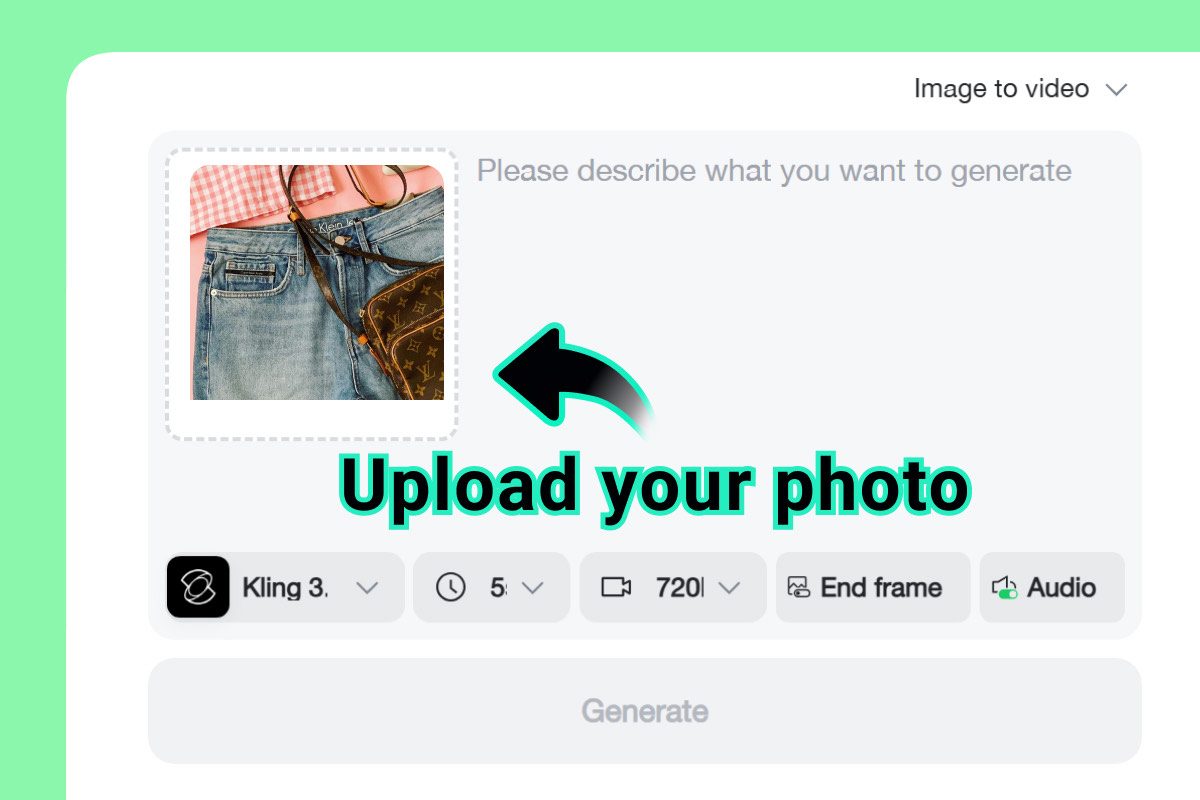
Start with a clean product or lifestyle image. For beauty, use packaging or an application shot. For fitness, use the product in a workout context. For ecommerce, choose a product reference image with enough detail for the AI to preserve shape, color, and style.
Step 2: Enter a UGC Prompt
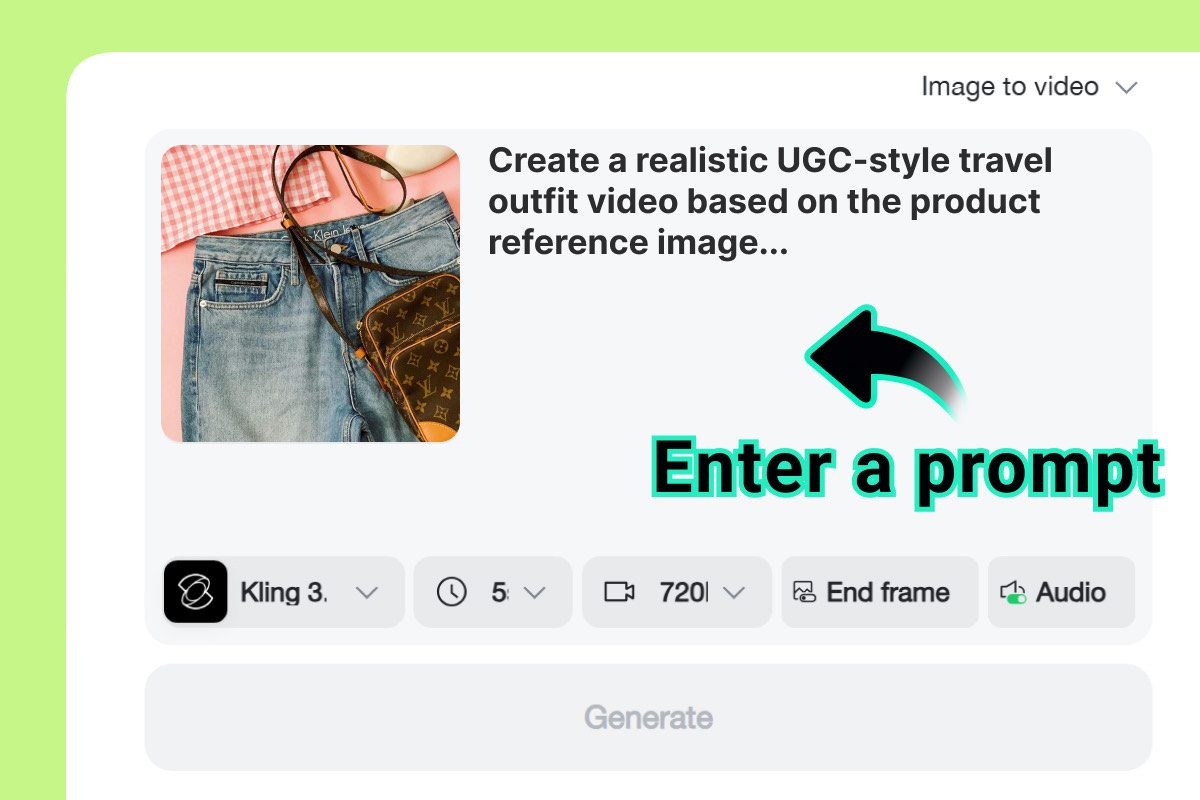
Write a prompt that combines the script direction with the visual action. For example: “Create a realistic UGC-style travel outfit video based on the product reference image. A confident creator wears the outfit while walking through a sunny city street, natural handheld camera, casual social media style.” This is where your AI UGC script becomes production guidance.
Step 3: Set Model, Duration, and Resolution
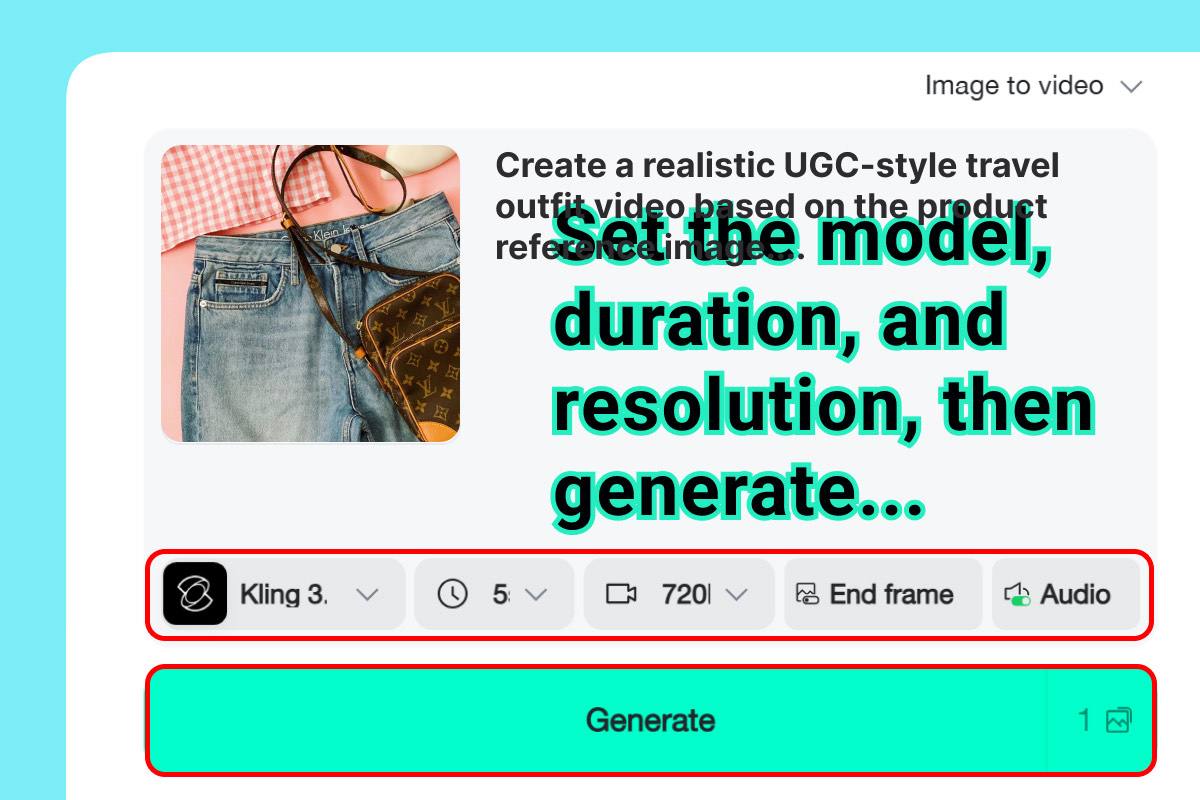
Choose the model, duration, resolution, end frame, and audio settings based on the platform. A short five-second clip is useful for hooks and product reveals. Longer clips work better for explanation, routine scenes, or multi-beat product demos.
Step 4: Generate and Download
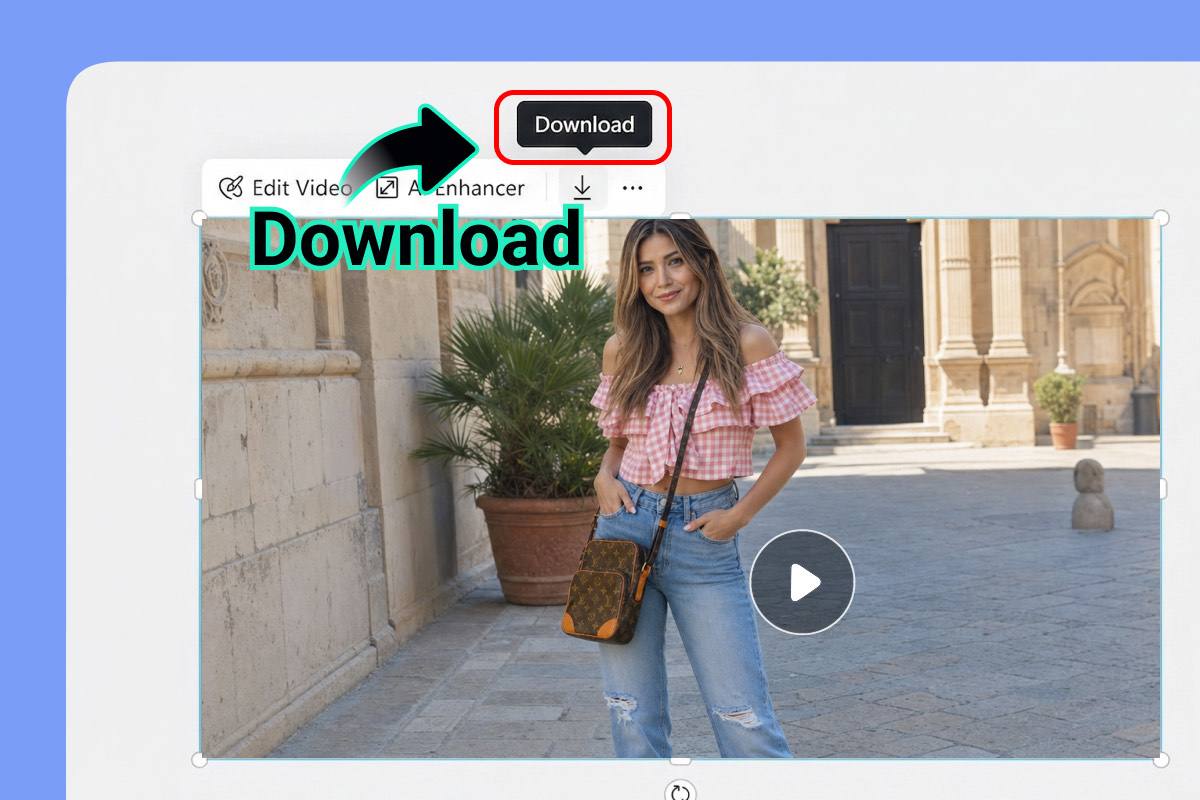
Generate the clip, review the motion, and download the final video. You can use it as a TikTok ad concept, Instagram Reel, product-page visual, email creative, or internal storyboard before commissioning a creator.
Prompt Tips for Better AI UGC Scripts
The script and prompt should support each other. The script gives the message; the prompt gives the visual direction. If your script says “this outfit is perfect for travel,” your prompt should show travel movement: walking through a plaza, adjusting a bag strap, smiling at the camera, or turning naturally in sunlight.
Use product-specific nouns. “A stylish outfit” is weaker than “pink gingham off-shoulder top, light blue high-waisted jeans, small brown crossbody bag.” Use camera language too: handheld phone footage, medium shot, natural daylight, subtle background blur, authentic creator vibe. Those details make the result feel closer to real UGC.
For beauty videos, mention skin finish, hand movement, bathroom mirror light, or vanity setup. For fitness videos, mention pace, posture, equipment, and sweat-safe realism. For ecommerce videos, mention how the product is worn, held, opened, packed, styled, or displayed. If you need broader video creation beyond product references, try the AI video generator for text-first concepts.
Best Practices for Beauty, Fitness, and Ecommerce Teams
For beauty brands, build scripts around texture and transformation. A good beauty script should answer: What changed, how fast did it happen, and what does the finish look like?
For fitness brands, make the product part of a habit. Show the item before, during, or after the workout so the viewer understands when they would use it. Strong fitness UGC often sells consistency, not just performance.
For ecommerce brands, keep the promise concrete. Viewers want to know why the product deserves attention in a crowded feed. Make the script answer one practical question: Does this make life easier, better-looking, more organized, more fun, or more giftable?
FAQ
What is an AI UGC script?
An AI UGC script is a structured short-form ad script designed for creator-style content. It usually includes a hook, problem, product moment, proof, and CTA.
Can I use the same script for beauty, fitness, and ecommerce?
Use the same framework, but customize the language. Beauty needs texture and finish, fitness needs routine and movement, and ecommerce needs practical product context.
Do I need a creator video to use insMind?
No. For this workflow, you can start with a product image and write a prompt that describes the UGC-style scene you want to generate.
How long should a UGC video prompt be?
One clear paragraph is usually enough. Include the product, creator action, setting, camera style, mood, and platform format.
Can AI UGC videos be used for ads?
Yes, but check each ad platform's AI content and disclosure rules. Use generated videos as concepts, ad tests, or final creatives depending on your brand policy.
Turn UGC Scripts into Testable Videos
The fastest creative teams do not wait until every script is perfect. They turn clear hooks into visual tests, compare what works, and scale the winners. With insMind, you can take one product image, write a focused UGC prompt, and generate a short video that shows how the idea might perform in a real feed.
Start with one beauty, fitness, or ecommerce template from this guide. Then adapt the hook, product moment, and CTA for your audience. The more specific your script, the more useful your AI-generated UGC video will be.

Sarah Michelle
I'm a freelance writer with a passion for editing and designing photos. Here at insMind, I strive to educate users on image creativity, photography, and enhancing product photos to help grow their businesses.


